
Views: 0 Author: Site Editor Publish Time: 2026-04-27 Origin: Site


Traditional waterproofing methods often fail when you need them most. PVC membranes, acrylics, and epoxies degrade rapidly under harsh UV exposure. They also surrender to intense hydrostatic pressure over time. For commercial contractors and facility managers, these recurring failures cause severe structural headaches. Seam deterioration and continuous leaks mean compounding labor expenses. They also introduce major liability risks. Plural-component polyurea introduces a monolithic, rapid-cure alternative. However, its success relies heavily on specialized application equipment. Operating a professional Polyurea Spray Machine requires high upfront capital. It also demands rigorous surface preparation. Yet, it delivers unmatched tensile strength and completely seamless applications. You will discover how this advanced machinery tackles extreme commercial roofing challenges. We will also explore its unique ability to seal high-pressure basement environments effectively.
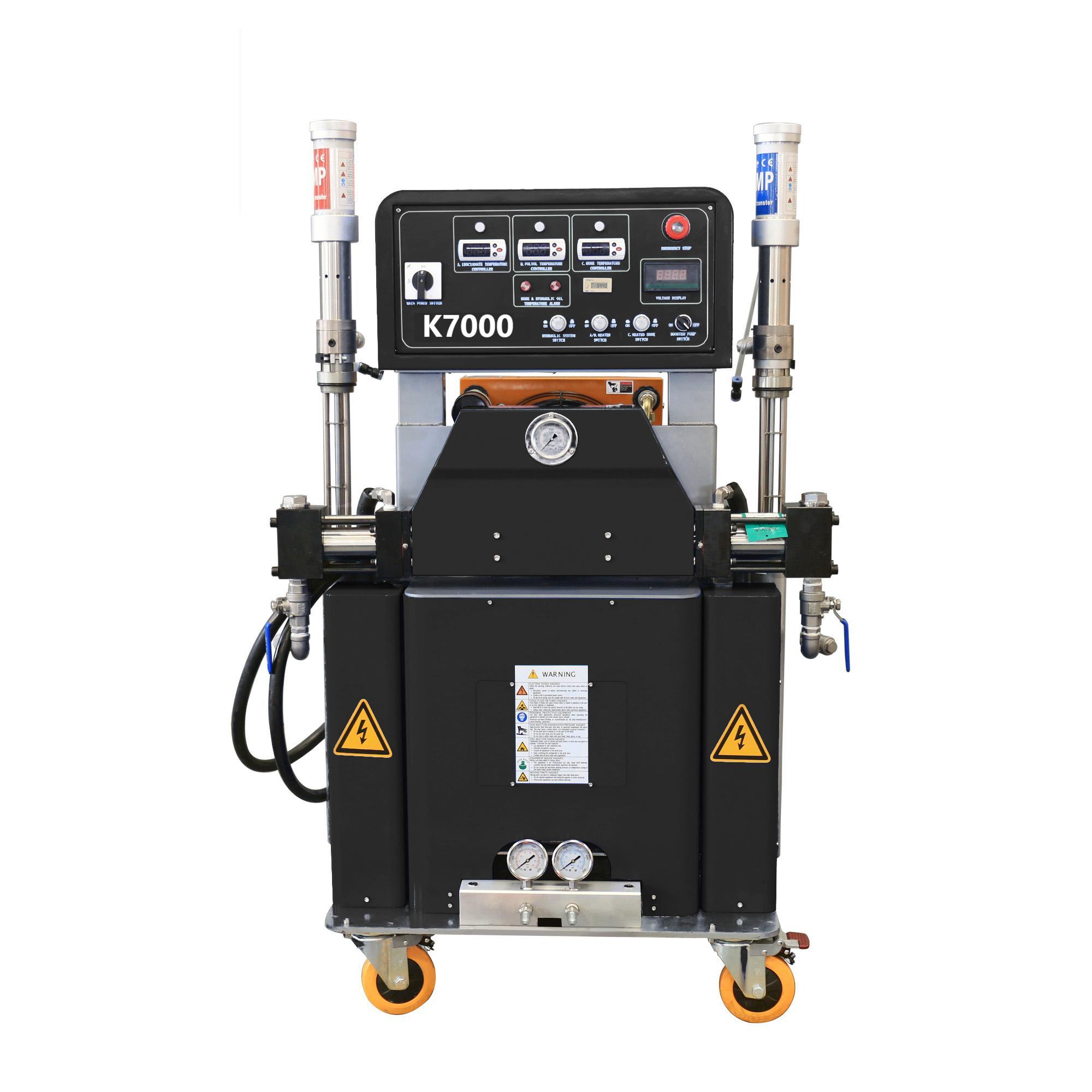
Equipment Dependency: True polyurea waterproofing requires specialized heated, plural-component spray machinery to achieve the necessary 1:1 chemical reaction and instant cure.
Unmatched Durability: Properly sprayed polyurea yields 2,000–6,000 psi tensile strength and can outlast traditional acrylics and silicones by decades.
Favorable TCO: Despite equipment costs ranging from $20,000 to $100,000+ and higher material costs, the 25-to-40-year lifespan drastically lowers the annualized cost of waterproofing.
Risk Profile: Material failure is rare; application failure due to improper surface preparation or uncalibrated machinery is the primary risk.
Plural-component polyurea is a highly resilient elastomer. It forms through a rapid step-growth polymerization process. You mix an isocyanate A-side and a synthetic resin B-side. Contractors do not paint this material onto a surface. Instead, the chemical reaction occurs directly at the tip of the spray gun.
This rapid chemistry dictates strict equipment requirements. A professional polyurea spray machine is non-negotiable for large-scale waterproofing. The system must heat both chemicals to precisely 140°F–160°F. Maintaining this temperature ensures optimal fluid viscosity. Furthermore, the machine must enforce an exact 1:1 proportioning ratio under extreme pressure. If the ratio drifts, the resulting membrane will fail. It will leave sticky, uncured spots across the roof.
The machine pushes the heated chemicals through heavily insulated hoses. These hoses often stretch hundreds of feet across a commercial roof. The fluid temperature must not drop during transit. The machine uses high-pressure impingement inside the gun. The chemicals collide at 2,000 to 3,000 psi. Once you release the trigger, a mechanical purge rod clears the chamber instantly. This prevents the polyurea from curing solid inside the gun.
One massive advantage is the return-to-service speed. High-pressure mixing allows the material to cure in mere seconds. Applicators can make continuous passes over the same area. You can build membrane thickness from 30 mils to over 500 mils in a single application. This eliminates costly downtime between coats.
Not all projects require massive equipment. You can categorize systems into a few distinct variants:
Heavy-duty plural-component machines: Ideal for massive commercial roofs and full foundation encapsulations. They offer maximum output and reliable temperature control.
Single-component moisture-cured systems: Best for minor localized repairs. They cure much slower and require no complex machinery.
Cartridge-based microcrystalline grouting: Used specifically for injecting and sealing dynamic structural cracks in basements.
Commercial roofing presents unique structural challenges. Flat roofs often suffer from standing water persisting for 48 hours or more. Rooftop HVAC units create constant vibrations. These vibrations severely stress traditional roofing materials. EPDM and TPO membranes frequently fail at their glued seams. Seam rupture remains their biggest structural flaw.
Polyurea completely eliminates these vulnerabilities. It creates a 100 percent seamless, monolithic barrier across the entire roof deck. There are absolutely no seams to split. It boasts a tensile strength between 2,000 and 6,000 psi. This is roughly ten times stronger than silicone. It is fifteen times stronger than basic acrylic coatings.
The material also features over 300 percent elongation. It stretches and moves effortlessly alongside the building structure. During summer, commercial roofs absorb massive amounts of solar heat. They expand significantly. During winter, they contract. This continuous thermal cycling destroys rigid seams. Polyurea accommodates this movement without tearing. Industry testing proves it can survive extreme impacts. Standard Factory Mutual (FM) hailstone impact tests demonstrate its resilience against severe weather.
When selecting materials, buyers must understand formulation differences. Your choice dictates long-term performance.
Feature | Aromatic Polyurea | Aliphatic Polyurea |
|---|---|---|
UV Stability | Poor. Chalks and fades quickly under direct sunlight. | Excellent. Resists UV degradation and retains color perfectly. |
Cost Profile | Cost-effective. Ideal for base layers and buried foundations. | Premium pricing. Often costs twice as much as aromatic versions. |
Application Strategy | Requires a protective aliphatic or silicone topcoat for exposed roofs. | Used successfully as a standalone, exposed waterproofing membrane. |
Sub-grade environments face constant hydrostatic pressure. During heavy rainfall, water saturates the soil surrounding a building. This water pushes violently against basement walls. Diagnosing your foundation vulnerabilities is the critical first step. Concrete block walls typically fail at the mortar joints. The rigid mortar cracks under soil pressure, allowing water intrusion. Conversely, poured concrete structures usually leak at the floor-wall joint or through settling cracks.
Polyurea provides distinct application advantages in these high-pressure sub-grade environments.
First, consider extreme climate and substrate tolerance. Applicators can spray polyurea in freezing temperatures as low as -5°C. You can also apply it to partially cured "green concrete." It adheres perfectly to Insulated Concrete Forms (ICF). Traditional asphalt coatings often peel or freeze under these exact conditions.
Second, the material excels at bridging and filling deep imperfections. Expanding polyurea variants effectively fill concrete bug holes and pinholes. Microcrystalline formulations absorb structural movement. As the material cures, it swells slightly. It anchors mechanically into the substrate. Traditional asphalt-based sealants simply lay flat on the surface. When the foundation settles, those rigid sealants snap.
Finally, spraying polyurea drastically improves labor efficiency. Confined basement spaces make traditional waterproofing difficult. The automated spray application eliminates several tedious manual tasks:
Taping: You no longer need to manually tape seams over joints and transitions.
Multi-layer troweling: One rapid spray pass replaces hours of physical hand-troweling.
Torch-down sealing: Open flames are eliminated entirely, drastically improving safety in confined areas.
Entering the professional polyurea market requires significant financial commitment. The upfront capital expenditure (CAPEX) serves as a major barrier to entry. A commercial-grade polyurea spray machine, paired with a fully equipped mobile rig, generally costs between $20,000 and $100,000+. This price tag covers more than just the proportioner unit. Applicators must invest in heavy-duty diesel generators. You also need industrial rotary screw air compressors. These compressors power the drum transfer pumps and the spray gun purge systems.
Material costs also reflect a premium product tier. Applicators typically spend between $1.25 and $1.75 per square foot on raw polyurea chemicals. Adding custom colorants or fire-retardant additives increases this baseline cost. This positions polyurea as a much higher initial expense compared to basic bucket-applied acrylics.
However, you must evaluate this investment against long-term performance longevity. An average acrylic roof coating degrades quickly under structural movement. It might last 8 years before requiring total replacement. In stark contrast, a properly applied polyurea membrane boasts a 25-to-40-year lifespan.
This extended durability easily justifies the hefty initial equipment cost. Contractors benefit directly from eliminated callback liabilities. Facility managers benefit from zero replacement cycles over three decades. When evaluated over the complete lifespan of a commercial building, the premium CAPEX translates into undeniable operational profitability.
Many contractors mistakenly view polyurea as a magic bullet. This is a dangerous myth. Polyurea is actually a highly unforgiving material. When a waterproofing project fails, the chemical material is almost never the culprit. Failures stem directly from contractor error, machine miscalibration, or poor surface preparation.
Strict surface preparation dictates project success. Polyurea adheres via a mechanical bond. It physically locks into the microscopic profile of the substrate. If you ignore preparation protocols, the membrane will delaminate immediately. You must follow these crucial preparation steps:
Moisture testing: Measure substrate moisture levels using calcium chloride tests. Trapped vapor attempts to escape during heating. This causes massive membrane blistering.
Concrete curing: Allow new concrete pours a standard 28-to-30-day cure time. Green concrete releases too much moisture for standard formulations.
Particulate removal: Shotblast or diamond-grind the surface thoroughly. You must remove all loose particulates, curing compounds, and weak concrete laitance.
Primer dependencies introduce another serious risk factor. Concrete is highly porous. If you spray hot polyurea directly onto porous concrete, the heat expands the air inside the pores. This trapped air bubbles up through the curing liquid, causing outgassing. Applying an epoxy primer seals these pores. However, you must let the primer cure to its exact specified window. Warn your crew against applying polyurea over wet primers. Spraying too early traps primer solvents, creating immediate blisters.
Adhesion challenges also complicate future repair work. Cured polyurea features a dense, inert surface. It heavily resists adhesion to itself. You cannot simply spray a fresh coat over an old polyurea membrane to fix a puncture. Recoating requires aggressive mechanical abrasion. You must physically rough up the existing surface using wire wheels or grinders. Then, you apply special chemical prep solvents to soften the old layer. Only then will the new spray achieve a permanent bond.
A polyurea spray machine serves as a highly capable tool. It easily dominates complex commercial roofing and basement waterproofing challenges. However, operators must strictly respect preparation and equipment maintenance protocols. The material is incredibly strong, but the application process remains highly delicate.
Contractors and facility managers should assess their specific project volume. High-volume, severe-duty environments easily justify the required equipment CAPEX. If you battle constant leaks, structural vibrations, and hydrostatic pressure, this technology provides a permanent fix.
Evaluate your operational needs today. Review specific machine specifications carefully, including psi ratings and maximum heating capacities. Schedule an equipment consultation to find the exact proportioner setup required for your next major waterproofing contract.
A: Yes, you can spray polyurea over an existing roof, but it requires rigorous preparation. You must clean the surface thoroughly and remove all loose debris. Typically, applicators apply a specialized epoxy primer first. This primer ensures the polyurea anchors properly without trapping existing substrate moisture. Bypassing the primer usually leads to massive blistering and total membrane failure.
A: Industry standards dictate a minimum thickness of 30 mils for basic waterproofing. This is roughly the thickness of a dime. However, commercial specifications for basements often call for 60 to over 100 mils. The required thickness depends entirely on the severity of the exterior hydrostatic pressure and structural movement expectations.
A: For large-scale commercial roofs and full foundation encapsulations, yes. These major projects require professional heated proportioners. However, for small crack injections or minor repairs, you do not need heavy machinery. You can use single-component moisture-cured polyurea or cartridge-based microcrystalline grouts applied via standard manual caulking guns.
A: Polyurea offers vastly superior tensile strength and physical durability. It easily handles heavy foot traffic and hailstone impacts. Silicone is much softer and tears easily under foot traffic. However, silicone is often cheaper upfront and naturally UV stable. This makes silicone a viable alternative for zero-traffic roofs where impact resistance is not required.


