
Views: 0 Author: Site Editor Publish Time: 2026-04-29 Origin: Site


Commercial fleet managers, automotive customization shops, and upfitters constantly evaluate ways to protect their investments. Upgrading protective vehicle coatings represents a major operational decision. You need solutions capable of enduring severe, repetitive daily abuse. Unfortunately, fleet vehicles face relentless dynamic stressors on the road and job sites. Abrasive debris, harsh chemical spills, and low-speed kinetic impacts easily destroy traditional automotive paints. Standard drop-in liners and basic epoxies frequently crack or fail under commercial-grade wear. This damage directly exposes underlying metal substrates to rapid corrosion, ultimately accelerating vehicle depreciation. In this article, we objectively examine how advanced elastomer coatings solve these structural vulnerabilities. You will discover the specific chemical mechanics and verifiable performance metrics behind polyurea impact resistance. We will also explore the practical implementation realities required to succeed in a professional shop environment.
Polyurea absorbs and deflects kinetic energy through molecular-level structural shifts, drastically reducing dents, scratches, and abrasion damage.
It exhibits high strain-rate sensitivity, meaning the coating dynamically stiffens under rapid, high-velocity impacts.
Compared to epoxy or standard polyurethane, pure polyurea offers a significantly longer lifecycle (often exceeding 10+ years) and cures in seconds, maximizing shop throughput.
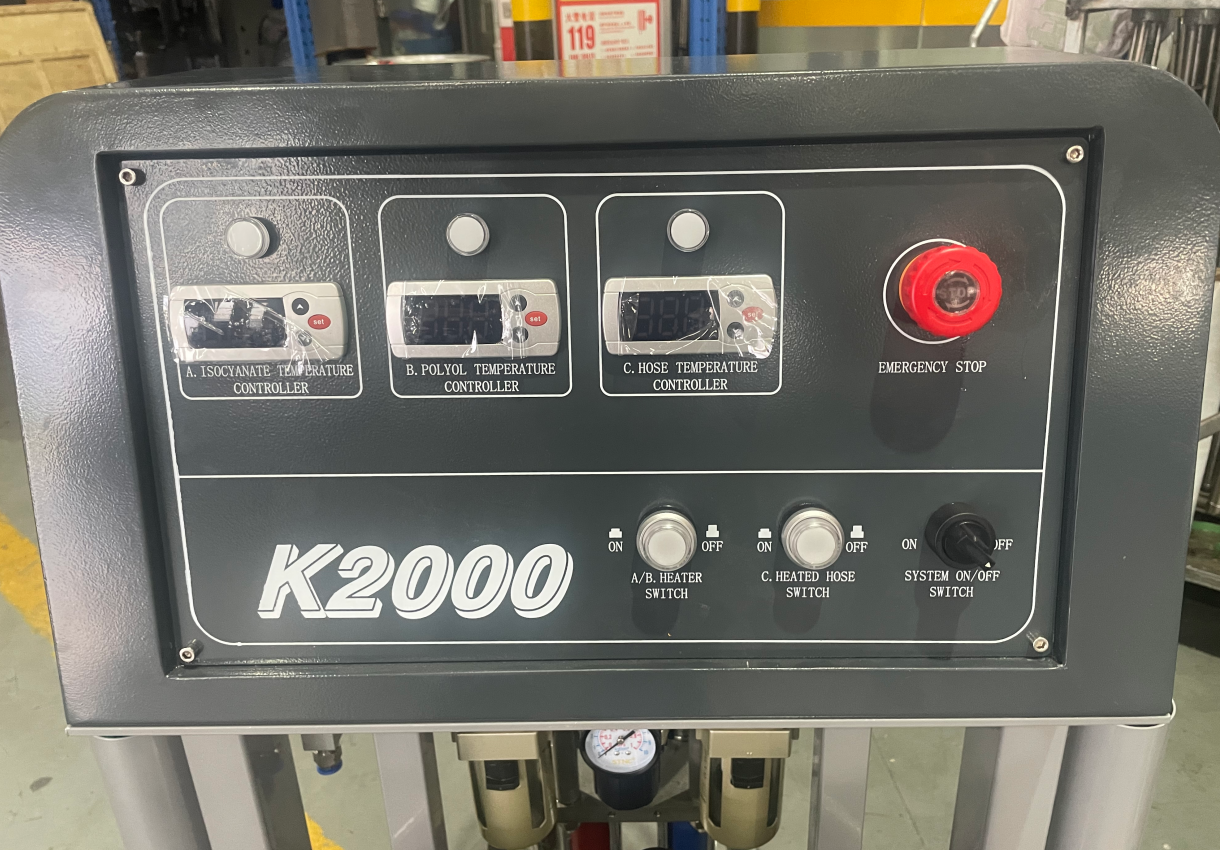
Successful application is highly dependent on surface preparation and utilizing a commercial-grade polyurea spray machine capable of maintaining precise heat and pressure metrics.
While highly effective against localized abrasion and kinetic strikes, polyurea does not alter the structural crash-safety rating of a vehicle chassis.
Polyurea delivers exceptional protection because of its unique chemical architecture. The material relies on a specific micro-phase separation structure. Polyurea consists of alternating soft and hard polymer segments. The soft segments come from polyetheramines. They provide extreme flexibility and store deformation energy. The hard segments come from isocyanates. They act as rigid cross-links to dissipate kinetic force. This dual structure creates a tough, highly elastic membrane.
When a rock strikes a coated bumper, hydrogen bond dissociation occurs. Kinetic impacts force the hydrogen bonds within the coating to temporarily break. They rapidly reorganize moments later. This chemical process absorbs massive amounts of destructive energy. It stops the force before it reaches the vehicle's metal or fiberglass substrate. You essentially get a self-healing energy sink right on the vehicle surface.
Furthermore, polyurea exhibits powerful strain-rate effects. Engineers call this dynamic stiffening. The material demonstrates non-linear stress responses under different loads. Under low-speed pressure, it remains flexible and yielding. However, high-speed impacts trigger a different reaction. When kicked-up gravel or dropped tools strike the surface, the coating momentarily transitions to a stiffer, glass-like state. It deflects the sharp blow, then instantly returns to its flexible form.
We must establish a clear skeptical boundary here. Polyurea effectively mitigates surface deformation. It handles localized blunt-force trauma brilliantly. However, it will not prevent frame bending in a major automotive collision. You should view it as supreme surface armor, not structural crash reinforcement.
Automotive professionals require verifiable data. We look to standardized impact testing to evaluate coating durability. Methodologies like ISO 6272-1:2011 measure drop-weight and pendulum impact resistance. These tests simulate tools dropping onto truck beds or vehicles scraping against obstacles. During these tests, epoxy often fractures after a single heavy strike. It shatters and loses adhesion. Polyurea, conversely, retains full structural integrity through repeated, violent impacts.
Epoxy and traditional polyurethane present severe limitations in commercial automotive environments. Epoxy grows highly brittle in cold weather. It also takes days to cure fully, bottlenecking shop productivity. Standard polyurethanes react poorly to humidity. They are highly sensitive to moisture during application, often causing bubbling. Polyurethanes also lack the extreme tensile strength found in pure polyurea systems.
Secondary impact damage often ruins fleet vehicles. When traditional paint chips, substrate rust begins immediately. Polyurea solves this through total chemical isolation. It provides a 100% solid, seamless moisture barrier. The membrane completely blocks water penetration. It also fiercely resists harsh automotive fluids. Brake fluid, road salts, and diesel fuels cannot degrade the cured surface.
The chart below outlines how these materials behave under typical automotive stressors.
Coating Type | Impact Resistance | Cure Time | Moisture Sensitivity | Flexibility in Cold |
|---|---|---|---|---|
Standard Epoxy | Low (Prone to shattering) | 24 to 72 Hours | Moderate | Extremely Brittle |
Polyurethane | Moderate | 4 to 12 Hours | High (Can blister) | Moderate |
Pure Polyurea | Very High (Dynamic stiffening) | 3 to 45 Seconds | Virtually None | High (Flexible to -20°F) |
Not all polyurea formulations serve the same purpose. Chemists tailor the liquid components for specific automotive applications. You must choose between aliphatic and aromatic formulas based on panel exposure.
Aromatic Formulations: These are highly durable and generally cost-effective. They perform perfectly for undercarriages, wheel wells, and internal truck beds. However, aromatic molecules break down under direct sunlight. This causes UV fading or "chalking" over time, though it rarely affects physical strength.
Aliphatic Formulations: These utilize a different chemical backbone to achieve UV stability. They remain entirely color-fast under intense sunlight. You must use aliphatic blends for exterior vehicle body panels, custom cosmetic armoring, and visible bumpers.
Applicators can also adjust cure time and fluidity variables. Fluidity dictates how the material settles before curing. We can categorize these adjustments into two main approaches.
Formulation Speed | Gel Time | Ideal Automotive Application | Visual Finish |
|---|---|---|---|
Rapid Cure | 3 - 7 seconds | Vertical doors, fenders, complex curves | Highly textured, prevents dripping or sagging |
Extended Cure | 20 - 45 seconds | Flat truck beds, cargo van floors | Smoother, flatter, self-leveling appearance |
Understanding the chemistry means little without proper application. Equipment criticality defines polyurea success. You absolutely cannot apply this material via standard HVLP paint guns. You also cannot use cheap, low-pressure DIY kits. The rapid chemical reaction requires highly specialized, industrial-grade equipment to succeed.
Evaluating your application hardware is vital. A professional Polyurea Spray Machine determines whether the coating adheres or fails entirely. When auditing this equipment, you must verify three non-negotiable performance metrics.
Plural-Component Proportioning: The machine must maintain an exact 1:1 volume ratio between the resin and the isocyanate. Ratio imbalances destroy the material matrix. Even a slight deviation leads to uncured, tacky surfaces or catastrophic coating failure months later.
Thermal Management: Pure polyurea demands strict temperature control. The machine must feature actively heated hoses. Materials typically require precise heating between 140°F and 160°F. This thermal management ensures optimal, uniform viscosity at the spray tip.
High-Pressure Output: The system relies on impingement mixing inside the gun block. The machine must generate high pressure, usually ranging from 1,500 to 2,500+ psi. This extreme pressure properly atomizes the heavy material before it hits the substrate.
Shop safety and regulatory compliance represent another major implementation reality. Pure polyurea utilizes zero-VOC, 100% solids formulations. However, zero-VOC does not mean harmless during application. The high-pressure atomization creates microscopic airborne particulates. Technicians must wear industrial PPE. This includes full-face fresh-air respirators and full-body chemical suits. Proper shop ventilation setups remain strictly necessary.
Even the strongest elastomer fails without proper bonding. We call this the adhesion mandate. Impact resistance becomes completely irrelevant if the coating delaminates from the vehicle body. You must follow strict preparation protocols to ensure permanent bonding.
First, technicians must perform aggressive surface profiling. You cannot spray over glossy clear coats. The metal requires heavy mechanical abrasion or media sandblasting to create a physical anchor pattern. Next, the team must execute complete degreasing. Any residual oils from the road will repel the coating. Finally, total moisture removal is necessary. While the spray itself resists humidity, trapped water underneath causes future blistering.
Primer requirements often surprise new applicators. Smooth automotive steel and aluminum possess very tight molecular pores. Bare metal sometimes struggles to grip the fast-curing polyurea. Specific epoxy-based primers become necessary here. They bridge the adhesion gap. They bite deeply into the metal and provide a textured chemical layer for the polyurea membrane to grab.
Fleet managers must also evaluate weight considerations. Thick mil-builds add tangible mass to a vehicle. A heavy-duty application easily adds significant weight. You must calculate this added bulk against vehicle payload capacities. Extra weight also impacts fleet fuel efficiency goals. You should balance the desired armor level against these operational realities.
Polyurea represents a scientifically validated solution for vehicle protection. It drastically improves resistance to abrasions, deep scratches, and localized blunt-force impacts. By utilizing advanced micro-phase separation and strain-rate stiffening, it outperforms traditional epoxies and paints. Moving forward, consider these action-oriented next steps to ensure successful implementation:
Evaluate your specific operational use cases to decide between UV-stable aliphatic body armor or cost-effective aromatic undercarriage protection.
Audit your facility's power and ventilation capabilities before committing to an industrial plural-component setup.
Investigate the exact pressure and heating specifications of any Polyurea Spray Machine you plan to purchase to guarantee a flawless 1:1 mix ratio.
Establish strict, mandatory surface profiling and priming protocols for all shop technicians to prevent delamination risks.
A: The total weight depends directly on the applied mil-thickness. A standard truck exterior typically gains between 50 and 80 lbs. Heavier, military-style builds can add over 100 lbs. Fleet managers must carefully weigh this trade-off between extreme armor levels and slight reductions in overall fuel economy.
A: No. We consider polyurea a highly permanent application. Successful installation requires intense surface profiling, mechanical sanding, and aggressive chemical adhesion. Removing it requires heavy grinding or extreme industrial stripping, which destroys the original underlying automotive paint and primer.
A: Yes. You can accurately tint aliphatic polyurea formulas using automotive-grade pigments. This allows for precise color matching to existing fleet graphics or factory paint codes. Aliphatic blends maintain this color stability over time without sacrificing any critical impact resistance or flexibility.
A: Polyurea features a vast thermal operating window. It reliably remains flexible and crack-resistant in environments dropping down to -20°F. Conversely, it heavily resists degradation at sustained high temperatures, making it safe for proximity to hot engine bays, exhaust routing, and sun-baked desert climates.


