
Views: 0 Author: Site Editor Publish Time: 2026-05-30 Origin: Site


Concrete crack leaks in commercial and residential infrastructure cause severe structural degradation. They also lead to steep compliance fines, such as EPA violations in wastewater facilities, and expensive operational downtime. Traditional repair methods like epoxy and cementitious grout frequently fail. They remain too rigid to handle natural structural movement. They also perform poorly in wet, active-leak conditions. Polyurea has emerged as a high-performance alternative for these demanding environments. However, it demands specific, specialized application equipment to work correctly. A professional high-pressure system can permanently seal active building crack leaks. It delivers a rapid-cure, highly elastic material deep into the substrate. Contractors must adhere strictly to high-pressure injection protocols and surface preparation standards to achieve this permanence. In this article, you will learn the exact mechanics behind polyurea crack repair. We will explore why specialized machinery is mandatory and provide a standard operating procedure for flawless, long-lasting execution.
Rigid fillers often fail when repairing concrete because they ignore basic structural physics. Concrete naturally shifts, settles, and expands under thermal stress. When you inject a stiff material into a moving joint, the surrounding substrate will eventually snap. Polyurea bridges this flexibility gap beautifully. It boasts an elongation rate exceeding 500%. This extreme elasticity allows it to stretch alongside the concrete substrate rather than snapping under pressure. It absorbs the shock of structural movement, keeping the water barrier intact over decades of seasonal changes.
Industry professionals frequently debate the merits of epoxy versus polyurea. We must frame this as an objective evaluation of use cases. Epoxy acts as a powerful structural adhesive. However, it remains highly brittle. It cures slowly, which risks material washout if water flows behind the wall. Epoxy also halts its curing process in temperatures below 32°F. Polyurea solves these exact bottlenecks. It remains highly flexible and cures in minutes. This fast reaction time traps the material deep within voids before it can wash away. Furthermore, you can apply polyurea in extreme cold, remaining fully functional down to -20°F.
| Performance Metric | Traditional Epoxy | Polyurea |
|---|---|---|
| Flexibility & Elongation | Low (Brittle, prone to cracking) | High (>500% elongation) |
| Cure Time | Hours to Days | Seconds to Minutes |
| Minimum Application Temp | 32°F (0°C) | -20°F (-29°C) |
| Washout Risk in Wet Voids | High | Extremely Low |
Beyond structural integrity, polyurea offers massive chemical and environmental resilience. Commercial facility managers value this trait highly. For example, wastewater treatment plants constantly battle hydrogen sulfide (H2S) gas. This gas aggressively eats away at standard concrete and cement patches. Polyurea resists this chemical degradation effortlessly. It also provides a remarkably smooth finish. This slick surface stops solid waste from clinging to tank walls, significantly reducing future maintenance labor and cleaning costs.
Many property owners fall for the myth of DIY crack repair kits. You will often see low-pressure caulk guns marketed as complete structural solutions. We must address this massive gap between homeowner kits and commercial-grade structural repairs. Low-pressure applications simply lack the mechanical force necessary to penetrate deep structural voids. They cannot fight active hydrostatic pressure. If a basement wall leaks live water, a low-pressure resin will just wash right back out. Professional contracting requires serious hardware.
True polyurea injection relies heavily on strict technical specifications. You cannot mix it in a bucket. The chemical components—isocyanate and amine resin—demand precise thermal control. You must heat them inside specialized hoses to a sustained range of 140°F–160°F. This heat lowers the material's viscosity, allowing it to flow like water before expanding. Additionally, the system must guarantee absolute precision mixing. The equipment must push the two chemicals at a strict 1:1 volume ratio, mixing them instantly at the gun tip. Even a minor ratio imbalance results in an uncured, useless mess.
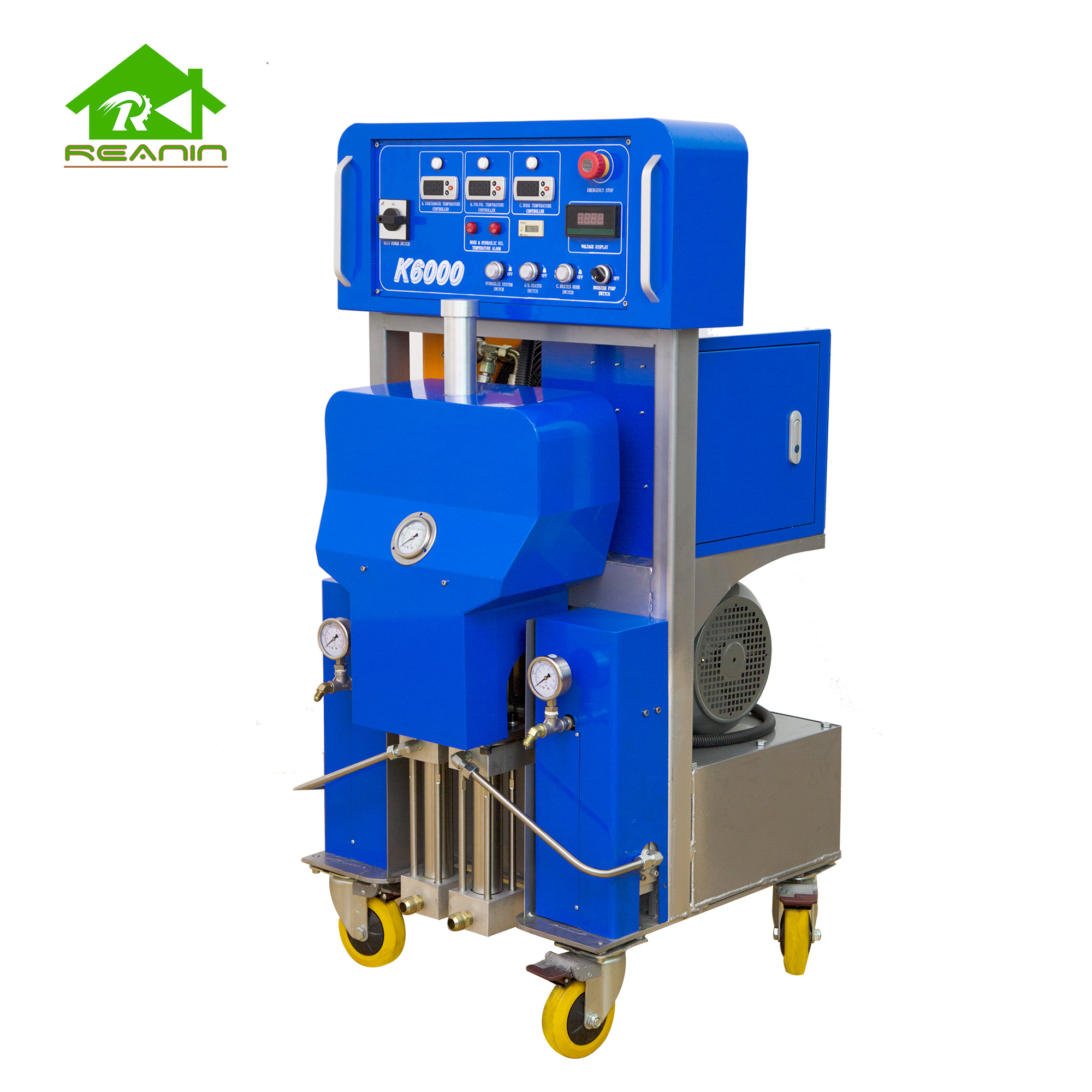
Evaluating your hardware properly determines your success rate. Contractors need machines capable of high-pressure output and stable thermal retention. When assessing these tools, a reliable Polyurea Spray Machine,K6000 Polyurethane & Polyurea Spray Machine configuration serves as a perfect industry benchmark. Quality dual-component systems handle both polyurethane foaming resins and structural polyurea coatings under extreme pressure. Polyurethane foam handles immediate water stoppage, while pure polyurea handles the long-term structural sealing. Owning versatile machinery ensures you can execute both phases flawlessly without swapping expensive equipment.
To achieve permanent leak resolution, follow this rigid standard operating procedure. Cutting corners during these steps guarantees failure. Below is the blueprint for professional inside-out leak sealing.
Running a polyurea contracting business involves significant risks and high initial capital expenditure (CapEx). We need to take a transparent look at equipment costs. Professional setups do not come cheap. A baseline machine costs around $15,000, while fully enclosed mobile spray rigs can easily exceed $50,000. You must frame this as a long-term investment. It requires consistent contract volume to justify the return on investment. Do not buy high-end rigs for occasional patch jobs.
Beyond capital, operator expertise remains your biggest hurdle. The equipment demands highly trained technicians. It is not plug-and-play. Improper temperature settings or off-ratio spraying will ruin a project instantly. If the machine sprays off-ratio, the chemicals will not cross-link. You will end up with an uncured, sticky mess inside the crack. Fixing this requires costly, labor-intensive mechanical removal.
To maintain high success rates, watch out for these common points of failure:
Finally, we must address the exterior drainage reality check. Injection fixes the internal leak brilliantly. It stops the water from entering the room. However, contractors should always advise clients on exterior drainage correction. If the yard slopes toward the foundation, water pressure will constantly attack the wall. Recommending exterior grading, gutter extensions, or french drains reduces long-term hydrostatic pressure. This holistic approach ensures your polyurea repair never faces forces beyond its design limits.
Facility managers evaluate repair methods based on operational downtime. We can easily translate polyurea's fast cure times into massive business value. Traditional cement or epoxy repairs take days to cure. During this time, warehouses, parking garages, or water treatment tanks sit idle. Shutting down commercial infrastructure costs thousands of dollars per hour. Polyurea changes this math completely. It allows facilities to return to service in hours rather than days. This downtime advantage frequently offsets the higher initial material costs.
Choosing the right strategy depends on the exact nature of the leak. If you deal strictly with hairline, dry cracks on horizontal surfaces, low-viscosity polyurea gravity feeds may suffice. You just pour it in and let gravity pull it down. However, structural foundation walls pose different challenges. If you deal with active subterranean leaks, high water tables, and varying seasonal temperatures, gravity feeds fail. High-pressure dual-component machines remain the only viable commercial path. They forcefully displace water and lock the elastic seal into the structural matrix.
Polyurea represents a massive leap forward in concrete crack repair technology. Its incredible flexibility and rapid cure times solve problems that older materials simply cannot fix. While the initial equipment investment and the necessary training curve remain steep, utilizing a professional polyurea system offers an unmatched, permanent solution to concrete leaks.
We encourage infrastructure managers to specify polyurea in their upcoming repair tenders for longer-lasting results. Contractors should actively evaluate their current machinery fleet against the requirements of a high-pressure dual-component system to ensure they can meet modern industrial demands.
A: Yes. Specialized formulas react with water to form a rapid seal, and high-pressure machines can push against live hydrostatic pressure (up to 1.5 MPa). This makes it highly effective for sealing live leaks in subterranean environments without waiting for the concrete to dry.
A: When installed correctly with proper surface prep, repairs typically last 20+ years, far outliving standard cement or epoxy patches due to their elastic nature. The material stretches with natural structural shifts rather than snapping under pressure.
A: Not necessarily. Advanced, versatile equipment like the K6000 Polyurethane & Polyurea Spray Machine can handle both materials by adjusting heating and pressure parameters, allowing contractors to perform both water-stopping and structural coating tasks using a single piece of hardware.


