
Views: 0 Author: Site Editor Publish Time: 2026-07-02 Origin: Site


Operating in off-grid environments strips away the basic conveniences of stable shore power. This harsh reality makes equipment selection the single biggest failure point for remote insulation jobs. You simply cannot rely on standard grid access when spraying foam miles from civilization. Standard hydraulic or high-draw electric proportioners typically require massive tow-behind generators. These heavy power constraints easily compromise remote project feasibility. They severely limit site accessibility across rugged terrain. Furthermore, complex electronic rigs face incredibly high failure risks when running on unstable generator power. For contractors targeting rural builds, agricultural facilities, or off-grid retrofits, pneumatic systems offer an ideal balance. They provide mechanical simplicity and highly manageable power draws. This guide breaks down how to evaluate a pneumatic polyurethane spray machine for true off-grid viability. We will focus strictly on power-to-output ratios, footprint limitations, and essential operational reliability to keep your remote jobs running smoothly.
Pneumatic proportioners shift the heavy lifting from electrical motors to air compressors, significantly reducing the size of the required off-grid generator.
Successful off-grid deployment requires precise matching of the machine’s heating requirements with available generator wattage to prevent voltage drops and chemical crystallization.
Simplistic mechanical designs in pneumatic units reduce on-site diagnostic time and lower the risk of catastrophic electronic board failures in unstable power environments.
Evaluating an air-driven system requires scrutinizing fluid pressure stability, primary heater capacity, and maximum workable hose length under cold-weather conditions.
Many contractors try deploying standard high-output insulation rigs in off-grid environments. They quickly hit severe logistical roadblocks. Electric and hydraulic proportioners demand immense continuous power. These massive machines often require robust 40kW to 60kW generators. Transporting such heavy equipment across rough terrain creates massive headaches. You spend valuable daylight managing site logistics instead of actually spraying foam.
Voltage drop represents another massive operational risk for remote jobs. Portable generators frequently suffer from unexpected power surges or sudden dips. These violent power fluctuations severely damage sensitive electronic proportioner control boards. A fried circuit board instantly paralyzes your entire operation. Furthermore, fluctuating power frequently causes dangerous off-ratio spraying before complete failure finally occurs.
Space and payload limits heavily restrict your remote vehicle choices. Box trucks packed with massive generators become dangerously heavy. This complicates navigating tight dirt roads or muddy farm access routes. Proper off-grid insulation equipment must remain highly compact. A lighter rig prevents your vehicle from sinking into soft agricultural soil.
Maintenance isolation compounds all these structural problems on remote sites. High-tech rigs rely heavily on complex computers and fragile digital sensors. If a proprietary motherboard fails off-grid, you are completely stranded. You remain hours away from certified technicians. You lack immediate access to specialized replacement parts. Prolonged downtime simply ruins your strict project timeline.
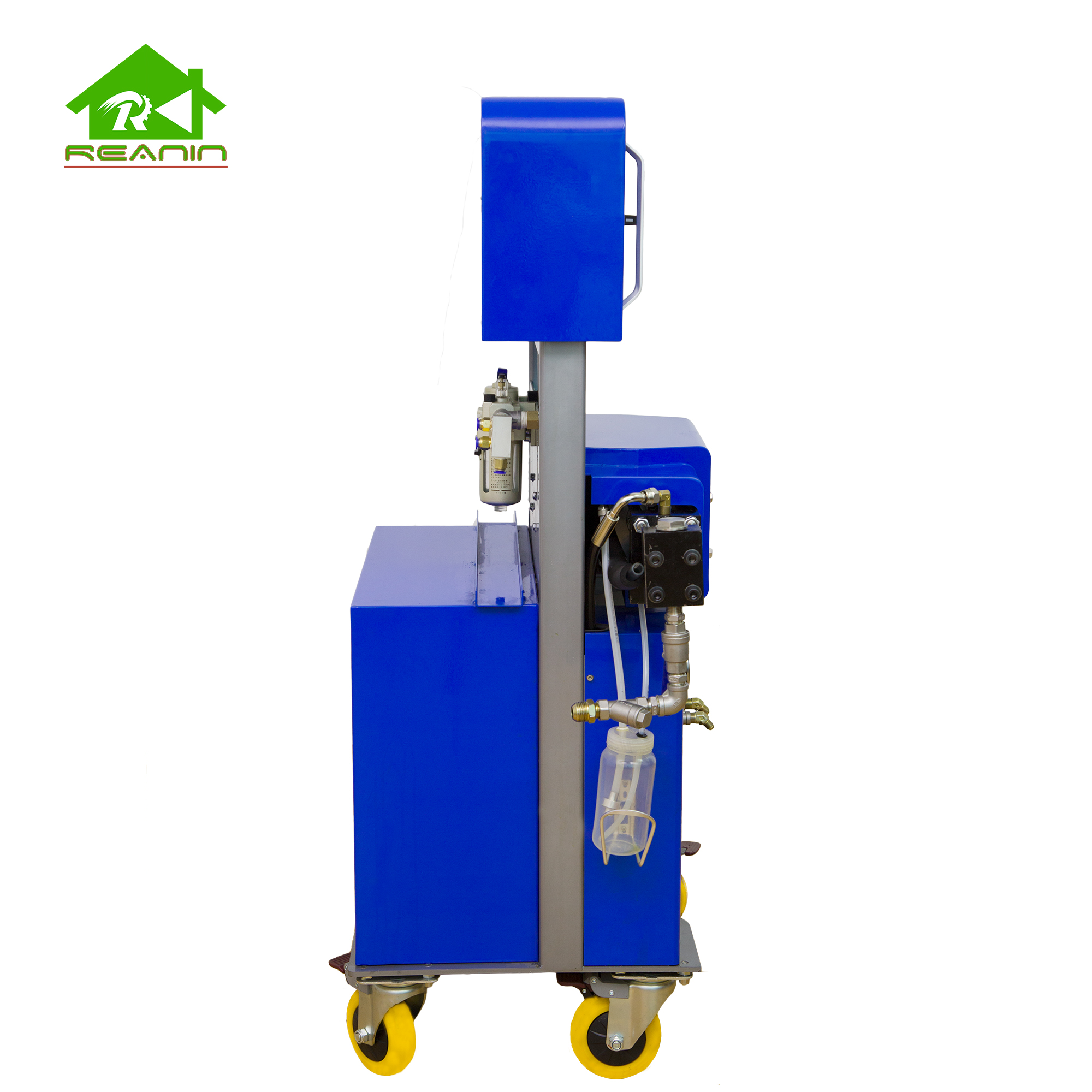
Pneumatic systems operate on a beautifully simple mechanical principle. They utilize pressurized compressed air to drive opposing chemical proportioning pumps. A central air motor powers both the A-side and B-side fluid sections simultaneously. They do not rely on complex electric motors or messy hydraulic fluid systems. This core mechanical design drastically reduces your primary electrical dependencies.
This intelligent power shifting strategy solves massive off-grid power headaches. You utilize a robust gas or diesel-powered air compressor. The separate compressor handles all the heavy mechanical lifting. Your main generator only needs to power the primary heating blocks and hose heaters. You drastically lower the total electrical demand placed on your portable generator.
Mechanical reliability truly defines these resilient air-driven systems. Industrial air motors withstand rugged environments incredibly well. They feature significantly fewer sensitive sensors. They completely lack fragile integrated circuits found in modern digital units. This stripped-down architecture ensures a remarkably high tolerance for messy generator power fluctuations.
Modern pneumatic units also excel at precise fluid pressure management. They maintain consistent dynamic fluid pressure, typically sitting between 1000 and 2000 PSI. Stable pressure ensures proper chemical atomization directly at the spray gun. This mechanical stability guarantees excellent foam yield and superior structural integrity.
Table 1: Power Source Distribution by Proportioner Type | |||
Proportioner Type | Pump Drive Power Source | Heating Power Source | Off-Grid Generator Sizing Need |
|---|---|---|---|
Hydraulic | Electric Motor (Drives Hydraulic Pump) | Electric Generator | Very High (40kW - 60kW+) |
Electric | Direct Electric Motor | Electric Generator | High (30kW - 45kW+) |
Pneumatic | External Air Compressor (Gas/Diesel) | Electric Generator | Low to Moderate (15kW - 25kW) |
Evaluating an air driven foam sprayer requires strict attention to core technical specifications. You must never guess your baseline operational requirements. Precision in the planning phase guarantees smooth spraying on the actual job site.
First, carefully assess your required output capacity. You must match the machine’s pounds-per-minute (lbs/min) flow rate directly to your target applications. A smaller 15 to 20 lbs/min unit perfectly suits residential touch-ups or small remote cabins. Commercial agricultural roofs demand highly robust 30+ lbs/min machines to maintain productivity.
Chart: Output Capacity vs. Target Application | ||
Output Capacity (lbs/min) | Primary Off-Grid Application Focus | Typical Hose Length Supported |
|---|---|---|
10 - 15 lbs/min | Small cabin retrofits, rim joists, minor touch-ups | 50 - 100 feet |
15 - 25 lbs/min | Residential walls, standard agricultural sheds | 150 - 200 feet |
25 - 35+ lbs/min | Large commercial barns, extensive roof spans | 200 - 300 feet |
Next, scrutinize the internal heating system architecture. You must evaluate the Delta-T, or total temperature rise capability. Off-grid setups face severe limitations regarding maximum generator amp output. You must differentiate clearly between primary block heater capacity and your heated hose limitations. Heavy heaters draw massive amps quickly.
Air consumption dictates your required external compressor size. You must calculate the exact cubic-feet-per-minute (CFM) needed. The compressor must drive the thick fluid pumps without starving your spray gun of purge air. Inadequate CFM causes dangerous pressure stalling. Stalling leads directly to poor chemical mixing.
Finally, verify exact fluid material compatibility. Ensure the fluid pumps easily handle both high-density closed-cell and lighter open-cell foams. Check if the unit can reliably spray high-pressure polyurea coatings. Cross-functional material capabilities keep your rig highly versatile across many different remote jobs.
Building a highly reliable rig requires precise mathematical pairing. Sizing your off-grid power plant accurately determines your daily field success. You must distribute the power load intelligently.
Determine the maximum combined amperage draw of the primary machine heaters.
Calculate the additional electrical draw for your maximum planned heated hose length.
Select a robust generator sized roughly 25% larger than this total electrical load.
Pair this generator with a separate gas-powered compressor delivering roughly 25 to 35 CFM.
Footprint and mobility strictly dictate your structural rig design. Portable polyurethane spraying setups must remain incredibly compact. You should design a tight box truck, small trailer, or custom skid-mounted system. The layout must securely accommodate the proportioner, chemical transfer pumps, material day tanks, and all power sources without exceeding axle limits.
Heated hose limitations require incredibly careful thermal management. Long exterior hose runs create severe electrical voltage drops. You will notice significant heating performance differences between a 150-foot and 300-foot hose length. Cold-weather off-grid sites rapidly compound this aggressive heat loss across fully exposed hoses resting on frozen ground.
Moisture mitigation actively protects your valuable chemical supply. You must implement critical air drying systems directly on site. Operators typically use heavy-duty desiccant filters or robust refrigerated air dryers. These systems prevent destructive atmospheric moisture from entering the Iso (A-side) drum or corroding the pneumatic air motor internals.
Operating entirely off-grid amplifies everyday spraying risks. Cold-weather startup requires strict daily operational protocols. You must bring cold chemicals to optimal processing temperatures before spraying. The material drums should reach 70°F to 80°F internally. Use silicone band heaters or heavy insulated drum blankets. Do this well before engaging the machine's primary block heaters.
Preventing off-ratio sprays keeps your architectural projects structurally sound. You must establish a mandatory daily maintenance checklist. Inspect your internal Y-strainers for chemical blockages. Monitor your drum transfer pump pressures carefully. Ensure proper ISO pump lubrication to prevent rapid chemical crystallization. Even a highly reliable pneumatic PU foam machine demands basic daily care.
You must assemble a comprehensive on-site spares kit for remote deployments. Parts availability drops to zero when you work off-grid. Consider packing the following critical components:
Replacement high-pressure O-rings and complete spray gun rebuild kits.
Spare fluid section packings for both the A and B chemical pumps.
Clean high-pressure inline fluid filters.
Extra moisture-absorbing desiccant cartridges for the drum breathing system.
Safety and ventilation present unique off-grid operational challenges. You must manage confined space ventilation meticulously. Standard grid-tied exhaust fans simply do not exist in remote agricultural builds. You should use portable gas-powered ventilators. Always mandate strictly filtered respiratory PPE for all interior off-grid insulation jobs to ensure crew safety.
A pneumatic system never represents a technological downgrade. It serves as a highly tactical choice for dedicated off-grid contractors. You gain robust, field-serviceable equipment featuring a significantly lower electrical overhead. This mechanical approach eliminates the crippling dependency on massive, heavy generators.
You should base your final shortlisting logic on strict operational metrics. Evaluate the required material output in pounds per minute. Define your maximum workable heated hose length clearly. Honestly assess the realistic continuous capacity of your existing off-grid power generation setup.
Take direct action on your equipment planning today. Audit your existing air compressor and portable generator assets immediately. Calculate your minimum Delta-T heating requirements based on your specific local winter climate. Request targeted specification sheets from trusted equipment integrators to finalize your ultimate remote spraying rig.
A: It depends on the machine's heaters. Typically, a mid-sized pneumatic machine requires a 15kW to 25kW generator, significantly less than hydraulic equivalents, provided the air compressor is driven independently.
A: Most systems require between 20 to 35 CFM at 100 PSI to operate the proportioner pumps and supply adequate purge air for the spray gun simultaneously.
A: Yes, provided the machine can reach the required processing temperatures (often 120°F-130°F) and maintain consistent dynamic pressure for proper mixing.
A: Mechanically, they are often simpler and easier to rebuild in the field. The primary maintenance focus shifts to ensuring clean, dry compressed air is supplied to the air motor to prevent freezing or internal corrosion.


