
Views: 0 Author: Site Editor Publish Time: 2026-06-28 Origin: Site


In cold chain logistics, insulation failure directly translates to payload loss and heavy liability. Spoiled food and compromised pharmaceuticals cost fleet operators millions annually. You need reliable climate control to protect these sensitive goods during transit. The quality of your temperature-controlled trailers heavily depends on machinery precision. It is not just about the chemical materials you choose. A precise PU foam spray machine makes the difference between a secure thermal envelope and a failing rig. Proportioning accuracy and temperature control remain the true drivers of insulation performance.
This article serves as an evidence-based guide for fleet manufacturers, custom upfitters, and specialized contractors. We will explore how to evaluate, shortlist, and procure the right machinery for your specific production volume. You will learn how different drive systems impact output consistency. We will also examine why precise heat control prevents catastrophic material waste. By the end, you will know exactly how to match equipment specifications to your commercial demands.
Equipment dictates foam yield and thermal resistance: Precise heating and pressure control prevent off-ratio mixing, which is the primary cause of thermal leaks in custom vehicle insulation.
Drive type matters: Pneumatic systems offer cost-effective entry points for low-volume upfitters, while hydraulic systems provide the continuous pressure stability required for high-volume OEM manufacturing.
Regulatory compliance is non-negotiable: Equipment must be compatible with modern, EPA-compliant low-GWP (Global Warming Potential) foam blowing agents.
Thermal Integrity (K-Value/R-Value) relies entirely on cellular structure. Uneven spray pressure creates an inconsistent matrix inside the polyurethane. This structural flaw leads to dangerous cold spots and thermal bridging inside the truck body. Flawed cellular walls allow rapid heat transfer. Your refrigeration unit works much harder to maintain target temperatures. Operating costs rise quickly. You must maintain strict application parameters to guarantee proper thermal resistance. High-quality machinery locks in the R-value by delivering perfectly atomized chemicals.
Material Yield versus Waste directly affects your project budget. Poor proportioning drains your resources rapidly. If your machine fails to keep a strict 1:1 chemical ratio, it dispenses uncured foam. You face costly scraping operations to remove the bad material. Raw materials go directly into the dumpster. Good equipment maximizes yield per drum. You get more usable board feet from every chemical set. This efficiency protects your profit margins on every trailer build. Consistent refrigerated vehicle insulation eliminates this unnecessary scrap.
Structural Adhesion ensures longevity on the road. Consistent equipment output guarantees proper bonding to interior panels. Commercial vehicles experience intense road vibrations daily. Poorly mixed foam delaminates over time. Gaps form between the exterior wall and the foam layer. Condensation builds up in these empty spaces, accelerating rust. Strong adhesion prevents this structural decay. The foam acts as a monolithic reinforcement for the trailer body. You achieve this only through stable, high-pressure dispensing.
Pneumatic (Air-Driven) Proportioners fit small-to-mid-sized operations perfectly. They work well for custom retrofits or mobile repair rigs. They require a lower initial investment. Maintenance feels relatively simple. Mechanics easily understand air-driven motors. However, they remain susceptible to pressure drops. If your air compressor lags, your foam quality drops immediately. You also need vigilant moisture control. Wet air ruins proportioner performance and degrades internal seals.
Hydraulic Proportioners dominate high-volume commercial manufacturing. Fleet builders rely on them for continuous daily output. You get exceptional pressure consistency from morning to night. They boast massive output capacity. They easily push materials through long hoses without surging. The downside involves higher capital expenditure. You must schedule specialized hydraulic maintenance. Fluid leaks demand immediate attention from trained technicians.
Electric Proportioners serve as a reliable middle-ground option. They deliver steady pressure without complex hydraulic fluids. You avoid air-compressor dependency entirely. Max output stays lower than hydraulic units, but consistency remains high. They suit medium-volume upfitters perfectly.
Drive System | Best Fit For | Output Stability | Primary Maintenance Needs |
|---|---|---|---|
Pneumatic | Custom retrofits, mobile repair rigs | Moderate (compressor dependent) | Air moisture traps, air motor lubrication |
Hydraulic | High-volume OEM fleet manufacturers | Exceptional (continuous duty) | Fluid changes, hydraulic pump seals |
Electric | Medium-volume facilities | High | Electrical relays, drive motor checks |
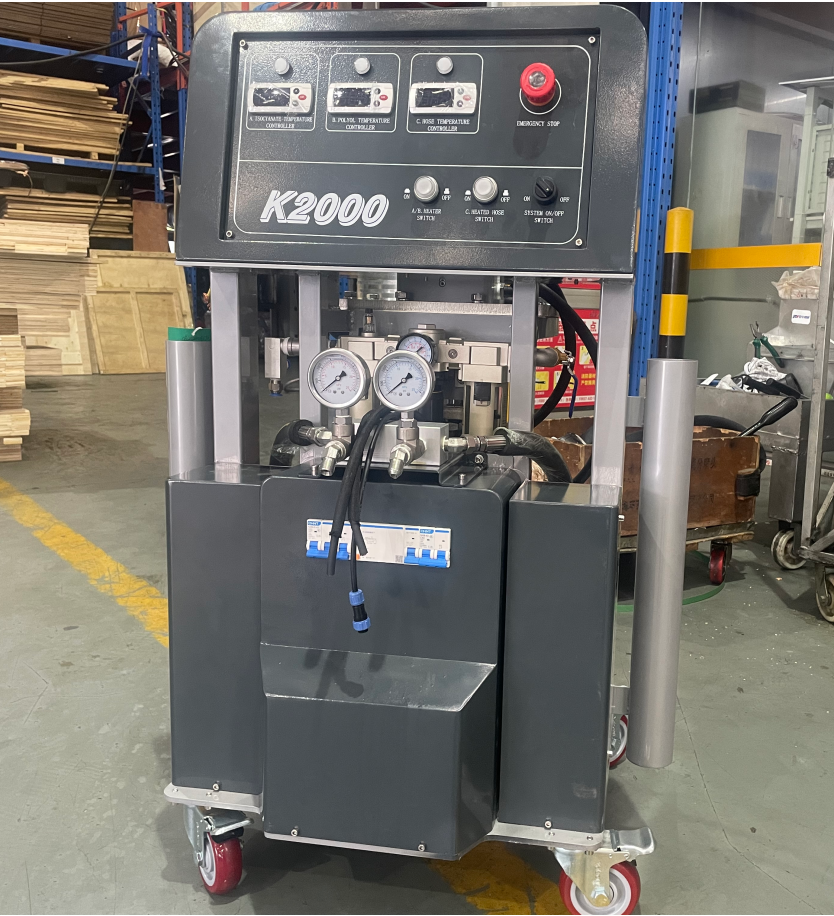
High-wattage primary heaters act as the heart of your system. PU foam for refrigerated trucks requires exact temperatures to perform correctly. Optimal viscosity must happen before chemicals reach the mixing gun. Cold chemicals mix poorly and expand unevenly on the truck wall. Robust heaters prevent these costly errors by providing a massive "Delta-T" (temperature rise). They quickly warm cold chemicals stored in unheated warehouses.
Evaluate temperature sustenance across extended hose lengths. Standard hoses run 50 feet. Custom trailers often demand much longer reaches. You need consistent heat without voltage drops across the entire line. Cold spots in the hose ruin the chemical mix instantly. Powerful hose transformers keep temperatures stable. Copper-wrapped heating elements provide uniform warmth. Check the maximum hose length your chosen machine can effectively heat.
Output specifications directly dictate your application speed. Match the machine's pounds-per-minute rating to your production goals. High maximum pressure ratings (e.g., 2,000 PSI) ensure proper atomization. Closed-cell foam needs aggressive, high-velocity mixing at the gun tip. Low pressure creates stringy, weak foam. Review these steps to size your machine correctly:
Calculate the total board footage required per trailer.
Determine your target cycle time per vehicle.
Divide the total weight of chemicals needed by your cycle time to find the required lbs/min.
Add a 20% buffer to account for operator fatigue and equipment resting periods.
Modern systems feature automatic shut-offs. Alarms sound immediately when chemical ratios deviate from 1:1. These smart controls prevent catastrophic failures. You avoid spraying off-ratio foam onto expensive trailer panels. Data logging tracks daily performance meticulously. You can export this data to prove quality control to your fleet clients. Advanced sensors track pressure imbalances before the human eye can detect them.
Navigating Environmental Regulations (EPA/SNAP) requires diligent equipment vetting. You must verify chemical compatibility before investing. Modern Hydrofluoroolefin (HFO) blowing agents are replacing older hydrofluorocarbons (HFCs). Global regulations enforce this shift aggressively. Your machine's seals, pumps, and hoses must withstand HFOs. Incompatible rubber parts dissolve quickly under these new chemical formulations. You must confirm that your chosen system meets modern compliance standards.
The "Cross-Over" Risk plagues careless operations. This failure occurs when Iso (A-side) and Resin (B-side) mix inside the hoses or the gun block. Pressure imbalances usually cause this nightmare. The chemicals harden instantly inside the equipment. You face blocked hoses, destroyed guns, and massive downtime. Proper maintenance prevents cross-overs entirely. You must monitor pressure gauges constantly and rebuild the gun periodically.
Operator Skill Dependency remains a daily reality. No machine operates entirely "plug-and-play." Successful polyurethane foam application demands skilled hands. Operators need rigorous training to interpret pressure fluctuations accurately. Daily gun cleaning remains strictly non-negotiable. Well-trained crews maximize machine lifespan.
Common Mistake: Ignoring daily greasing of the spray gun.
Common Mistake: Failing to park the proportioner pump correctly at shutdown.
Common Mistake: Spraying over wet or cold vehicle substrates.
Evaluate Local vs. Overseas Manufacturing carefully. Importing machinery saves money upfront. However, you must consider replacement parts availability. Proprietary O-rings might take weeks to arrive from overseas. Circuit board failures halt your production line entirely. Local suppliers or distributors offer faster shipping for critical spares. Weigh your in-house repair capabilities against potential shipping delays. Keep spare parts kits on hand to mitigate these risks.
Warranty and Tech Support Realities demand close scrutiny. Look closely at warranty limits and exclusions. Accessible troubleshooting matters most during a breakdown. Check if manufacturers offer live video call support. Do they provide clear, exploded technical diagrams? You need help during your actual operating hours. A long warranty means nothing if technical support ignores your urgent phone calls.
Requesting Proof of Performance protects your investment. Demand detailed technical data sheets (TDS). Ask for comprehensive operator manuals before signing a contract. Request case studies involving commercial vehicle fleets. Ensure the vehicle insulation spray equipment performs reliably in real-world manufacturing environments. Speak to other upfitters who use the same brand. Never buy based purely on glossy marketing brochures.
Choosing the correct equipment ensures your refrigerated trailers hit the road safely. You must balance production volume, drive type, and precise heating controls. The right proportioner guarantees a flawless 1:1 chemical mix. This accuracy builds a strong, reliable thermal envelope.
Investing in a reliable system mitigates severe downstream risks. You prevent cold chain failures, expensive warranty claims, and massive material waste. Quality machinery protects your brand reputation in the logistics industry.
Take a cautious, spec-driven approach to your procurement process. Request detailed quotes from multiple manufacturers. Vet their tech support infrastructure thoroughly. Ensure the system handles modern low-GWP blowing agents without seal degradation.
A: You generally need a minimum of 1,000 to 1,500 PSI for proper atomization. Closed-cell foam is dense and requires aggressive mixing at the gun tip. Commercial rigs often run closer to 2,000 PSI to ensure a perfectly smooth, consistent application on large trailer walls.
A: Portable units work well for minor repairs or small patch jobs. However, full trailer insulation requires high-output, continuous-duty machines. High-volume equipment ensures seamless application, preventing cold joints and uneven foam layers across large surface areas.
A: Longer hoses increase internal fluid friction and heat loss. You need more powerful proportioner pumps to push chemicals over long distances without pressure drops. You also need robust copper-wrapped hose heating elements to prevent temperature loss before the chemicals reach the mixing gun.
A: No. Some older or cheaper models feature seals, O-rings, and gaskets that degrade quickly. Modern HFO chemical formulations are highly reactive. You must specifically vet the equipment to ensure it is rated for low-GWP agents to avoid sudden pump failures.


