
Views: 0 Author: Site Editor Publish Time: 2025-09-16 Origin: Site


In modern construction, roofing and waterproofing are two of the most critical aspects that determine the longevity, efficiency, and sustainability of a building. A roof not only shields a structure from environmental elements but also contributes significantly to its energy performance and maintenance costs. One technology that has dramatically transformed roofing and waterproofing practices is the Polyurethane Foam Spray Machine. These machines apply spray polyurethane foam (SPF), a versatile material that provides seamless insulation and waterproofing in a single application.
This article explores how polyurethane foam spray machines enhance roofing and waterproofing performance, their benefits across different building types, common concerns, and why they have become essential in today’s construction industry.
Polyurethane foam spray machines are specialized equipment designed to mix and spray isocyanate and polyol resin, which react on-site to create a rigid, closed-cell foam. This foam expands instantly upon application, adhering to roofing substrates and forming a continuous, seamless layer.
Unlike traditional roofing materials such as asphalt shingles, bitumen, or tiles, spray foam creates a monolithic surface that eliminates gaps, seams, and overlaps. This means fewer weak points where water can infiltrate or heat can escape.
The machine itself ensures precise ratios of chemical components, consistent mixing, and controlled application, which directly influences the quality and performance of the sprayed foam layer.
One of the greatest strengths of polyurethane foam spray machines lies in their ability to deliver unmatched waterproofing.
Seamless Application: Traditional waterproofing materials often involve seams or joints that may deteriorate over time. Spray foam forms a single, continuous barrier that prevents water penetration.
Self-Adhesion: SPF adheres strongly to most roofing surfaces—including concrete, wood, metal, and asphalt—ensuring no gaps between layers.
Ponding Water Resistance: Unlike many materials that weaken when exposed to standing water, closed-cell spray foam resists moisture absorption and maintains its structural integrity.
Reduced Leak Risk: By eliminating vulnerable points, the foam significantly reduces the chances of leaks, even in complex roof geometries.
For buildings in regions with heavy rainfall or frequent storms, polyurethane foam spray machines provide peace of mind by protecting against water infiltration and long-term damage.
While waterproofing is crucial, roofing must also deliver thermal efficiency. Spray polyurethane foam provides one of the highest insulation values per inch of thickness among roofing materials.
High R-Value: SPF typically offers R-values ranging from 6.0 to 7.0 per inch, outperforming fiberglass or cellulose.
Energy Savings: By reducing heat transfer through the roof, foam helps maintain comfortable indoor temperatures, lowering HVAC loads and energy bills.
Year-Round Benefits: Whether preventing heat gain during summer or heat loss during winter, SPF enhances the overall energy performance of the building.
Polyurethane foam spray machines ensure that insulation and waterproofing are achieved simultaneously in a single application, reducing labor and material costs.
A roof is a long-term investment, and polyurethane foam roofing systems deliver impressive durability when applied correctly.
Resistant to Shrinking and Cracking: Unlike other materials that may warp, crack, or shrink under changing temperatures, SPF maintains dimensional stability.
Impact Resistance: The foam layer provides resilience against hail, debris, and foot traffic during maintenance.
UV Protection with Coatings: When paired with protective elastomeric coatings, SPF roofs resist ultraviolet degradation, extending service life for decades.
Properly maintained spray foam roofs can last over 30 years, often outliving many traditional roofing systems.
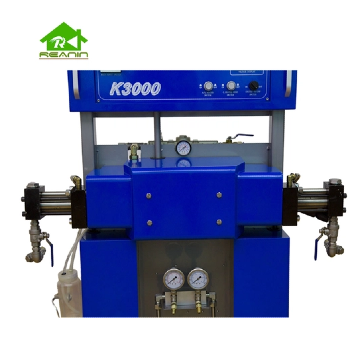
Polyurethane foam spray machines are not limited to a single type of building or roof structure. Their versatility makes them suitable for:
Flat Roofs: SPF solves the common problem of ponding water on flat roofs by allowing slight slopes to be created during application for effective drainage.
Metal Roofs: Spray foam can be applied directly to corrugated or standing seam metal roofs, sealing fasteners and preventing corrosion.
Complex Roof Designs: Domes, irregular shapes, or roofs with multiple penetrations benefit from SPF’s ability to conform to any surface.
Retrofits: Old or damaged roofs can often be renewed by spraying foam directly over the existing surface, reducing the need for costly tear-offs.
This adaptability makes polyurethane foam spray machines a cost-effective choice for both new builds and renovations.
Sustainability is an increasingly important factor in construction, and polyurethane foam roofing systems contribute in several ways:
Energy Efficiency: By lowering heating and cooling demand, SPF reduces greenhouse gas emissions linked to energy consumption.
Extended Roof Life: Longer-lasting roofs reduce waste generated from frequent replacements.
Cool Roof Options: Reflective coatings can be added to SPF systems to reduce urban heat island effects and improve comfort.
Material Savings: Spray application requires fewer raw materials than traditional multi-layer roofing systems.
As green building standards such as LEED gain momentum, polyurethane foam spray machines are becoming valuable tools for achieving energy and sustainability goals.
While the advantages are clear, some concerns are often raised regarding polyurethane foam insulation and roofing systems.
Concern: Chemical Safety During Application
Solution: The spraying process involves chemicals that require protective equipment and proper ventilation. However, once cured, the foam becomes inert and non-toxic, safe for both occupants and the environment.
Concern: Higher Upfront Costs
Solution: Although initial costs can be higher than conventional roofing, the long-term savings in energy, maintenance, and replacement make it more economical over the lifecycle of the roof.
Concern: Weather Sensitivity During Installation
Solution: Application requires suitable weather conditions, but modern spray machines and trained applicators can manage variables such as humidity and temperature to ensure quality results.
Concern: Limited Recyclability
Solution: While traditional recycling is challenging, ongoing innovations in sustainable PU formulations and recycling methods are steadily reducing the environmental footprint.
Polyurethane foam spray machines have been successfully applied across a range of projects:
Commercial Warehouses: Large flat roofs benefit from seamless insulation that reduces air conditioning costs.
Hospitals and Schools: Enhanced indoor comfort and reduced noise contribute to better environments for patients and students.
Residential Homes: Homeowners appreciate the combined insulation and waterproofing benefits, especially in regions with heavy rainfall or extreme temperatures.
Renewable Energy Projects: SPF roofing supports the integration of solar panels by providing a durable, insulated, and watertight base.
These examples highlight how polyurethane foam spray machines address diverse needs in construction.
The demand for high-performance, energy-efficient, and sustainable roofing solutions continues to grow. Polyurethane foam spray machines are at the forefront of this shift, offering unmatched versatility and performance. As equipment becomes more advanced and eco-friendly foam formulations emerge, spray foam roofing is set to play an even greater role in modern construction.
Future innovations may include smarter application systems with IoT-enabled monitoring, further reducing waste and ensuring consistent quality across projects. Combined with increasing regulatory emphasis on green building, polyurethane foam spray machines will remain essential for contractors, architects, and property owners aiming for long-lasting and sustainable roofing systems.
Polyurethane foam spray machines have redefined what is possible in roofing and waterproofing. By delivering seamless insulation, superior waterproofing, durability, and sustainability benefits, they outperform many traditional methods and offer long-term value. From flat commercial roofs to complex architectural designs, spray foam technology ensures reliable protection against the elements while contributing to energy efficiency and environmental goals.
For construction professionals, property managers, and homeowners seeking advanced roofing solutions, polyurethane foam spray machines present a future-proof choice.
To explore advanced polyurethane foam spray machines and learn how they can support your next roofing or waterproofing project, you may consider reaching out to Shandong Reanin Machinery Co.,Ltd. Their expertise and equipment solutions are designed to help you achieve superior results with confidence.


