
Views: 0 Author: Site Editor Publish Time: 2026-04-30 Origin: Site


Industrial floors endure brutal daily punishment. From heavy forklift traffic to chemical spills, the concrete beneath your operations takes a constant beating. facility managers face a tough balancing act. They need maximum floor durability but cannot afford extended operational downtime. Traditional coatings often force a painful choice between long-lasting protection and keeping the doors open. We explore polyurea as a high-performance alternative to conventional floor coatings. You will discover how its rapid curing and extreme strength address major industrial challenges. We also provide an evidence-based framework to help you decide if this advanced material fits your facility needs.
Extreme flexibility (>300% elongation) and high tensile strength (>3000 psi) make it highly resistant to industrial impacts, forklift traffic, and freeze-thaw cycles.
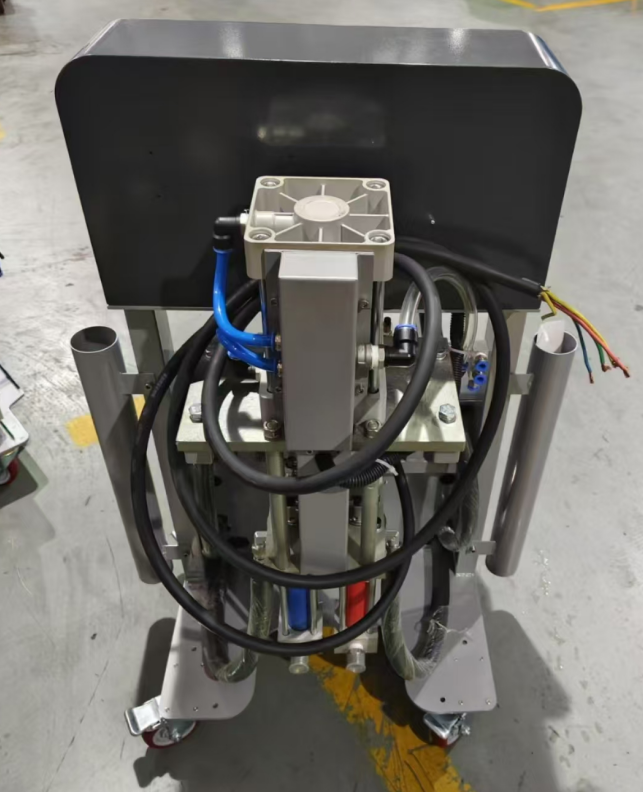
Application requires specialized expertise and a professional polyurea spray machine due to rapid curing windows (gel-free in seconds).
It drastically minimizes facility downtime, allowing for light foot traffic in hours and full operational capacity within 24 hours.
Pure (Type 1) and Hybrid (Type 2) polyurea systems serve different industrial needs, requiring precise specification based on UV exposure and chemical risks.
Polyurea commands a higher initial price point compared to traditional commercial epoxy. Facility owners typically pay between $7 and $12 per square foot for a professional installation. Standard epoxy usually costs significantly less upfront. However, analyzing purely the initial application price obscures the true value of the investment. Polyurea boasts an extended lifecycle of 15 to 40 years under heavy industrial use. Epoxy floors often fail, chip, or require complete resurfacing every two to five years. By choosing a high-performance elastomer, you avoid the recurring capital drain of constant floor replacements.
Facility shutdowns represent massive hidden costs. Every hour your production line sits idle, you lose revenue. Polyurea leverages rapid step-growth polymerization. This chemical reaction allows the material to cure incredibly fast. Facilities can usually resume light operations within mere hours. Full operational capacity, including heavy forklift traffic, typically resumes within 24 hours. Commercial epoxy demands three to five days of strict curing downtime. In high-output manufacturing plants, reclaiming four days of production easily offsets the premium material cost of the coating.
Industrial environments destroy weak surfaces. Constant friction, dropped tools, and heavy loads lead to delamination. Hot tire pickup occurs when vehicle tires heat up, expand, and tear standard coatings right off the concrete. Polyurea resists these specific failures exceptionally well. You will spend far less time and money patching cracked concrete or re-coating peeled sections. Its seamless nature also prevents harsh cleaning chemicals and industrial fluids from seeping into the porous substrate below.
Concrete acts like a living sponge. It expands during hot summers and contracts during freezing winters. Rigid floor coatings cannot handle this movement and eventually crack. Polyurea features an elastomeric nature. It routinely achieves elongation rates exceeding 300%. This extreme flexibility allows the coating to move in harmony alongside the concrete slab. Furthermore, it maintains its structural stability across extreme temperature variations. The material easily handles environments ranging from -40°F to 250°F. This wide operational window makes it highly viable for blast freezers, cold storage units, and high-heat manufacturing zones.
Flexibility usually compromises raw strength, but polyurea delivers both. Industrial-grade formulations feature Shore Hardness ratings ranging from 40A to 80D. A Shore 80D rating signifies a remarkably hard surface capable of withstanding severe point-load pressure. Simultaneously, it maintains a tensile strength exceeding 3000 psi. This unique combination translates directly into superior impact absorption. When workers drop heavy steel tools or when raw materials slam into the floor, the coating disperses the kinetic energy. The surface rarely chips or shatters.
Industrial spills happen daily. Polyurea forms a completely non-porous barrier over your floors. It aggressively resists penetration from harsh fuels, road salts, caustic acids, and aggressive cleaning solvents. Furthermore, moisture poses a massive threat to standard coatings during application and throughout their lifespan. Polyurea exhibits unique moisture insensitivity. It maintains structural integrity and exceptional adhesion even in high-humidity environments. This trait prevents trapped moisture from blistering the floor from the inside out.
Selecting the right industrial floor requires evaluating specific operational needs against material capabilities. Let us compare polyurea directly against standard industry alternatives.
Epoxy remains the most common industrial floor coating, but it serves a fundamentally different purpose.
Where Epoxy Wins: It offers a much lower initial cost. The extremely slow cure time allows deeper penetration into concrete pores. It also forgives minor application errors, making it easier for standard contractors to install.
Where Polyurea Wins: It dominates in turnaround time. Aliphatic formulations provide absolute UV stability, preventing the ugly yellowing common in epoxy. It also delivers extreme flexibility and a drastically longer lifespan.
Contractors frequently use polyurethane as a thin protective topcoat over epoxy bases. It resists UV rays and scratches well, but it lacks the necessary thickness to serve as a standalone heavy-duty base layer. MMA (Methyl Methacrylate) cures almost as fast as polyurea and handles freezing temperatures well. However, MMA emits highly toxic, noxious odors during installation. It also costs significantly more and requires extreme ventilation protocols.
Industry professionals often use the terms interchangeably, but polyaspartic is actually a specific aliphatic derivative of polyurea. Chemists designed it to extend the workable pot life. Pure polyurea cures in seconds, while polyaspartic takes longer, allowing contractors to roll it onto floors manually. Polyaspartic completely resists UV yellowing, making it an exceptional premium topcoat for automotive showrooms and sunlit facilities.
Coating Type | Cure Time | UV Resistance | Flexibility | Best Application |
|---|---|---|---|---|
Polyurea (Pure) | Seconds to Minutes | Low (Aromatic) | Extreme (>300%) | Heavy manufacturing, cold storage |
Epoxy | 3 to 5 Days | Poor (Yellows) | Low (Rigid) | Low-traffic warehouses, budget projects |
Polyurethane | 12 to 24 Hours | High | Moderate | Topcoats over existing epoxy |
MMA | 1 to 2 Hours | Moderate | Moderate | Fast winter installs (highly odorous) |
Polyaspartic | 2 to 4 Hours | Excellent | High | Showrooms, retail, outdoor spaces |
You cannot buy authentic industrial polyurea in a bucket at a local hardware store. This material is strictly incompatible with DIY methods or low-tier contractor application. The chemical process requires a highly advanced, dual-component setup. Applicators must use a specialized, high-pressure Polyurea Spray Machine to execute the job. These powerful dispensing units heat the resin and isocyanate components to exactly 160°F. They then force the materials together under extreme pressure (often exceeding 2000 psi) to ensure an exact 1:1 volumetric mix at the spray tip.
The application environment offers absolutely zero margin for error. Pure polyurea features a gel-free time of just 7 to 9 seconds. The material becomes tack-free in 10 to 12 seconds. Applicators must execute their spray patterns flawlessly. If the machine pressure drops or the temperature fluctuates, the chemical reaction fails instantly. You rely entirely on the training, steady hand, and technical expertise of the contractor holding the spray gun.
Poor mechanical bonding causes nearly all polyurea failures. Because the material cures in seconds, it lacks the time to soak deeply into the concrete. Therefore, contractors must aggressively profile the surface before spraying. They must use heavy diamond grinders or shot-blasting equipment to rough up the concrete. This creates microscopic peaks and valleys. The liquid polyurea locks into this jagged texture just before it hardens. Skipping this aggressive preparation guarantees catastrophic peeling.
Manufacturing & Warehousing: These facilities demand relentless durability. Forklifts spin their heavy rubber tires constantly, generating intense friction. Dropped steel parts shatter weaker floors. Polyurea easily absorbs these impacts. It also creates a seamless, non-porous surface. Janitorial crews can clean vast warehouse floors rapidly without worrying about dirty grout lines or peeling joints.
Food Processing & Cold Storage: Hygiene and temperature resilience dictate material choices here. Specific pure polyurea formulations carry USDA and NSF 61 compliance, meaning they safely handle incidental food contact and potable water. Furthermore, blast freezers subject floors to brutal freeze-thaw cycles. The elastomeric stretch of the coating prevents cracking in sub-zero environments. Its moisture insensitivity during application means contractors can install it even in damp processing rooms.
Automotive & Showrooms: Dealerships face constant threats from spilled brake fluid, motor oil, and hot-tire peeling. Polyurea resists automotive chemicals effortlessly. When dealership owners utilize aliphatic or polyaspartic UV-stable blends, they also secure incredible high-gloss retention. The floor will not fade or yellow despite constant exposure to large glass showroom windows.
Facility managers must weigh several competing factors before authorizing a massive flooring overhaul. Use this strategic framework to guide your decision-making process.
Assess Facility Constraints: Calculate the exact cost of halting your operations. Does shutting down your assembly line for a full week cost more than the premium price of a one-day polyurea installation? If downtime costs you thousands of dollars per hour, the fast cure time instantly justifies the higher material expense.
Identify Environmental Stressors: Evaluate the daily abuse your floor takes. Will it face direct, intense sunlight? You need an aliphatic topcoat. Does it endure extreme thermal cycling from industrial ovens? You need a pure aromatic polyurea. Do harsh chemical spills happen daily? A high-density hybrid system might serve you best.
Vet the Applicators: The best material in the world fails if installed poorly. You must interrogate potential contractors. Ask them to verify their specific Polyurea Spray Machine maintenance logs. Well-maintained equipment ensures proper chemical mixing. Furthermore, demand they perform a moisture vapor transmission test on your concrete slab prior to any application.
Polyurea stands out as unequivocally suitable for high-demand industrial environments. It consistently outperforms traditional epoxy when evaluated on durability, turnaround time, and impact resistance. If your facility budget permits the initial investment, you secure a floor capable of surviving the most brutal operational conditions for decades.
Take action by thoroughly analyzing your facility downtime costs. Prioritize finding elite contractors rather than hunting for the lowest bid. The success of this advanced material relies entirely on meticulous surface preparation and highly calibrated dispensing equipment. Invest in the right expertise upfront, and you will effectively eliminate floor maintenance headaches for the foreseeable future.
A: No. It performs exceptionally well in freezing environments. The material features an elastomeric structure with an elongation rate exceeding 300%. This high flexibility allows it to easily expand and contract alongside the concrete slab during brutal freeze-thaw cycles, completely preventing the brittle cracking common in epoxy floors.
A: The rapid chemical reaction requires extreme precision. The isocyanate and resin components must mix precisely at a 1:1 ratio. The equipment must heat the chemicals to 160°F and dispense them at pressures exceeding 2000 psi. Hand-mixing cannot achieve this environment, resulting in instant material failure.
A: Standard aromatic pure polyurea will yellow when exposed to direct sunlight. However, contractors prevent this by applying aliphatic polyurea or polyaspartic topcoats. These specific chemical formulations are entirely UV stable and will retain their clear, glossy finish indefinitely, even in heavily sunlit showrooms.
A: No. It requires a direct mechanical bond with the underlying concrete. Applicators must aggressively grind or shot-blast the failing epoxy entirely off the surface. This exposes the raw, porous concrete, allowing the new coating to anchor itself securely before it cures.


