
Views: 0 Author: Site Editor Publish Time: 2026-09-17 Origin: Site


Struggling with tight spaces on remote jobsites? Massive spray rigs often fail in confined areas where on-site maneuverability is just as critical as raw fluid power. When you arrive at a residential property, spending two hours unspooling hundreds of feet of heavy hose from a street-parked box truck drains your labor budget before the trigger is even pulled. Instead, forward-thinking contractors are increasingly deploying agile, mobile equipment that rolls directly to the application zone.
Recent market analyses reveal a massive spike in urban retrofitting initiatives. Property owners are rapidly upgrading older residential and commercial buildings to meet incredibly strict modern energy efficiency standards. This global industry shift toward green building practices makes massive, street-bound rigs a logistical nightmare in dense city centers. To capitalize on this lucrative retrofitting trend, contractors require systems designed specifically for portability without sacrificing fluid output. This guide unpacks the critical technical features professionals must evaluate when investing in mobile proportioning equipment. Mastering these specifications will help you boost field efficiency, ensure consistent chemical yield, and ultimately win more competitive bids.
Mobility Equals Profit: A wheeled setup drastically slashes staging time. It grants contractors immediate access to hard-to-reach zones like attics and crawlspaces without trailing massive, pressure-draining hose lines.
Drive Power Dictates Performance: Selecting between an electric and a pneumatic fluid drive system depends entirely on your available on-site air compressors and specific environmental conditions.
Thermal Control is Non-Negotiable: High-wattage primary heaters and insulated heated hoses are absolutely critical for maintaining chemical viscosity. This is especially true when operating in fluctuating outdoor temperatures.
Versatility Wins Bids: Modern proportioners frequently double as concrete lifting systems. This allows ambitious businesses to offer both building envelope insulation and geotechnical void-filling services.
Ease of Field Maintenance: Features such as self-cleaning fluid sections and easily accessible pump lowers minimize jobsite downtime and protect your operational bottom line.
Historically, the insulation sector relied heavily on custom-built, heavy-duty box truck rigs. While these massive setups deliver extreme output capacities, they present severe logistical hurdles in modern construction environments. The steep cost of entry remains a primary barrier for new contractors, requiring massive upfront capital. Consequently, tight urban environments impose strict parking restrictions. Parking a 20-foot truck near a downtown commercial high-rise is virtually impossible. Running 300 feet of hose from street level to upper floors causes severe pressure drops and catastrophic temperature loss. This directly compromises the exothermic chemical reaction and ruins the final foam yield.
Transitioning to smaller, mobile equipment directly impacts a contractor's bottom line. A streamlined setup allows for efficient single-man operation, drastically slashing daily labor costs. Without the need to haul a massive trailer, fleet fuel consumption plummets. More importantly, portability unlocks access to highly lucrative, smaller-scale jobs that large rig operators typically decline. Projects involving residential crawlspaces, attic retrofits, and small commercial touch-ups become highly profitable. When the equipment rolls directly to the application zone, setup and teardown times shrink from hours to mere minutes.
The beating heart of any polyurethane foam spray machine is its fluid drive pump. The complex chemical reaction between the A-side, known as Isocyanate, and the B-side, the Resin, demands a strict, uncompromising 1:1 volumetric ratio. Professional-grade portable units utilize precision-engineered positive displacement pumps. These pumps must sustain working pressures up to 13.8 MPa or 2000 psi to ensure proper atomization, regardless of backpressure or fluid viscosity. If the proportioner fails to maintain this exact balance, the resulting foam suffers from poor structural integrity, off-gassing, or severe shrinkage. Such chemical failures lead to costly jobsite tear-outs and permanently damage a contractor's reputation.
Polyurethane chemicals are notoriously sensitive to ambient temperature variations. Maintaining optimal chemical viscosity is crucial for achieving the correct spray pattern and maximizing your board-foot yield. To combat cold environments, mobile units must feature robust primary heaters. High-performance models typically utilize dual heaters pushing 3 kW to 4.5 kW per side, rapidly elevating the fluid temperature as it passes through the heating block. Simultaneously, heated hoses act as an insulated transit corridor. They maintain that exact temperature as the fluid travels to the spray gun. Without synchronized heating, contractors risk applying cold chemicals, resulting in sluggish expansion rates and wasted material.
As the final point of mixing and application, the spray gun dictates the quality of the finish. In mobile applications, contractors generally choose between air-purge and mechanical-purge guns. Air-purge models use a sharp blast of compressed air to clear the mixing chamber after every trigger pull. They remain highly popular for their reliability and rapid field serviceability. Mechanical-purge guns utilize a physical valving rod to push material out of the chamber. For portable operations, selecting a lightweight, ergonomic spray gun is essential. It staves off operator fatigue during prolonged spraying sessions in cramped quarters.
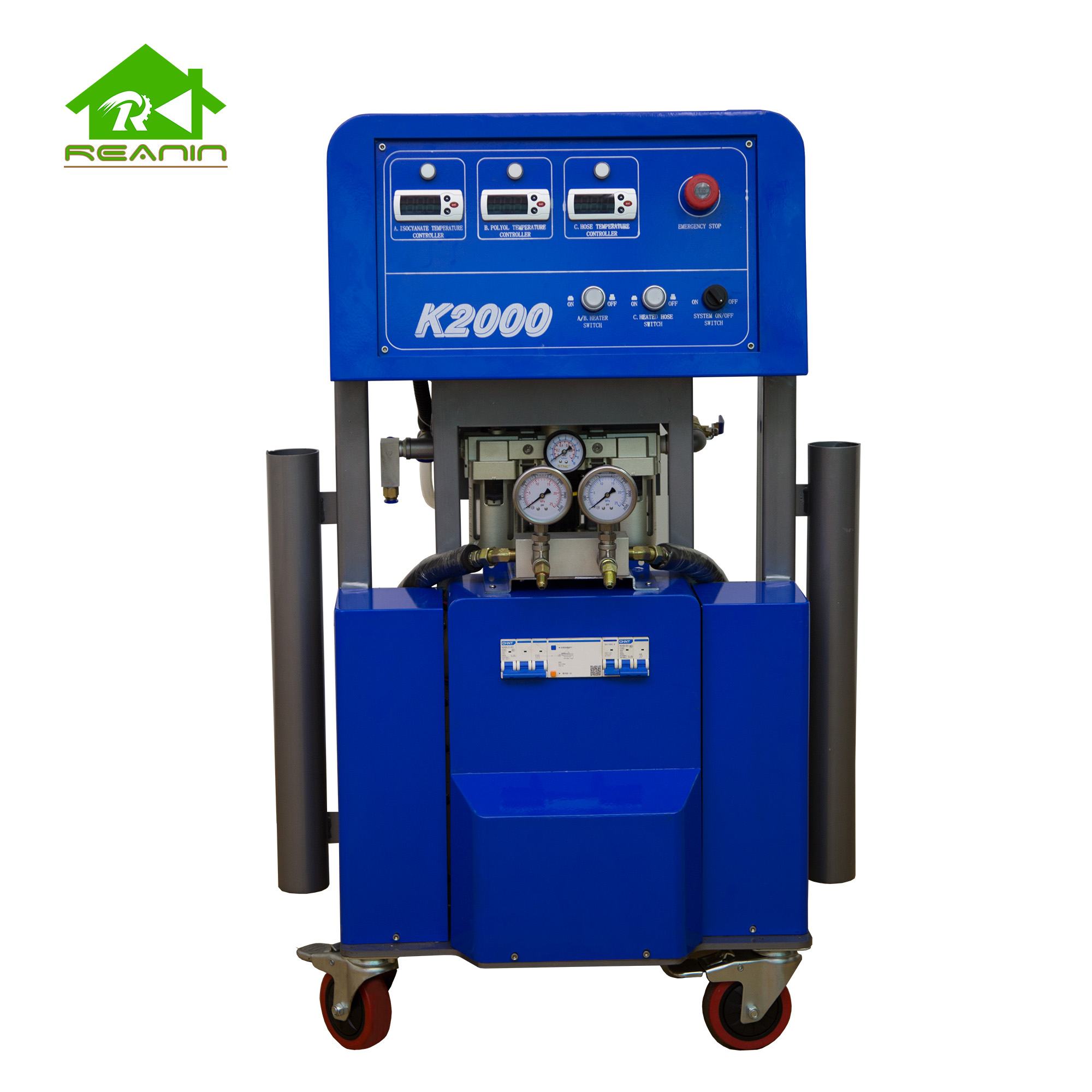
When evaluating portable equipment, the physical chassis design dictates how easily your crew maneuvers on-site. Wheeled cart designs are engineered with heavy-duty casters and ergonomic handles. This specific layout allows a single operator to tilt and roll a portable PU foam spray machine across uneven terrain, navigate through standard 36-inch doorways, and load it into commercial elevators. Skid-mounted units offer a highly stable base that can be bolted into a utility vehicle, yet they lack independent mobility. For true mobile jobsite agility, wheeled carts provide the highest degree of operational flexibility.
The physical dimensions of your machine dictate the type of transport vehicle required. This heavily influences your monthly overhead costs. Smart contractors look for a compact footprint that easily fits inside a standard cargo van, such as a Ford Transit, rather than requiring a dedicated box truck. A well-designed portable unit typically weighs under 150 kg and occupies less than half a square meter of floor space. This highly efficient use of space leaves ample room for chemical drums, mobile air compressors, and essential safety gear.
Time spent wrestling with stiff, heavy hoses is time wasted on the clock. Machines designed for field efficiency feature quick-connect heated hose manifolds. These easy-disconnect mechanisms empower operators to rapidly assemble and disassemble the fluid lines without specialized wrenches. This modular approach to hose management means your crew can easily swap out damaged sections. They can also attach flexible whip hoses for greater maneuverability in tight attic corners, significantly accelerating the daily workflow.
For contractors operating in rugged, dusty environments, a pneumatic polyurethane foaming machine is often the preferred workhorse. Pneumatic drive systems utilize compressed air to power the proportioning pumps, resulting in highly consistent fluid pressure. Because they rely on straightforward mechanics rather than complex circuit boards, they carry a lower risk of failure in damp conditions. A standard setup typically requires an air source delivering 0.5 to 0.8 MPa at a volume of roughly 1 cubic meter per minute. Field repairs are generally simpler, provided you maintain a reliable, high-capacity mobile air compressor on-site.
Electric-driven proportioners offer a distinct set of advantages, particularly suited for indoor or residential jobsites. These units typically boast a lower overall power draw compared to the combined requirements of a pneumatic pump and a massive air compressor. Electric machines operate much more quietly. This noise reduction is a massive benefit when working in occupied residential neighborhoods, schools, or commercial office buildings. They also provide incredibly smooth pump changeovers, minimizing pressure fluttering at the gun tip.
Selecting the optimal drive system requires matching the machine's specifications to your existing fleet infrastructure. Review the comparative overview below to assist in your procurement decision:
Feature | Pneumatic Drive System | Electric Drive System |
|---|---|---|
Power Source | Requires large air compressor delivering ~1m³/min | Requires electrical generator or direct shore power |
Maintenance | Simple mechanics, rapid field repairs | More complex, requires electrical troubleshooting skills |
Noise Level | High due to constant air compressor operation | Low, ideal for quiet residential areas |
Durability | Extremely high in harsh, dusty environments | Moderate, sensitive to extreme moisture and voltage drops |
Best For | Heavy-duty commercial, remote outdoor sites | Indoor residential, noise-sensitive urban areas |
Closed-cell polyurethane foam is significantly denser than its open-cell counterpart. It acts as a robust air barrier and rigid vapor retarder. The chemistry involved in producing this dense foam requires higher, more stable temperatures and consistent fluid pressures. The blowing agents rely on precise exothermic reactions. If the chemicals are applied too cold, the material fails to achieve its specified R-value and density. This ultimately leads to structural and insulative failures that will not pass building code inspections.
Given these strict chemical requirements, operators must carefully scrutinize heating specifications. When investing in a closed cell foam spray machine, high-wattage primary heaters are absolutely essential. Look for machines boasting excellent Delta-T ratings. This metric measures a heater's ability to raise the chemical temperature from its ambient state in the drum to the target 60°C to 80°C spray temperature in a single pass. Independent heat control for both the A-side and B-side is also critical, as the two chemicals frequently require slightly different processing temperatures to flow optimally.
While portable machines are not designed to push thick chemicals through 400 feet of hose like a massive box truck rig, they still demand adequate reach. For mobile operations, heated hoses typically range from 60 to 90 meters. It is vital to ensure the machine's electrical architecture can support the voltage drop across these lengths without losing heating efficacy. A premium portable unit maintains a consistent fluid temperature all the way to the mixing block, ensuring uniform expansion even at maximum reach.
The modern mobile proportioner is not restricted merely to wall and roof insulation. Progressive contractors leverage these machines for lucrative geotechnical applications, including slab jacking, concrete leveling, and foundation stabilization. By injecting high-density polyurethane beneath sunken concrete slabs, the rapidly expanding foam gently lifts the concrete back to its original grade. This innovative process is faster, cleaner, and far less invasive than traditional mudjacking.
To successfully transition a standard spray rig into a construction polyurethane injection machine, specific mechanical thresholds must be met. Geotechnical work demands higher sustained pressures to force viscous fluid into compacted soil or tight voids beneath heavy concrete slabs. The pump must be robust enough to handle the unique viscosity of lifting foams. It needs to sustain static pressure without stalling. Furthermore, the equipment must interface seamlessly with specialized injection guns and mechanical packers drilled directly into the concrete.
Investing in versatile equipment provides a massive commercial advantage. Purchasing a single, multi-use machine allows your business to serve two entirely distinct markets: building envelope insulation and concrete repair. This strategic diversification insulates your business against seasonal downturns in the housing market. When residential insulation jobs dry up in the off-season, your crew seamlessly pivots to leveling driveways or stabilizing municipal sidewalks. This keeps revenue flowing year-round.
Operating equipment in mobile jobsite conditions introduces a unique set of challenges that stationary factory setups rarely encounter. Your gear endures transit across rocky terrain, exposure to freezing or sweltering ambient temperatures, and environments choked with drywall dust. Therefore, the structural integrity and maintenance accessibility of your equipment directly dictate your long-term return on investment.
The physical chassis of mobile units must withstand relentless vibration from transit and the inevitable physical impacts of active construction sites. Professionals prioritize frames constructed from powder-coated carbon steel. Powder coating provides a superior, chip-resistant barrier against chemical spills and rust compared to standard paint. This is a vital feature given the highly corrosive cleaning solvents used in this trade. Industrial-grade mobility components, such as non-marking polyurethane casters with secure locks, prevent the unit from rolling away on sloped driveways.
The fluid sections of any proportioner are highly susceptible to wear. The A-side chemical is notoriously reactive to ambient moisture. If exposed to humid air, it crystallizes instantly. It creates abrasive, glass-like particles that shred pump seals and score the pump shaft. High-quality mobile machines combat this with easy-access fluid sections featuring integrated lubrication cups. These cups hold Throat Seal Liquid, which surrounds the pump shaft and prevents crystallization. When a seal does wear out, operators can rebuild the lower pump section directly on the tailgate of their van using standard hand tools, bypassing days of repair shop downtime.
Gone are the days of manually interpreting analog gauges and breaking out a multimeter to diagnose a heating failure. Advanced portable units utilize Programmable Logic Controllers to monitor system health in real-time. These digital brains continuously track the pressure differential between the A and B sides. If a blockage occurs and the pressure differential exceeds a safe threshold, typically around 1.3 to 3.4 MPa, the system triggers an automatic shutdown. This fail-safe prevents the dispensing of off-ratio foam. Digital screens display specific error codes like "E-04: Hose Heat Sensor Failure", allowing your crew to pinpoint and resolve issues in seconds.
Maintenance Task | Frequency | Purpose / Benefit |
|---|---|---|
Check & Refill Throat Seal Liquid | Daily before startup | Prevents Isocyanate crystallization on the A-side pump shaft. |
Inspect Y-Strainers | Weekly | Removes debris and prevents blockages in the fluid section. |
Lubricate Spray Gun | Daily after shutdown | Ensures smooth mechanical operation and prevents chemical crossover. |
Check Hose Connections | Weekly | Prevents chemical leaks and ensures electrical continuity for heaters. |
Inspect Pump Seals | Monthly | Identifies early signs of wear to prevent sudden jobsite failures. |
Selecting the optimal equipment for your fleet requires a realistic analysis of your current business model, projected growth, and the specific demands of your daily jobsites. Buying an overpowered machine results in a unit too bulky for residential work, while an underpowered rig throttles your daily yield on commercial contracts.
The primary metric for matching a machine to your business is its fluid output capacity, typically measured in kilograms per minute. For contractors who primarily handle rim joists, small crawlspaces, or concrete lifting, a compact machine delivering 8 to 10 kg per minute is highly efficient. These units draw less power and maneuver effortlessly in tight spaces. Conversely, if your business targets whole-home insulation or continuous foundation stabilization, you require a robust machine capable of pushing 12 to 15 kg per minute to maximize your daily square footage.
Purchasing proportioning equipment represents a major capital expenditure. Beyond the technical specs, the true value of the machine ties directly to the manufacturer's support infrastructure. A high-tech unit is useless if it sits idle waiting for parts. Scrutinize the warranty carefully. Understand the difference between coverage for structural components versus consumable wear parts such as O-rings and mixing chambers. Partner with manufacturers that maintain robust inventories and offer accessible technical support. Comprehensive training ensures your operators master daily maintenance routines, drastically extending the lifespan of your investment.
Mobile jobsite work demands equipment that perfectly balances raw fluid power with true portability. As the global construction industry leans heavily toward urban retrofitting and agile building practices, upgrading your proportioning system ensures superior operational efficiency and consistent material yield. By rigorously evaluating drive systems, thermal capacities, and maintenance accessibility, you can select the exact tool tailored to your daily project demands. A professional-grade, reliable machine reduces field headaches, helps you secure more bids, and maximizes your profit margins. Ready to upgrade your fleet? Visit chinareanin.com to explore our full lineup of high-performance proportioners and secure a custom equipment quote today.
Yes, a portable machine easily processes both open-cell and closed-cell materials, provided it meets specific technical thresholds. Closed-cell foam generally requires higher processing temperatures, often between 43°C and 54°C, and higher sustained pressures to achieve proper expansion and density. Therefore, the machine must be equipped with high-wattage primary heaters and a proportioning pump capable of maintaining consistent pressure without cavitation. Contractors must ensure they thoroughly flush the system or follow strict changeover protocols when switching between open-cell and closed-cell materials to prevent chemical cross-contamination.
The power requirements depend entirely on the specific model's motor and heating elements. Generally, a mid-sized pneumatic machine requires a generator capable of producing a minimum of 10,000 to 15,000 running watts to handle the primary heaters and heated hoses simultaneously. For the air compressor, pneumatic proportioners typically require a continuous air supply of 0.5 to 0.8 MPa at a volume of roughly 1 cubic meter per minute to drive the pump and operate an air-purge spray gun. It is critical to consult the exact specifications, as undersizing the generator leads to severe voltage drops that destroy sensitive electronic components.
While portable machines are engineered primarily for touch-ups, mid-sized residential projects, and hard-to-reach areas, they are not typically the primary workhorse for massive commercial jobs, such as insulating a massive commercial warehouse ceiling. Large commercial projects usually require high-output, truck-mounted hydraulic rigs capable of dispensing massive volumes and pushing chemicals through extended hose lengths. However, portable units serve as excellent supplementary machines on large sites. They allow crews to tackle isolated areas, high-rise floors, or tight mechanical rooms where dragging heavy hose from a box truck is logistically impossible.
Proper maintenance is critical to prevent the two-part chemicals from curing inside the machine. The external components and the spray or injection gun must be cleaned daily. The gun should be purged and greased immediately after use to prevent crossover, which happens when A and B chemicals accidentally mix inside the gun block. The proportioning unit itself does not need to be completely flushed daily if it is used regularly. However, the operator must ensure the pump is parked correctly with Throat Seal Liquid to prevent crystallization. A full system chemical flush is typically only required if the machine is going into long-term storage or if you are switching to a fundamentally different material formula.
Most mobile units efficiently support 60 to 90 meters of heated hose. Pushing beyond this limit on a compact machine often results in severe pressure drops at the gun tip and inadequate fluid heating, as the smaller electrical architecture struggles to maintain the voltage required for longer hose runs. If your jobsite consistently requires hose lengths exceeding 90 meters, you will likely need to upgrade to a higher-output hydraulic or heavy-duty pneumatic system designed for extended reach.
High humidity introduces moisture to the substrate and the surrounding air, which severely disrupts the chemical reaction of polyurethane foam. The A-side chemical reacts aggressively with moisture, leading to poor adhesion, blistering, or a spongy foam texture that fails to meet density specifications. Additionally, high humidity accelerates the crystallization of chemical residue on the machine's pump shafts. Operators must monitor ambient conditions closely, utilize proper storage techniques for chemical drums, and ensure their equipment's fluid sections are well-lubricated to mitigate moisture damage.


