
Views: 0 Author: Site Editor Publish Time: 2026-05-29 Origin: Site


Automotive manufacturing faces intense pressure today. Strict lightweighting mandates and rigorous NVH (Noise, Vibration, and Harshness) standards shrink margins on interior components. Engineers must innovate rapidly to stay ahead. Relying on outdated manual mixing or legacy low-pressure systems is highly risky. These older methods produce inconsistent cell structures and cause massive material waste. They also frequently fail to meet modern ergonomic standards. Poorly mixed foam ultimately leads to rejected parts and bottlenecked assembly lines. Transitioning to purpose-built PU foam equipment solves these exact issues. Plant managers gain precise control over volatile chemical reactions. You can easily scale output and integrate new hardware seamlessly into automated assembly lines. Modern dispensing systems eliminate guesswork from the factory floor. In this comprehensive guide, we explore how upgrading your foam production drives economic efficiency. We will detail specific applications, evaluate machinery types, and outline essential layout requirements to keep your plant highly competitive.
Modern automotive suppliers must look beyond raw material pricing. The real financial advantage lies in maximizing process yield. Upgrading your production hardware directly influences how much usable product you extract from every barrel of chemicals.
Understanding foam curing is essential for optimizing yield. When liquid polyols and isocyanates react, they generate heat. This exothermic reaction causes moisture and expanding gases to escape the mixture. As these elements leave, the foam naturally shrinks. Batch processing usually exacerbates this issue. Small pours expose a massive amount of surface area relative to the internal volume. Continuous and bulk PU machines change this dynamic completely. They minimize the surface-area-to-volume ratio during the curing phase. A larger, continuous block retains heat better and shrinks far less. You directly reduce material loss by upgrading to high-capacity, continuous production methods.
Pinholes are the enemy of automotive interior manufacturing. Inconsistent liquid distribution creates tiny air pockets within the foam structure. Manual mixing and low-tier machines cannot blend viscous chemicals thoroughly. When this porous foam reaches the assembly line, it causes severe downstream issues. Adhesives seep into pinholes during secondary lamination. This ruins expensive door panels, headliners, and synthetic leather fabrics. Automated homogenization is absolutely required for parts undergoing lamination. High-pressure mixing ensures a smooth, flawless surface. You drastically cut scrap rates when you eliminate the pinhole problem at the source.
The automotive industry is aggressively shifting toward sustainability. Regulatory bodies now demand higher recyclability across all vehicle components. Modern PU machines easily accommodate sustainable and bio-based formulations. They process modern chemistries without clogging or pressure drops. Furthermore, high-quality production facilitates better end-of-life recycling. You can divert clean scrap foam into secondary products. For example, recycled seating foam frequently becomes high-grade carpet cushioning. Investing in precise machinery helps your plant meet stringent ESG compliance targets effortlessly.
Polyurethane foam is not a universal, one-size-fits-all material. Different interior zones demand radically different physical properties. Specialized machinery allows you to manipulate density, hardness, and cell structure with absolute precision.
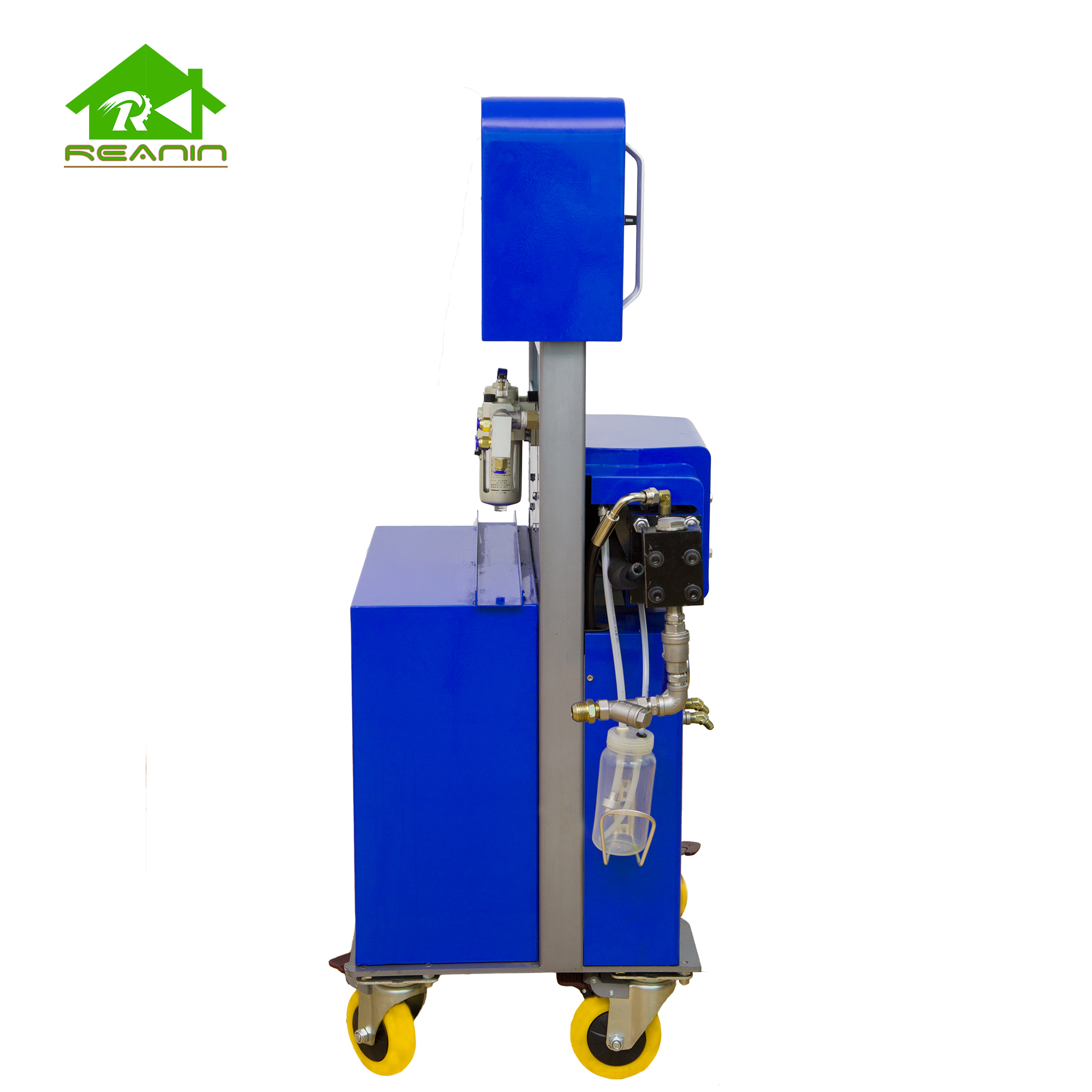
Selecting the correct dispensing method dictates your production capabilities. Equipment falls into three distinct categories based on application style, pressure requirements, and factory integration.
High-pressure injection systems are the industry standard for closed-mold applications. You will use these machines for car seats, headrests, and center consoles. The chemicals mix rapidly inside the chamber at extreme pressures. This method offers a massive environmental advantage. The transition from low-pressure to high-pressure eliminates the need for harsh solvent flushing. High-pressure mix heads clean themselves mechanically. This reduces your environmental impact and handles complex, multi-component recipes with ease.
Open-surface applications require a completely different approach. A Polyurethane Foam Spray Machine focuses entirely on broad, rapid coverage. This equipment is incredibly useful for applying acoustic dampening layers. You can coat vehicle floorpans and undercarriages rapidly on the assembly line. It is also the preferred method for insulating large commercial vehicle cabins. Spray systems atomizer the chemicals, creating a uniform, expanding layer that bonds tightly to raw metal surfaces.
Sometimes, fully electronic drives are not the best fit for your specific environment. A Pneumatic Two-Component Polyurethane Foaming Machine serves as a highly reliable alternative. These systems are perfect for mid-volume production or decentralized plant stations. Pneumatic systems offer inherent safety advantages in highly volatile chemical environments where sparks pose a risk. They also drastically simplify routine maintenance compared to complex electronic servo-drives. Your maintenance team can rebuild pneumatic pumps quickly and keep the line moving.
Procuring new machinery requires strict alignment with your production goals. You must evaluate output capacity, mix head design, and thermal management capabilities to ensure operational success.
You must map machine output strictly to your mold volume and target cycle times. Under-sizing a machine causes premature gelation before the mold fills. Over-sizing wastes material and strains the pumps. Buyers should utilize a specific capacity matrix to match equipment to the component.
| Automotive Application | Mold / Target Type | Required Output (g/s) |
|---|---|---|
| Small Trim & Headrests | Closed Mold (Small) | 300 - 800 g/s |
| Automotive Seating & Cushions | Closed Mold (Medium) | 800 - 2,500 g/s |
| Dashboards (Integral Skin) | Closed Mold (Complex) | 2,000 - 4,000 g/s |
| Large Acoustic Mats & NVH | Open Mold / Spray | 5,000 - 10,000 g/s |
The mix head is the absolute heart of your production line. You must evaluate different styles based on fluid dynamics. L-style mix heads feature two perpendicular mixing chambers. They provide excellent homogenization for complex formulations and reduce splash during injection. Straight-style mix heads feature precision engineering ideal for closed pouring into tight mold ports. Spray-style heads atomize the mixture over broad surfaces. Select the head that directly supports your primary product geometry.
The machine dictates the delicate balance between the expansion and gelling phases. Polyols, isocyanates, and chemical additives must react at the perfect moment. If the mixture gels too quickly, it will not fill the mold. If it expands too fast, it blows out the seals. Temperature control systems are a critical necessity. Quality machines utilize cooling jackets and heat exchangers to manage the violent exothermic heat. Regulating this temperature ensures uniform cell structure and actively prevents dangerous fire risks on the floor.
Installing heavy industrial equipment disrupts daily operations if planned poorly. You must prepare your physical footprint, address logistics, and secure ironclad vendor support before the machines arrive.
Do not ignore your post-cure logistics. Many plants upgrade their pour systems but fail to plan for material movement. Large continuous foam buns are incredibly heavy and surprisingly fragile when warm. You must specify the installation of PU foam block handling cranes. These specialized lifting devices move massive buns safely from the curing area to the cutting racks. Automated handling prevents manual deformation of the foam and eliminates severe lifting hazards for your workforce.
Evaluating a vendor is not just about comparing hardware specs. You are buying a long-term partnership. Look for manufacturers offering pre-purchase plant layout mapping. They should provide CAD drawings showing exactly how the tanks, pumps, and conveyors fit your floor. Demand on-site commissioning to ensure the first batch meets automotive standards. Finally, insist on extended warranties. A 5-year coverage plan on core components (like pumps and mix heads) derisks your capital expenditure significantly.
Investing in specialized PU foam equipment represents a direct investment in your plant's future. You guarantee part consistency, maximize raw material yield, and easily maintain strict automotive compliance. Upgrading from legacy systems eliminates the pinhole defects that ruin downstream lamination processes. It also allows you to tackle advanced applications, from acoustic floorpans to critical safety components.
Your engineering teams should begin this transition immediately. Start by auditing your current scrap rates and analyzing your lamination failure data. Next, define your target output metrics based on upcoming contract volumes. Match your specific part dimensions against the output capacity matrix to find your ideal g/s requirements.
Do not let outdated mixing methods bottleneck your automotive assembly line. Request a custom plant layout consultation from a trusted equipment manufacturer today. Submit your specific part dimensions and cycle time goals to receive expert, tailored output matching recommendations.
A: High-pressure machines eliminate the need for toxic solvent flushing, which drastically improves environmental compliance. They utilize mechanical self-cleaning mix heads. Additionally, high-pressure impingement creates much finer, more consistent cell structures compared to low-pressure mixing.
A: You should specify a spray machine for broad, open-surface applications. They are highly effective for NVH coating, underbody insulation, and applying open-mold acoustic layers. They are not suitable for closed-mold seating or precise trim components.
A: A fully continuous foam production line requires significant space. You should plan for a baseline of 55 to 100 meters in length. You also need 5 to 9 meters of height to safely accommodate material handling equipment and necessary exhaust ventilation.
A: Yes, they are highly versatile. Pneumatic machines allow operators to adjust chemical mixing ratios easily. Their pneumatic drives provide exceptional reliability when processing materials with varied viscosities, making them ideal for multi-density production.


