
Views: 0 Author: Site Editor Publish Time: 2026-09-16 Origin: Site


Are massive foam rigs draining your project budget? Small batches usually mean wasted chemicals, high overhead, and endless logistical headaches. Traditional industrial equipment is simply too massive and rigid for agile projects. However, the manufacturing landscape is evolving rapidly.
Recent industry trend analyses reveal a significant shift toward localized manufacturing and just-in-time production. Supply chain fluctuations and a growing demand for eco-friendly building retrofits have forced contractors to rethink their operational models. Instead of relying on centralized mega-factories, businesses are moving toward decentralized, on-demand fabrication. This surge in niche demand requires custom fabricators to adopt highly adaptable equipment. You can no longer afford the overhead of legacy continuous-run systems for micro-projects.
In this engineering guide, you will learn exactly how modern technology bridges this operational gap. A specialized polyurethane foam spray machine easily handles intermittent, low-volume production. The secret lies in selecting the right configuration. We will explore the bottom-of-funnel benefits, essential equipment parameters, cost-efficiency metrics, and the best maintenance practices for small-batch scenarios.
Right-Sizing is Crucial: Selecting compact equipment eliminates the chemical waste and high operational costs associated with massive industrial units.
Versatility Matters: A combined spray and injection system offers the flexibility needed for diverse micro-projects.
Material Efficiency: Modern proportioners provide precise ratio controls, strictly minimizing raw material waste even on brief 10-minute runs.
High ROI for Niche Jobs: Using dedicated equipment for specialized tasks yields a rapid return on investment due to superior speed and product quality.
In the context of polyurethane applications, a small batch refers to production runs requiring a highly limited volume of material. Picture a custom auto shop molding a bespoke seat cushion. Alternatively, imagine a residential contractor filling a tight basement gap. Unlike continuous manufacturing lines that run uninterrupted for entire shifts, small-batch production is defined by frequent starts and stops. This intermittent workflow demands equipment that adapts instantly without compromising the chemical integrity of the foam.
Traditional equipment creates severe material waste during low-volume runs. Older, bulky industrial machines require gallons of chemicals just to prime the extensive hoses and internal mixing chambers. When a brief 15-minute job concludes, operators must purge the lines. This prevents the A-side isocyanate and B-side polyol resin from reacting and curing inside the machine. Consequently, you end up disposing of expensive, unused raw materials. Over time, this daily purge waste completely erodes the profit margins of small projects.
Labor costs present another critical hurdle. Preparing a large-scale rig for a minor injection job involves lengthy heating processes, manual calibration, and exhaustive post-job cleaning. If it takes 45 minutes to prep and clean a machine for a 10-minute pour, the labor cost eclipses the actual value of the product. This historical inefficiency made micro-jobs economically unviable for many small business owners.
Equipment engineering has evolved to directly address these operational bottlenecks. Manufacturers now design systems specifically tailored for agile manufacturing. These updated units feature shorter hose lengths, rapid-heating elements, and advanced purge technologies. Operators can dispense precise amounts of foam, stop immediately, and walk away with minimal overhead.
Procurement managers and business owners must understand the immediate financial benefits of equipment upgrades. Investing in a right-sized polyurethane spray and injection machine transforms low-volume production from a frustrating chore into a highly profitable revenue stream.
Manual mixing of polyurethane chemicals is notoriously susceptible to human error. Even slight deviations in the chemical ratio or ambient temperature result in foam that shrinks, cracks, or fails to cure. Automated injection equipment guarantees exact one-to-one chemical ratios and maintains consistent fluid temperatures. This results in uniform cell density and structural integrity every single time. Such precision is an absolute necessity for custom molding and rapid prototyping.
Turnaround time is a massive competitive advantage in the custom fabrication sector. Dedicated equipment allows businesses to execute rapid prototyping and fulfill bespoke orders instantly. Because the machine maintains raw materials at optimal processing temperatures, an operator can initiate production immediately. Coupled with the fast curing times of polyurethane foam, your speed to market increases exponentially.
Transitioning from manual pouring and tedious solvent cleaning to a semi-automated system saves countless labor hours. Modern machines handle complex metering, mixing, and dispensing automatically. By reducing the manual labor required per batch, you can reallocate your workforce to more value-added tasks. This significantly lowers your overall operational footprint.
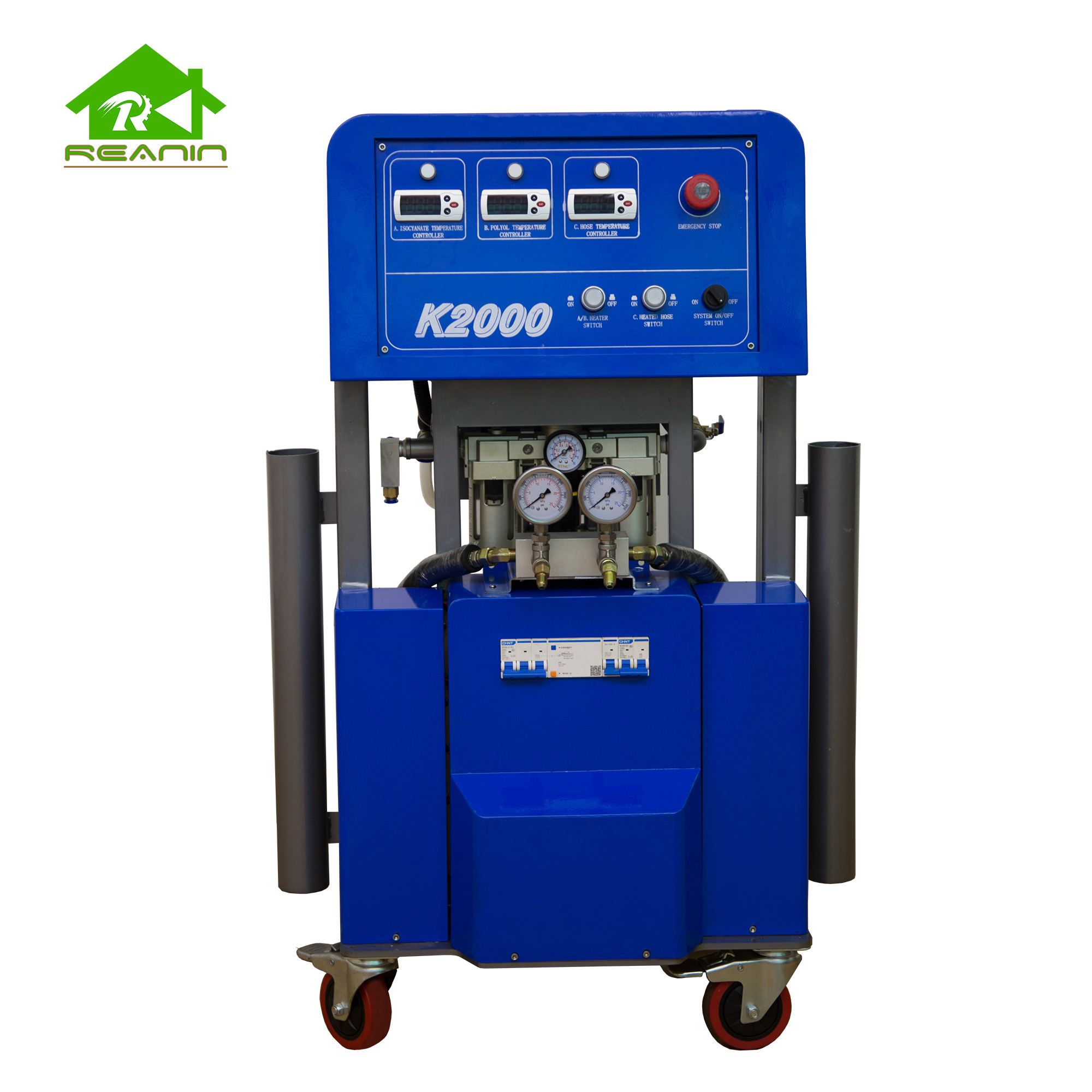
Not all machines are built to handle intermittent use. Selecting the appropriate equipment requires a careful evaluation of specific technical specifications. Buyers should prioritize features that enhance fluid control, reduce chemical waste, and simplify daily maintenance.
Blasting high-pressure foam into delicate, small-cavity molds causes structural blowouts and messy material overflow. A suitable machine must feature highly adjustable pressure and flow rate settings. The ability to dial down the fluid output gives the operator granular control over the dispensing rate. This ensures precise application in confined or fragile environments.
Polyurethane chemicals must reach specific temperatures to achieve the correct viscosity for mixing. Massive industrial tanks take hours to heat up. In contrast, machines optimized for small batches feature robust primary heaters, typically ranging from 6kW to 9kW. These systems, combined with quick-heating hoses, reach optimal spraying temperatures around 150 degrees Fahrenheit in under 20 minutes. This eliminates idle time and cuts down on energy consumption.
The applicator gun is arguably the most critical component in small-batch production. Traditional solvent-flush guns are tedious to tear down and generate hazardous waste. Modern equipment utilizes self-cleaning air-purge or mechanical-purge injection guns. These sophisticated designs automatically clear the mixing chamber of residual chemicals the exact second the trigger is released. This completely eliminates chemical lock-up between small pours.
Operational Metric | Traditional Industrial Rig | Agile Small-Batch Machine |
|---|---|---|
Startup Time | 45 to 60 minutes | 15 to 20 minutes |
Chemical Waste per Job | High line flushing required | Minimal self-cleaning guns |
Power Requirements | 3-Phase or Diesel Generator | Single-Phase 220V Plug-and-Play |
Mobility | Fixed to a box truck | Caster-mounted portable skid |
Mobility is a fundamental game-changer for modern contractors. A portable PU foam injection machine provides the ultimate flexibility required to execute diverse projects without the geographical constraints of a fixed factory line.
Many small-batch applications occur in highly restricted environments. Consider residential basements, crowded custom workshops, or the interior of a marine vessel. Dragging hundreds of feet of heavy, heated hose from a rig parked on the street is exhausting. Portable units, designed as compact skids mounted on heavy-duty casters, roll directly through standard doorways. You bring the power right to the application site.
Power requirements often dictate whether a job is feasible. Massive foam rigs typically require three-phase power or noisy diesel generators. Furthermore, many portable units are engineered with plug-and-play capabilities. They run efficiently on standard single-phase electrical outputs. This dramatically simplifies site logistics and reduces operational friction for small teams.
The success of any small-batch project depends entirely on matching the right equipment with the appropriate chemical system. Polyurethane foam is broadly categorized into closed-cell and open-cell structures. Each requires distinct processing parameters.
Closed-cell foam is dense, rigid, and highly resistant to water absorption. It provides superior structural integrity and a massive insulation value. For demanding micro-projects like manufacturing marine buoyancy modules or custom cooler insulation, a dedicated closed cell foam injection machine is mandatory. These units handle the higher pressures, often reaching 2000 PSI, required to properly mix and expand dense structural chemicals.
Open-cell foam is significantly lighter, more flexible, and highly effective at sound dampening. It expands at a much higher rate than closed-cell foam. This makes it a cost-effective choice for filling large interior cavities or creating bespoke protective packaging. Because it is less dense, it generally requires lower processing pressures and remains highly economical for low-volume runs.
Beyond factory settings, small-batch polyurethane applications are highly lucrative in the construction and structural repair industries. These specialized tasks require equipment that withstands harsh on-site conditions while delivering surgical precision.
Sunken sidewalks, uneven driveways, and settling factory floors pose significant safety hazards. Traditional mudjacking is messy and time-consuming. Today, modern contractors use small batches of high-density polyurethane foam to lift and level concrete slabs. The foam is injected through tiny drill holes. It expands rapidly to compress underlying soil and lift the concrete back to grade. This process involves short, controlled bursts of foam, which is the very definition of small batch injection.
Foundation cracks require immediate, localized intervention. Injecting hydrophobic polyurethane resin directly into these fissures creates a flexible, watertight seal. Because these repairs are highly localized, they only require minimal amounts of material. This makes them the perfect use case for agile injection equipment.
Construction environments are unforgiving. Dust, abrasive debris, and wildly fluctuating ambient temperatures easily destroy sensitive factory equipment. A true construction polyurethane injection machine is built ruggedly to handle these variables. It features robust proportioning pumps and reinforced chassis designs to withstand the start-and-stop nature of localized repair jobs without losing pressure.
For decision-makers, purchasing equipment ultimately comes down to the Return on Investment. Analyzing the cost structure of low-volume foam production reveals exactly why owning the right machine is a highly profitable move.
Many contractors rely on disposable retail kits for small jobs. While the upfront cost of these kits seems low, the cost per board foot of foam is exorbitantly high. When a business consistently purchases these disposable kits, the cumulative expense quickly surpasses the purchase price of a dedicated machine. Investing in professional hardware allows you to buy raw chemicals in bulk drums. This drastically slashes the cost per cubic foot of processed foam.
Owning specialized equipment empowers businesses to diversify their revenue streams. A company that previously turned down small, specialized micro-jobs can now accept these highly lucrative contracts. The ability to execute small batches efficiently transforms a capital expense into a powerful tool for business expansion.
The primary hesitation buyers have regarding small-batch equipment is maintenance. When a machine sits idle between low-volume runs, chemicals can crystallize. However, implementing strict maintenance protocols ensures post-purchase success and prolongs the lifespan of the equipment.
If a machine will not be used for a few weeks, proper storage is mandatory. Isocyanate reacts aggressively with moisture in the air to form hard urea crystals. Operators must ensure the system is completely sealed. For periods of inactivity, running a specialized pump lubricant through the lines displaces reactive chemicals and keeps internal components safely lubricated.
Chemicals stored in the tanks must be kept in stable environments. Extreme cold drastically increases fluid viscosity, putting undue strain on the proportioning pumps during the next small run. Keeping the machine in a climate-controlled environment, even when idle, ensures the materials are always ready for processing. Always ensure the desiccant breathers on the chemical tanks are active to block humidity.
A modern polyurethane spray and injection system easily handles small batch production when you select equipment tailored for agility. Adjustable output, rapid heating, and easy maintenance are non-negotiable features. Whether you focus on custom manufacturing, localized structural repairs, or rapid prototyping, investing in a right-sized, portable machine is a highly profitable decision. Evaluate your specific production volume today. Visit China Reanin to explore a full range of advanced polyurethane equipment engineered specifically to help your team dominate niche markets.
Polyurethane chemicals have a shelf life ranging from six to twelve months depending on the manufacturer. They will not prematurely expire inside the machine if stored correctly. The primary risk is moisture contamination, not time. By using desiccant breathers to remove humidity from the air entering the drums and ensuring the system is completely sealed, chemicals can safely remain in the lines for several weeks between your small production runs without degrading.
Yes, absolutely. Modern portable units are engineered specifically to handle the rigorous demands of dense materials. They are equipped with robust primary heaters, heated hoses, and high-pressure proportioning pumps capable of reaching the necessary pressure, often up to 2000 PSI. This provides the exact temperatures required to properly mix and cure high-density closed-cell foam for structural reinforcement or concrete lifting.
With legacy equipment, startup and shutdown waste was a significant financial burden. Today, modern machines utilize air-purge or mechanical-purge spray and injection guns. These advanced gun designs clear the mixing chamber automatically the exact moment you release the trigger. As a result, the chemical waste generated during a small job is reduced to just a few fractions of an ounce.
Yes. Versatility is a hallmark of modern polyurethane equipment. By adjusting the fluid pressure settings on the main console and switching the tip of the applicator gun, you can transition seamlessly from spraying insulation onto a broad surface to injecting foam into a small, enclosed cavity. This dual capability makes these machines exceptionally valuable for handling diverse projects.
While contemporary machines feature user-friendly digital interfaces, basic training is strongly recommended. Operating polyurethane equipment involves handling heated, pressurized chemicals that require specific safety protocols, including the use of proper personal protective equipment. Understanding how to perform routine maintenance, manage temperatures, and troubleshoot minor pressure imbalances protects your investment and ensures consistent foam quality.
Modern agile machines do not have a strict minimum batch size limit that would cause mechanical damage. Because advanced proportioners utilize self-cleaning guns and precise metering pumps, you can trigger the gun for just a few seconds to dispense a tiny amount of foam for void filling. As long as the fluid temperatures are at the optimal setpoint and the pressures are balanced, micro-bursts are completely safe for the equipment.
Many high-end portable polyurethane machines are dual-purpose and can process polyurea coatings. However, polyurea generally requires higher processing temperatures, often up to 160 degrees Fahrenheit, and higher sustained pressures compared to standard open-cell foam. If you plan to spray polyurea in small batches, ensure the machine you select is explicitly rated for high-heat and high-pressure applications.


