
Views: 0 Author: Site Editor Publish Time: 2026-09-18 Origin: Site


Boasting a cure time of just three to five seconds, polyurea coatings have completely rewritten the rules of commercial waterproofing. This rapid hardening virtually eliminates project downtime. However, it also presents a formidable logistical challenge for field crews. If the reactive chemicals mix even a fraction of a millisecond too early, they will instantly solidify inside the equipment. The result is catastrophic internal damage and massive repair bills.
Contractors simply cannot rely on traditional application methods for these advanced elastomers. You need highly specialized fluid handling systems engineered to manage volatile chemical reactions with absolute precision. By utilizing a professional polyurea spray machine, operators can safely heat, pressurize, and isolate the materials until the exact moment they hit the substrate. In this technical guide, we will break down the precise mechanics of how these proportioners work, helping business owners select the optimal equipment for heavy-duty waterproofing operations.
Precision is Everything: A high-quality proportioning setup relies on exact 1:1 volume delivery. This ensures rapid-cure coatings react perfectly without clogging internal fluid pathways.
Heat and Pressure are Non-Negotiable: Maintaining fluid temperatures of 140°F to 160°F and dynamic pressures exceeding 2,000 PSI is strictly required to properly atomize thick components.
Impingement Mixing: The actual chemical collision of the two fast-setting materials only happens inside the microscopic tip of the spray gun. This prevents the elastomer from solidifying inside the heated hoses.
Hydraulic Power Wins: For continuous commercial waterproofing, hydraulic systems offer the relentless mechanical power needed to prevent pressure dives that ultimately ruin rapid-cure applications.
To grasp the sophisticated engineering behind these fluid handling systems, you must first understand the volatile nature of the materials. Polyurea is not a traditional architectural paint. It is an advanced elastomer created through an instantaneous exothermic reaction.
The system operates using two distinct components. Side A consists of an Isocyanate prepolymer. Side B is a specialized resin blend, typically composed of amine-terminated polyether resins. When stored in separate 55-gallon drums at ambient room temperature, these chemicals remain relatively stable and inert.
The exact moment these two specific compounds come into physical contact, they trigger a violent chemical reaction. This reaction forms a solid, highly durable waterproof membrane in mere seconds. Because the cross-linking is so rapid, the materials cannot be mixed in a bucket and rolled onto a concrete deck like standard epoxy. They must be pumped separately, heated independently, and forced together at the exact moment of application.
Contractors transitioning to elastomeric coatings often wonder whether their existing airless paint sprayers can be repurposed. The definitive answer is no. Standard equipment completely lacks the robust mechanical architecture required to handle fast-setting, dual-component polymers.
Below is a technical breakdown highlighting why dedicated proportioning rigs are mandatory for this line of work:
Feature | Standard Airless Paint Sprayer | Dedicated Proportioning Machine |
|---|---|---|
Component Handling | Single component pre-mixed | Dual-component with Side A and Side B separate |
Operating Pressure | 1,000 to 3,000 PSI fluctuating | 2,000 to 3,500 PSI highly consistent |
Material Heating | Ambient temperature only | Primary heaters and heated hoses maintaining 140°F to 160°F |
Mixing Location | In the hopper or bucket | Inside the tip of the spray gun via impingement |
Ratio Control | Not applicable | Strict 1:1 volume proportioning |
The primary commercial advantage of this waterproofing method is its unprecedented speed. Ironically, this exact speed is also your greatest operational hurdle in the field.
In the protective coating industry, operators measure speed using two critical metrics known as gel time and tack-free time. The gel time for standard pure polyurea typically hovers between three to five seconds. The liquid transitions into a solid gel almost instantly. Following this, the tack-free time is usually under sixty seconds, meaning the coated surface can actually sustain foot traffic almost immediately.
To accommodate this tight window, a dedicated polyurea waterproofing spray machine must flawlessly transport thick chemicals from the supply drums, through the proportioning pumps, down hundreds of feet of hose, and onto the substrate. Delay the fluid delivery by even a fraction of a second, and the material will cure deep inside the equipment. This invariably results in catastrophic failure, requiring thousands of dollars in replacement manifolds and hoses.
Among experienced applicators, crossover is the most feared mechanical failure in plural-component spraying. It occurs when a severe pressure imbalance causes one chemical to push backward into the fluid lines of the opposing chemical. Because of the microscopic gel time, a crossover event will instantly solidify the chemicals inside the spray gun and potentially travel down the heated hoses.
Modern equipment actively mitigates this risk by utilizing advanced check valves, digital pressure balance sensors, and automated shutdown protocols. If the system computer detects a pressure differential exceeding 200 to 500 PSI between the A and B lines, it will instantly halt the pumps to save the rig from internal destruction.
Looking at the broader construction sector, the global waterproofing market is experiencing a massive shift toward fast-set elastomers. This transition is largely driven by extreme weather resilience requirements and chronic labor shortages. As climate patterns become more unpredictable, facility managers are demanding seamless, highly flexible membranes capable of withstanding heavy ponding water and structural shifting without cracking.
Concurrently, the construction industry is grappling with a severe lack of skilled labor. Traditional multi-day applications are becoming economically unviable. Contractors are migrating to single-pass systems that allow a small, well-trained crew to waterproof a 10,000-square-foot commercial roof in a single day. Consequently, the demand for advanced proportioning equipment that can reliably support high-volume, rapid-cure applications is surging globally.
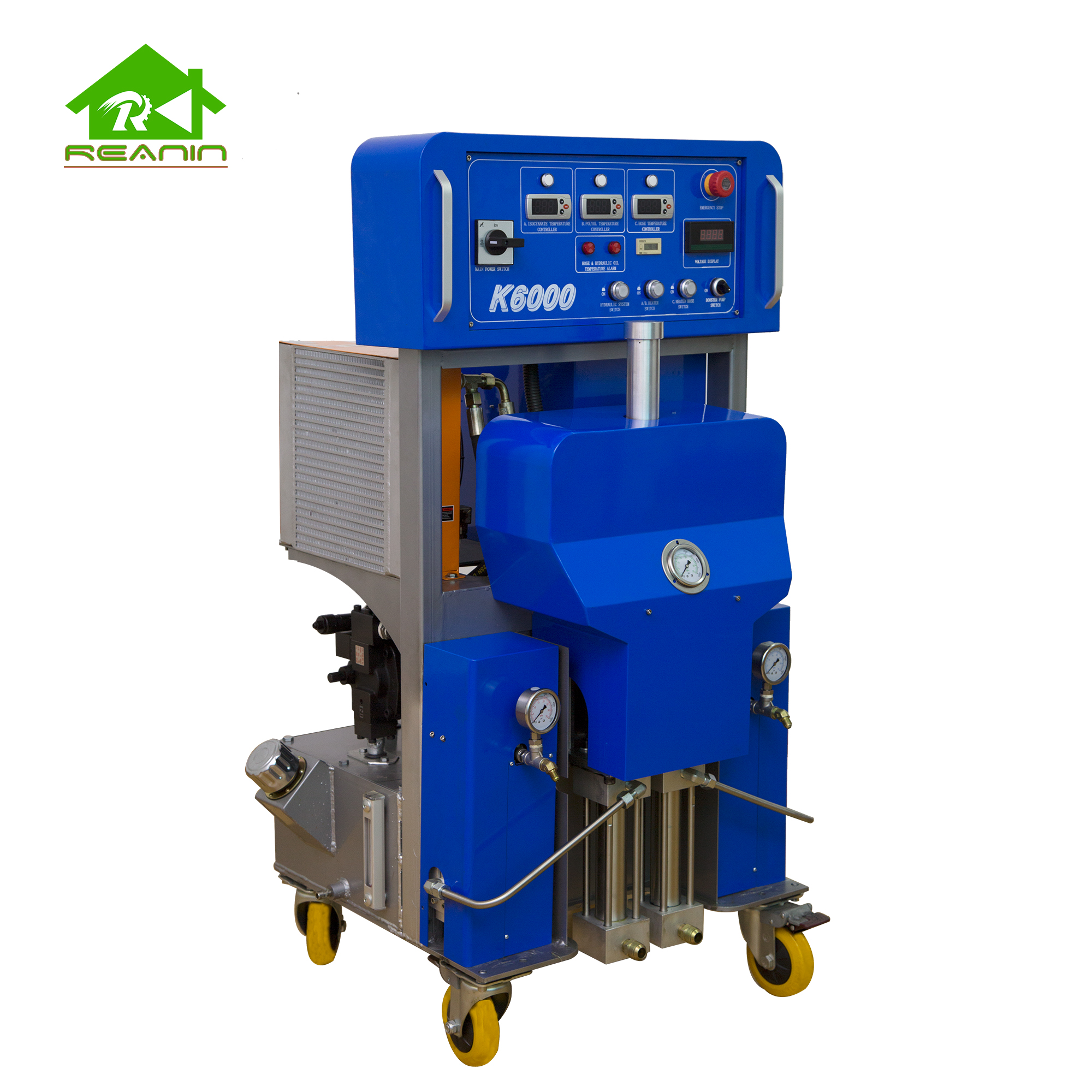
To prevent crossover and ensure a flawless chemical reaction, industrial rigs rely on a sequence of highly engineered mechanical steps designed to isolate and prepare the raw materials.
The proportioner serves as the engine of the entire operation. Its primary directive is to draw the A and B chemicals from their respective drums and pressurize them at a strict, unwavering 1:1 ratio by volume.
Precision at this stage is absolutely critical. The chemical formulation assumes a perfect even mix. If the pump packings wear down and deliver a mix that is even five percent off-ratio, the resulting coating will ultimately fail. Isocyanate-rich mixes yield a brittle, hard coating that cracks under minimal structural stress. Conversely, a resin-rich mix remains soft, sticky, and fails to cure. High-quality proportioners utilize synchronized pump shafts to guarantee that every single stroke delivers the exact same volume of material.
At room temperature, these chemicals are incredibly thick and highly viscous. To atomize them into a fine mist at the spray gun, their viscosity must be drastically reduced through precise thermal engineering.
As fluids exit the proportioning pumps, they enter the primary heaters. These high-wattage heating blocks rapidly elevate the fluid temperature to the required 140°F to 160°F. However, heating the chemical at the base unit is only half the battle. Imagine dragging 200 feet of hose across a frosty concrete deck in November. The fluid will lose its heat before reaching the operator. Therefore, the rig utilizes electrically heated hoses featuring a copper heating element wrapped around the internal fluid lines. This preserves the exact temperature set by the primary heaters all the way to the gun.
Heat and pressure work in a symbiotic relationship. You simply cannot achieve a durable waterproofing application if either of these pillars fluctuates or fails in the field.
The rapid cure chemical reaction requires the two components to be mixed at a microscopic level. If you were to simply pour the two heated liquids together, they would instantly form a lumpy, inconsistent mass.
To achieve a smooth, monolithic waterproofing membrane, the chemicals must be aggressively atomized. The equipment achieves this by forcing the heated fluids through microscopic orifices at pressures typically ranging from 2,000 to 3,500 PSI. This extreme mechanical force breaks the thick liquids down into a fine, high-velocity mist. The smaller the droplets, the larger the surface area for the chemical reaction. This guarantees a flawless, instantaneous cure.
Contractors frequently operate in harsh, unforgiving environments. Delta T refers to the temperature differential. It measures the machine's ability to take cold, sluggish chemicals from the drum and heat them to the target temperature in a single pass through the primary heaters.
If the raw chemicals sit at 40°F, the machine must raise that temperature by over 100°F in the few seconds it takes the fluid to pass through the heating block. Robust primary heaters are essential here. If the machine lacks the wattage to achieve the proper Delta T, the fluid arrives at the gun too thick. The reaction is delayed, and the coating fails.
While the base unit pressurizes and heats the fluid, the actual magic happens directly in the operator's hands at the end of the hose line.
Because the material solidifies in seconds, the A and B chemicals cannot touch each other anywhere inside the machine or the hoses. The only place they are permitted to meet is inside a tiny, replaceable component within the spray gun known as the mixing chamber.
This localized process is called impingement mixing. Utilizing a polyurea polyurethane spraying machine, the A and B chemicals are driven into the chamber from opposite sides at over 2,000 PSI. They crash into each other at extreme velocity. This violent collision forces the atomized droplets to intermingle perfectly, and the mixed material is immediately expelled out of the gun tip onto the substrate. The entire mixing sequence takes a fraction of a millisecond.
The exact moment the operator releases the trigger, the flow of chemicals halts. Because the mixed residue inside the chamber will cure in three seconds, the gun must instantly clean itself to prevent a blockage.
Professional spray guns typically utilize one of two purge methods. Air purge systems use a continuous, high-pressure blast of compressed air to blow the remaining material out of the chamber. Alternatively, mechanical purge systems employ a metal valving rod that physically drives forward through the chamber. This pushes the remaining material out and blocks the fluid ports from cross-contamination.
When investing in plural-component equipment, business owners must carefully choose the drive system that powers the proportioning pumps. The two primary options dominating the market are pneumatic or hydraulic systems.
Pneumatic rigs utilize compressed air to drive the proportioner pumps up and down. On the positive side, they generally feature a lower initial purchase price and are mechanically simpler to repair. They serve well for entry-level contractors or low-output residential applications. However, air is inherently compressible. When the spray gun is triggered, pneumatic systems often experience a momentary drop in pressure, known as a pressure dive. Furthermore, they require massive tow-behind air compressors to supply the necessary air volume to keep the pumps running continuously.
For professional, high-volume waterproofing operations, a hydraulic polyurea spray machine represents the gold standard. Instead of air, these machines use pressurized hydraulic fluid to drive the proportioning pumps.
Hydraulic fluid is non-compressible. This specific engineering choice means the machine delivers relentless, consistent pressure without the dreaded pressure dive associated with pneumatic setups. Advanced hydraulic machines can effortlessly maintain 3,000 to 3,500 PSI continuously, hour after hour, without stalling or overheating. They offer significantly higher output capacities and longer hose length capabilities. For crews applying the thickest waterproofing elastomers on massive commercial roofs, hydraulic power is heavily favored.
Operating high-pressure proportioning equipment requires strict adherence to daily maintenance protocols. The volatile nature of rapid-cure chemicals means that operator error or neglected maintenance will inevitably lead to catastrophic equipment failure. Protecting a hydraulic polyurea polyurethane sprayer requires treating it with the precision of a laboratory instrument rather than a standard construction tool.
The most critical phase of operating proportioning equipment is the shutdown process. When chemicals remain static inside the machine, any cross-contamination or pressure imbalance can cause the materials to cure internally, destroying hoses and manifolds.
A systematic daily shutdown procedure ensures that the A and B components remain completely isolated and stable. The primary focus is always on the spray gun, as this is the only location where the two chemicals intersect. Operators must ensure that the mixing chamber is completely purged, the fluid valves are locked, and the gun is heavily lubricated with approved grease to prevent microscopic crystallization.
Procedure Step | Action Required | Purpose |
|---|---|---|
1. Gun Purging | Trigger the gun to clear the chamber, then engage the safety lock. | Prevents mixed material from curing inside the gun tip. |
2. Pressure Relief | Open recirculation valves to bleed pressure back to the drums. | Relieves static stress on hydraulic seals and heated hoses. |
3. Gun Lubrication | Apply specialized grease to the mixing chamber and fluid ports. | Blocks ambient moisture from reacting with residual chemicals. |
4. Park the Pump | Cycle the proportioning pump until the shaft is fully retracted. | Protects the pump shaft from exposure to airborne moisture. |
5. Power Down | Turn off primary heaters, hose heaters, and main power supply. | Prevents thermal degradation of chemicals resting in the lines. |
Moisture is the absolute primary enemy of any elastomeric waterproofing operation. While the resin side is relatively stable, the Isocyanate side is highly reactive to ambient humidity.
When moisture in the air contacts the Isocyanate inside the supply drums, it triggers a reaction that produces hard urea crystals. These crystals act like abrasive sand when drawn into the machine. They will aggressively score the cylinder walls of the proportioning pumps, shred internal seals, and eventually clog the ultra-fine filter strainers. To prevent this, contractors must implement environmental controls before the chemicals even enter the rig. Installing desiccant breather cartridges on the drum bungs strips moisture from the air as fluid is pumped out, while drum heating blankets prevent internal condensation caused by temperature swings.
Transitioning to rapid-cure coatings represents a complete paradigm shift for waterproofing contractors. The operational speed and return-to-service times are unmatched by traditional materials, but unlocking these lucrative benefits requires selecting the appropriate proportioning equipment.
The upfront capital required for rapid-cure chemicals and hydraulic proportioning rigs is undeniably higher than traditional roll-on epoxies. However, the return on investment is rapidly realized through exponential labor savings and drastically increased project turnover.
Consider a commercial roof project spanning 10,000 square feet. A traditional polyurethane coating requires multiple coats, each needing twelve to twenty-four hours to cure. This forces a crew to remain on-site for nearly a week, accumulating heavy labor costs while remaining vulnerable to sudden rainstorms. In contrast, polyurea cures in seconds. A trained crew can apply the required thickness in a single pass, allowing the surface to withstand foot traffic in minutes. By reducing labor hours by up to seventy percent, contractors can bid more competitively and take on more projects per month.
When selecting equipment, decision-makers must look beyond the initial price tag and evaluate the total cost of ownership. A machine that struggles to maintain heat or pressure will result in failed coatings, leading to disastrously expensive tear-outs.
First, rigorously evaluate the heating capacity. Professional-grade rigs often feature robust 18kW to 24kW primary heaters to instantly raise the temperature of cold chemicals. Second, assess the drive system. Hydraulic pumps provide the relentless, non-pulsating pressure required to atomize thick materials consistently. Third, verify the maximum hose length capacity. High-end hydraulic units can push material through 90 to 120 meters of heated hose, which is vital for large commercial roof jobs. Finally, ensure the manufacturer offers accessible replacement parts and comprehensive technical support. Downtime waiting for a proprietary seal far exceeds the savings of buying an unsupported, budget-tier machine.
Mastering a waterproofing membrane that cures in three seconds requires a flawless symphony of heat, pressure, and exact mechanical timing. While the speed of these elastomers offers incredible profitability and unmatched durability, your project success is inextricably linked to the quality of your fluid handling system.
Ultimately, a reliable proportioning machine is just as vital to the job as the chemical itself. By understanding the core mechanics of impingement mixing, thermal regulation, and daily maintenance, contractors can confidently scale their operations. We highly encourage you to browse the advanced equipment catalog at Chinareanin to find the perfect technological fit for your next commercial waterproofing venture.
While some versatile machines are marketed as dual-purpose, a standard entry-level polyurethane foam machine is generally insufficient for pure polyurea applications. Polyurethane foam typically requires lower operating pressures around 1,000 to 1,500 PSI and lower temperatures around 110°F to 130°F. Pure polyurea requires aggressive impingement mixing to cure correctly, which demands consistent pressures between 2,000 and 3,500 PSI and sustained temperatures up to 160°F. If a foam machine lacks the hydraulic power or heater wattage to instantly prepare the chemicals, the polyurea will not atomize properly, resulting in a weak, off-ratio coating.
If a rapid-cure coating remains sticky, soft, or brittle after the standard five-second window, it is almost exclusively an equipment or maintenance issue, rather than a chemical defect. The reaction requires an exact 1:1 ratio by volume. If the coating fails to cure, the machine is spraying off-ratio. This imbalance is usually caused by a restriction in fluid flow on one side of the system. Common culprits include clogged filter strainers, crystallized Isocyanate in the pump, or a blockage in the spray gun mixing chamber. Immediate shutdown and pressure troubleshooting are required.
If the heated hose loses temperature due to a faulty copper element or extreme ambient cold, the chemicals will rapidly increase in viscosity. Thick, sluggish chemicals will not atomize properly at the gun tip, leading to poor impingement mixing. The resulting coating will be off-ratio, exhibiting a blistered texture, weak adhesion, and a complete failure to waterproof the substrate.
Maintaining a perfect 1:1 ratio relies entirely on the mechanical health of your proportioning pumps and fluid supply lines. Operators must ensure filter strainers are clean, pump seals are intact, and drum transfer pumps are supplying adequate feed pressure. Advanced digital pressure monitors on modern hydraulic rigs will automatically shut down the system if a ratio imbalance is detected, preventing bad material from ever reaching the spray gun.
The investment for professional-grade proportioning equipment varies significantly based on output capacity, heater wattage, and system architecture. A standalone, bare hydraulic proportioner typically ranges from $15,000 to $35,000. However, contractors rarely buy just the base unit. A fully operational setup requires heated hoses, specialized spray guns, drum transfer pumps, a high-capacity air compressor, and a power generator. A complete, turnkey mobile spray rig built into an enclosed trailer can range from $45,000 to over $85,000. Serious waterproofing contractors view this as a long-term asset that pays for itself through drastically reduced labor costs.
Operating high-pressure proportioning equipment is not comparable to using a standard paint sprayer. It requires highly specialized technical training. Because the chemical reaction happens in mere seconds, there is zero margin for error. Operators must understand the fundamentals of fluid dynamics, thermal mass, and chemical safety. They must be trained to read digital pressure gauges to identify microscopic blockages before they cause a catastrophic crossover. While the learning curve is undeniably steep, proper training prevents costly equipment damage and ensures the application of flawless, durable waterproofing membranes.


