
Views: 0 Author: Site Editor Publish Time: 2026-08-27 Origin: Site


The proportioner serves as the operational heart of any spray foam rig. It directly dictates chemical yield, application speed, and final product quality. Spray foam is a cellular plastic that does not become insulation until you process and spray it on-site. The proportioner acts as a mobile manufacturing plant. Off-ratio spraying presents massive structural risks. Wasted chemical sets, substrate failure, and tear-outs frequently result from equipment that cannot maintain consistent pressure or temperature under sustained loads. This technical evaluation guide helps contractors and facility managers understand proportioner mechanics. We will compare drive systems and select the exact equipment required for specific two-component processing demands. You will learn how to match machine specifications to your daily output requirements, calculate power loads, and avoid common job-site equipment failures.
Ratio Assurance: Double-acting proportioning pumps are non-negotiable for maintaining the strict 1:1 volumetric ratio of Isocyanate (A-side) and Polyol (B-side) required for proper cellular plastic formation.
Thermal Management: Consistent processing temperatures (typically 140°F–150°F) are critical to lowering chemical viscosity, ensuring optimal mixing and maximizing board-foot yield.
Drive System Trade-offs: Selecting between pneumatic, electric, and hydraulic drives requires balancing initial cost, electrical load requirements, sustained pressure capabilities, and material versatility.
Validation is the Standard: Modern proportioners increasingly rely on integrated data logging to validate spray parameters, protecting contractors from liability and ensuring building code compliance.
Two-component processing presents a unique fluid dynamics challenge. Operators must move two highly viscous, temperature-sensitive chemicals from 55-gallon drums through hundreds of feet of hose to a spray gun without introducing pressure imbalances. The process begins at the drum level. Transfer pumps, typically operating at a 2:1 ratio, push the raw A-side and B-side materials out of the drums and feed them into the proportioner's inlet valves. These transfer pumps must maintain a steady feed pressure of 100 to 250 PSI. If the feed pressure drops, the proportioner pumps will cavitate, drawing in air and instantly ruining the chemical ratio.
A reliable Polyurethane Foam Spray Machine solves the ratio problem by utilizing a dual-pump architecture. The system relies on two distinct metering pumps working in tandem. One pump is dedicated entirely to the Isocyanate (A-side), while the other handles the Polyol resin (B-side). These pumps operate in perfect synchronization to ensure the chemical volumes remain identical throughout the application process. The mechanical linkage between these two pumps prevents one side from pumping faster than the other, even if a blockage occurs downstream.
Double-acting positive displacement forms the mechanical foundation of this synchronization. Standard single-acting pumps only push fluid on the downstroke, creating a momentary pause in fluid flow during the upstroke. Double-acting pumps create positive displacement on both the upstroke and the downstroke. This continuous movement eliminates pressure drops and prevents the material stream from pulsing at the spray gun. When the fluid flow remains constant, the impingement mixing inside the gun chamber remains uniform. The internal check valves—specifically the inlet ball-and-seat valves and the piston valves—open and close in alternating sequences to maintain this continuous high-pressure flow.
The proportioner physically meters the A-side and B-side chemicals simultaneously through a rigid mechanical yoke connecting the two fluid pumps to a single central drive motor. This physical connection acts as a hard mechanical safeguard. It prevents crossover and ensures the exact 1:1 volumetric ratio is maintained regardless of dynamic pressure changes caused by varying hose lengths, elevation changes on a multi-story building, or partial gun triggering by the operator. If a restriction occurs in the A-side hose, the mechanical yoke forces the B-side pump to slow down to match, maintaining the ratio at the expense of overall output volume.
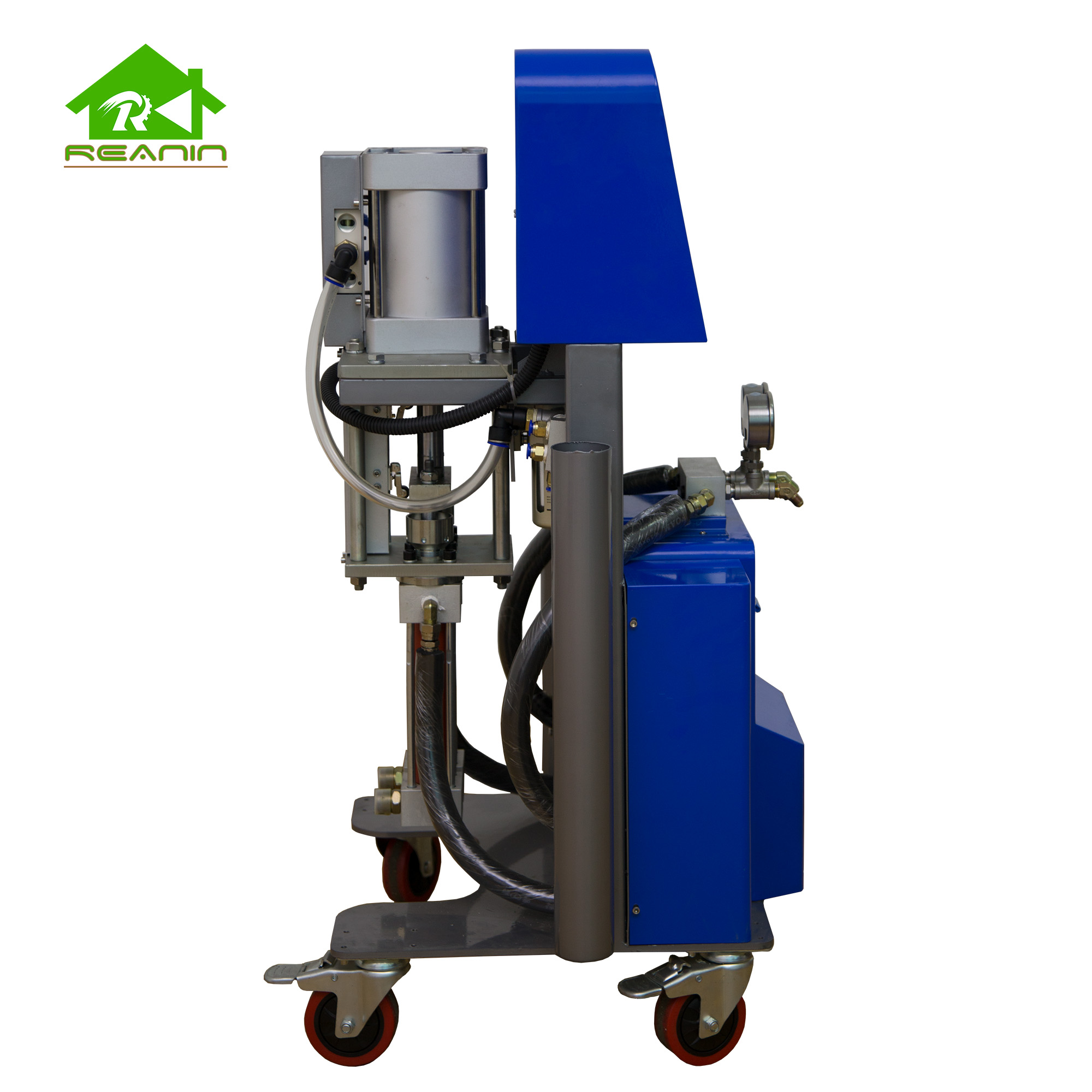
Heating capacity directly correlates to chemical yield, proper cellular structure, and overall job site profitability. When you process chemicals at the correct temperature, they expand to their maximum potential, providing the highest possible board-foot yield per drum set. Poor thermal management results in dense, under-expanded foam that consumes more material to cover the same square footage. Cold foam also suffers from poor adhesion to substrates like wood, steel, or concrete.
Understanding the distinction between primary heaters and hose heaters dictates how you operate the equipment. The primary heater block rapidly elevates chemical temperatures from ambient storage conditions to the required processing range, typically between 140°F and 150°F. The fluid passes through a series of heated aluminum or steel channels within the block. This requires immense thermal energy to achieve the necessary Delta T (temperature difference) in a fraction of a second. If your ambient chemical temperature is 60°F and your target is 140°F, your primary heaters must generate an 80°F Delta T instantly as the fluid flows at two gallons per minute.
Heated hoses serve a completely different function. They are designed exclusively to maintain the Delta T achieved by the primary heaters as the chemical travels from the rig to the spray gun. Heated hoses utilize a copper heating element wrapped around the fluid lines, covered by insulation and a protective scuff jacket. They lack the wattage to heat cold chemical from scratch. Relying on hose heat to compensate for undersized primary heaters will inevitably lead to cold material reaching the mixing chamber. A Fluid Temperature Sensor (FTS) placed near the gun communicates with the machine's control board to regulate the hose heat output.
Temperature control is fundamentally about viscosity management. Isocyanate and resin have different baseline viscosities at room temperature. Heating the materials lowers their viscosity, making them thinner and easier to pump through high-pressure lines. Bringing both components to a similar, low-viscosity state ensures proper impingement mixing. When the two thin liquids collide at 1,000+ PSI inside the tiny mixing chamber of the spray gun, they atomize completely. This violent collision creates a uniform cellular matrix. If one chemical is colder and thicker than the other, it will push past the thinner chemical, resulting in a poorly mixed, off-ratio product that may shrink or emit odors.
Selecting the right high pressure PU foam equipment requires comparing the three primary drive mechanisms powering the proportioning pumps. Each system offers distinct advantages regarding scalability, operational environment suitability, and material versatility. The drive system you choose dictates the size of the generator you need, the maintenance schedule you must follow, and the maximum hose length you can push material through.
A quality pneumatic polyurethane foaming machine utilizes compressed air to drive the proportioning pumps. The primary advantage of a pneumatic system is its lower electrical requirement. Because the drive motor does not draw high electrical current, contractors can utilize smaller, lighter generators. Pneumatic machines also offer mechanical simplicity. Field maintenance and troubleshooting are straightforward for operators without advanced electrical training. If a pneumatic motor stalls, it is usually a simple matter of checking air pressure, lubricating the air valve, or replacing a basic O-ring.
Despite their lower power draws, quality pneumatic systems possess excellent material versatility. They process nearly any standard two-component material system, including open-cell foam, closed-cell foam, and some polyureas. However, they rely entirely on a robust, high-CFM air compressor. A typical pneumatic proportioner requires 25 to 35 CFM at 100 PSI just to operate the pumps, plus additional air for the spray gun purge. Under continuous, high-output spraying conditions, pneumatic systems can experience slight pressure fluctuations if the air compressor fails to maintain a steady supply.
Electric and hydraulic alternatives cater to different operational demands. Electric proportioners replace the air motor with an electric drive mechanism, often utilizing a gearbox and a rotating cam to drive the pump yoke. They offer consistent performance, lower operational noise, and excellent mid-to-high output efficiency. They eliminate the reliance on massive air compressors for fluid pumping, though you still need a smaller compressor for gun purging and drum transfer pumps. Electric machines provide a very smooth changeover at the top and bottom of the pump stroke, minimizing pressure spikes.
Hydraulic proportioners represent the heavy-duty standard for commercial applications. They utilize pressurized hydraulic fluid to drive the proportioning pumps. This provides maximum sustained pressure, the highest output volumes, and the longest equipment lifespan. Hydraulic systems excel in environments requiring continuous spraying through maximum hose lengths (often up to 300 or 400 feet). The hydraulic fluid acts as a heat sink and a lubricant, allowing the machine to run all day without overheating the drive system. The trade-off involves higher initial equipment costs, heavier rig requirements, and the need for larger generators to power the hydraulic power pack.
Drive System | Primary Power Source | Max Hose Length (Typical) | Key Advantages | Ideal Application |
|---|---|---|---|---|
Pneumatic | Compressed Air (High CFM) | 200 - 300 Feet | Low electrical draw, simple field maintenance, cost-effective rebuilds. | Entry-level rigs, residential insulation, moderate output demands. |
Electric | Electrical Current (240V) | 200 - 300 Feet | Consistent pressure, quieter operation, efficient power usage, smooth stroke changeover. | Mid-sized commercial projects, consistent daily spraying, residential retrofits. |
Hydraulic | Hydraulic Fluid (Pumped via Electric Motor) | 300 - 400+ Feet | Maximum sustained pressure, highest output, extreme durability, continuous duty cycle. | Large commercial jobs, multi-gun setups, roofing applications, high-volume polyurea. |
Equipment needs vary drastically based on the specific chemical you spray. Operating a closed cell foam insulation machine demands higher performance thresholds compared to open-cell applications. Closed-cell foam is significantly denser (typically 2.0 pounds per cubic foot compared to open-cell's 0.5 pounds). It requires more blowing agent, utilizes different chemical formulations (like HFOs), and is highly sensitive to temperature and pressure variations during application.
Closed-cell applications require a machine capable of sustaining higher dynamic pressures. Proper atomization of the denser closed-cell chemical requires continuous pressure at the gun tip, often exceeding 1,200 to 1,500 PSI during active spraying. If the proportioner cannot sustain this pressure, the spray pattern collapses from a wide fan into a narrow stream. This results in uneven application, poor cell structure, reduced R-value, and a rough surface finish that requires excessive trimming.
Ambient temperatures heavily impact closed-cell yields. Cold substrates draw heat away from the reacting chemical, inhibiting expansion. Robust primary heaters are mandatory in colder climates to ensure the chemical hits the substrate at the absolute optimal temperature. Contractors often apply a thin "flash coat" to cold concrete or steel to create a thermal break before applying the full pass. The proportioner must recover heat instantly between these passes to maintain the required Delta T.
Standard proportioners can also adapt for alternative applications. Converting a rig into a capable polyurethane injection machine for concrete lifting, void filling, or structural stabilization requires specific modifications. Operators must switch from a standard impingement spray gun to a specialized injection gun or pour head. Injection foams are often slow-reacting compared to fast-reacting spray foams. They might cream in 15 seconds instead of 3 seconds. The proportioner must be adjusted to deliver material at lower pressures (often 600 to 800 PSI) and controlled volumes to prevent substrate blowout or concrete slab cracking during void filling.
Advanced equipment setups directly influence labor costs, daily productivity, and overall quality control on the job site. Contractors scaling their operations look beyond basic proportioner functions to maximize their rig's output potential. Upgrading the fluid section, adding automated hose racking systems, and implementing digital tracking all contribute to higher daily board-foot yields.
Multi-gun setups offer a pathway to maximum productivity. Running two spray foam guns simultaneously from a single proportioner allows a crew to double their application rate without investing in a second complete rig. This configuration has strict technical requirements. It is only feasible with high-output hydraulic machines capable of moving massive volumes of fluid (often 3 to 4 gallons per minute) without pressure degradation. You must install a specialized manifold to split the heated fluid lines safely.
Executing a multi-gun setup requires perfectly balanced hose lengths and identical mixing chambers in both guns. The primary risk involves severe pressure drops. If one operator stops spraying while the other continues, the sudden change in fluid demand can cause a pressure spike or drop. This leads to an off-ratio spray for the active operator. Advanced hydraulic systems with rapid pressure compensation and digital motor control are mandatory for this setup to ensure the active gun maintains a steady 1,200 PSI regardless of what the second gun does.
The industry is experiencing a massive shift toward verifiable quality control. Because the proportioner manufactures the final product on-site, builders and inspectors increasingly demand proof of proper application. Modern machines feature integrated data logging systems that track pressure, temperature, and material usage in real-time. These systems utilize flow meters and pressure transducers to monitor the exact ratio of A to B. They generate digital validation reports, proving the foam was applied within the manufacturer's specified parameters. This protects contractors from liability claims and simplifies building code inspections.
Purchasing the wrong proportioner leads to cascading failures across the entire operation. Buyers must utilize a concrete framework to assess their needs and avoid costly equipment mismatches. A machine that looks great on a spec sheet might fail completely if your trailer setup cannot support its power and air requirements.
Assessing power availability is the most critical step in rig design. Under-sizing the generator is a common and expensive mistake. The generator must handle the combined electrical draw of the proportioner's motor, the primary heaters, the hose heat transformer, the air compressor, the fresh air breathing system, and all auxiliary rig lighting. A machine requiring 50 amps for the heaters alone will quickly trip breakers if the generator cannot handle the simultaneous startup surge of a 5-horsepower air compressor. To calculate generator size, add up the total wattage of all components, add 25% for startup surges, and divide by 1,000 to find the minimum required Kilowatt (kW) rating.
Maintenance overhead and potential downtime must factor into the selection process. Two-component equipment requires rigorous daily maintenance. Operators must clean Y-strainers (typically 40 or 60 mesh screens) to prevent debris from starving the pumps. The Isocyanate pump requires daily inspection of the Throat Seal Liquid (TSL) or ISO lubrication system. This fluid prevents the A-side chemical from crystallizing on the pump shaft and destroying the packing seals. Desiccant dryers on the drum pumps must be replaced regularly; operators monitor the silica gel, changing it when it turns from blue to pink, indicating moisture saturation.
Follow this daily startup protocol to prevent equipment failure:
Check generator oil and fuel levels before applying any electrical load to the rig.
Inspect the desiccant dryers on the A-side drum to ensure no moisture is entering the Isocyanate.
Turn on the air compressor and verify the transfer pumps are delivering at least 100 PSI to the proportioner inlets.
Activate the primary heaters and hose heat, allowing the system to reach the target temperature (e.g., 140°F) before triggering the gun.
Perform a test spray on cardboard to verify the spray pattern is wide and the foam cures at the correct speed and density.
The best proportioner directly aligns with a contractor's primary application, expected daily output, and available rig power. There is no universal solution, only the correct mechanical match for specific processing demands. Pneumatic machines remain the logical choice for entry-level setups or rigs operating under strict electrical limitations. Hydraulic and high-output electric systems are mandatory for high-volume commercial contractors who require multi-gun capabilities, maximum closed-cell yield, and continuous operation in demanding environments.
To finalize equipment selection, take the following actions:
Calculate the exact electrical draw of all planned rig components to determine the minimum required generator kW rating.
Match the proportioner's maximum output (gallons per minute) to your intended spray gun mixing chamber size.
Review specific machine specification sheets to verify the primary heater wattage is sufficient for your local winter climate conditions.
Establish a daily maintenance protocol based on the manufacturer's guidelines before deploying the equipment to the field.
A: Most two-component spray polyurethane foams require processing temperatures between 140°F and 150°F. Elevating the chemical to this temperature range lowers the viscosity of both the Isocyanate and the Polyol resin. This ensures they mix properly inside the high-pressure gun chamber and expand to their maximum yield on the substrate.
A: A double-acting pump creates positive displacement of fluid on both the upstroke and the downstroke. By utilizing two dedicated metering pumps linked mechanically by a yoke, this design ensures a continuous, non-pulsing flow of material to the spray gun. This continuous flow maintains the strict 1:1 chemical ratio.
A: Yes, running two guns boosts productivity, but it requires a high-output hydraulic proportioner. The system must handle the increased fluid volume and rapid pressure changes that occur when one operator triggers or releases their gun while the other is actively spraying.
A: The primary advantages are lower electrical draw and mechanical simplicity. Because they use compressed air rather than large electric motors to drive the fluid pumps, contractors can use smaller generators. They are also easier to troubleshoot and rebuild in the field.
A: Isocyanate and resin naturally have different thicknesses at room temperature. If their viscosities are not equalized through precise heating, the thicker chemical will overpower the thinner one inside the mixing chamber. This poor impingement mixing results in off-ratio foam that shrinks or fails to adhere.
A: Yes. Standard proportioners adapt easily for concrete lifting or void filling. You must change the applicator to a specialized injection gun or pour head and adjust the machine's pressure and temperature settings to accommodate slower-reacting injection foams.


