
Views: 0 Author: Site Editor Publish Time: 2026-08-31 Origin: Site


Polyurea cures in under five seconds. This rapid gel time leaves zero margin for error in your equipment configuration. Strict temperature requirements dictate every aspect of the application process. Specifying an incorrect hose length directly causes pressure drops, severe temperature loss, and off-ratio mixing. These issues result in catastrophic coating failures, costly rework, and wasted material. Establishing the optimal heated hose length requires precise calculations. You must balance the hydraulic proportioner’s output capacity with heater wattage while accounting for the physical demands of the job site. Upgrading your current rig demands careful planning. Transitioning from spray foam to polyurea requires entirely new operational parameters. This guide breaks down the technical specifications for matching hose length to your machine. You will learn how to maintain dynamic pressure and achieve flawless chemical reactions on every single pull of the trigger.
Hose length acts as a primary variable in fluid dynamics on the job site. It dictates the chemical reaction quality at the gun and determines your overall output per cycle. Pushing high-viscosity chemicals through hundreds of feet of hose requires immense mechanical force. Friction fights against this force every single inch of the way. Understanding this dynamic prevents material failures. We see contractors ignore this basic physics principle constantly. They add another 100 feet of hose to reach a far corner of a roof. Suddenly, their material stops curing correctly. The coating looks tacky or blisters. They blame the chemical manufacturer. In reality, the extended hose length destroyed their dynamic pressure and temperature profile.
Static pressure occurs when the spray gun is closed and the system is fully pressurized. Dynamic pressure is the actual spraying pressure when you pull the trigger and material flows. You must focus entirely on dynamic pressure. A hydraulic two component spray machine must maintain a minimum of 2000 to 2500 psi at the proportioning unit. This ensures adequate mixing pressure reaches the gun. Friction losses through the hose degrade this pressure rapidly.
When you pull the trigger, the fluid begins to move. The friction against the inner wall of the hose creates resistance. This resistance subtracts from the pressure generated at the pump. If your proportioner outputs 3000 psi, but you have 300 feet of 3/8-inch hose, you might lose 1000 psi to friction. The fluid arrives at the gun at 2000 psi. If the chemical viscosity increases due to cold weather, that friction loss multiplies. Suddenly, you only have 1500 psi at the gun. The impingement mixing chamber requires high velocity to shatter the A and B chemicals into a fine mist. Low pressure means low velocity. The chemicals collide poorly. They exit the gun as a sloppy, unmixed stream rather than a uniform fan pattern.
To monitor dynamic pressure effectively in the field, follow these steps:
The primary heaters are massive aluminum blocks with heating rods inside. They do the heavy lifting. They take the chemical from 70°F in the drum up to 160°F. The heated hose is simply a copper wire wrapped around a Teflon tube, covered in insulation. It only has enough wattage to maintain that 160°F. If you lay 300 feet of hose on a frozen steel deck, the cold steel acts as a heat sink. It sucks the thermal energy right through the insulation. The copper wire cannot generate enough heat to replace what the steel deck steals. The chemical temperature drops to 130°F by the time it reaches the gun. The material thickens. The pressure drops. The reaction fails.
Ground contact accelerates this heat loss significantly. Dragging a hose across a cold concrete bridge deck pulls heat rapidly. The internal copper heating elements must work continuously to compensate. If the hose is too long, the temperature drops before the fluid reaches the gun. Cold chemicals increase in viscosity. This leads to poor cross-linking and weak physical properties in the final coating.
| Substrate Contact | Ambient Temperature | Heat Loss Potential (per 100 ft) | Heater Strain Level |
|---|---|---|---|
| Suspended / Scaffolding | 75°F (24°C) | Minimal | Low |
| Dry Concrete | 50°F (10°C) | Moderate | Medium |
| Wet Concrete / Frozen Steel | 30°F (-1°C) | Severe | Maximum |
Excessive hose length causes severe pressure lag. You pull the trigger on a high-performance air-purge spray gun. The fluid takes a fraction of a second too long to reach full velocity. This lag negatively affects trigger responsiveness. It ruins the atomization quality of the spray pattern.
Operators notice this lag immediately. The spray pattern spits or fluctuates. The edges of the fan pattern become heavy and uneven. Precise application control becomes impossible. You waste material trying to achieve a uniform coating thickness. Keeping the hose length within the machine's optimal range ensures instant trigger response and perfect atomization.
You must categorize hose configurations based on machine size and drive type. Project scope also dictates your setup. Not all proportioners handle extreme lengths. Matching the hose to the machine prevents mechanical breakdowns. It ensures consistent daily production rates.
This range represents the industry sweet spot for mid-tier hydraulic rigs. It provides a perfect balance. You get adequate job site reach for standard commercial roofing. It works flawlessly for secondary containment projects. The equipment experiences minimal strain during continuous operation.
Operating within this baseline extends pump life. The primary heaters easily maintain the target Delta-T. The fluid dynamics remain stable and predictable. Operators experience fewer pressure imbalances. A standard Polyurea Spray Machine thrives in this configuration. It delivers maximum reliability and consistent chemical yields.
Long-reach applications demand specialized setups. Large infrastructure projects require extended hoses. Bridge decks, wastewater treatment plants, and high-rise commercial applications often push past 300 feet. You cannot simply attach more hose to a standard rig. Specific requirements must be met to succeed.
Only high-output machines support these lengths. You need oversized primary heaters. Robust transformers are mandatory to power the extended heating elements. Hydraulic systems are far superior to air-driven machines here. Hydraulic drives push high-viscosity materials through 300+ feet of hose without pressure cavitation. Air-driven pumps simply stall under this massive friction load.
You must install a 10-foot whip hose immediately before the spray gun. This is an ergonomic and technical necessity. The whip hose steps down to a 1/4-inch diameter. It provides exceptional flexibility for the operator. Heavy standard hoses cause severe wrist fatigue during long shifts.
The whip hose also ensures precise application control. It provides final fluid velocity control before impingement mixing. The smaller diameter accelerates the fluid right before it enters the mixing chamber. This guarantees a sharp, responsive trigger action. Never spray polyurea without a properly heated whip hose installed.
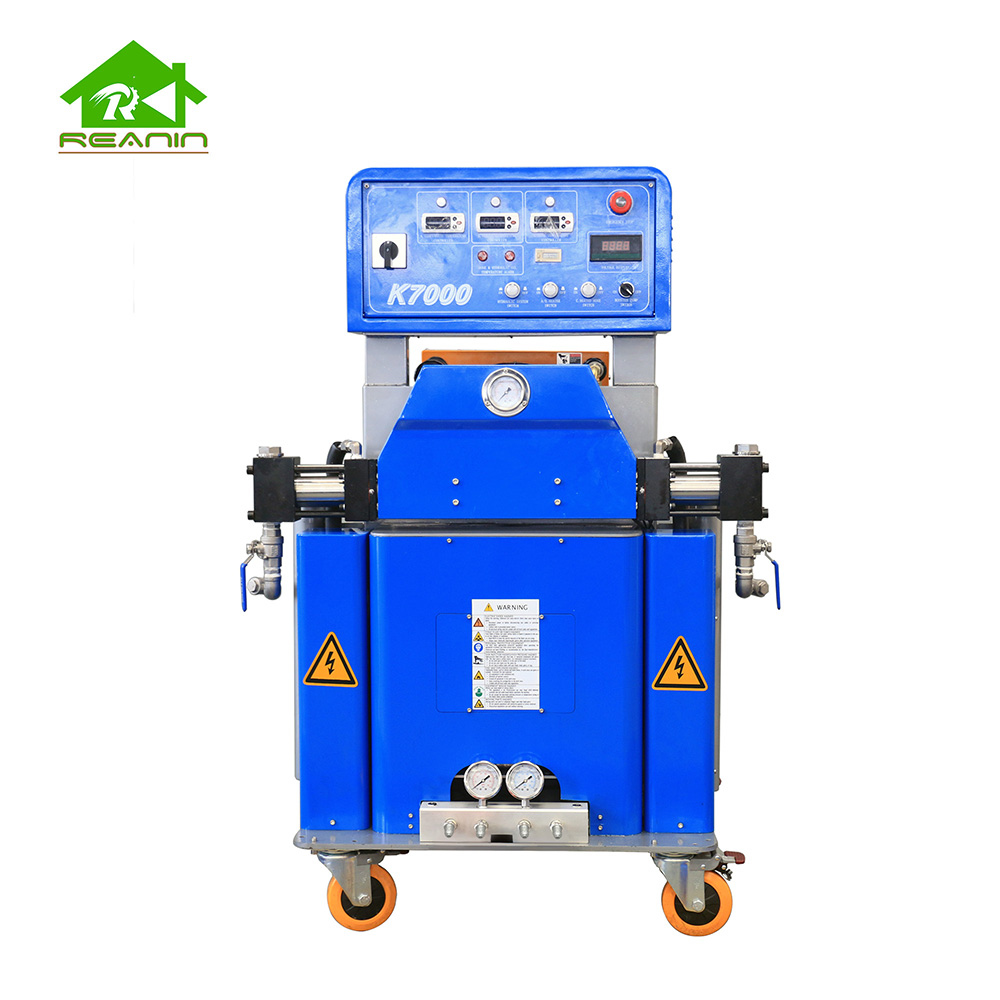
Guesswork leads to equipment failure. You must evaluate specific technical dimensions before adding hose length. Match the physical hose volume to the mechanical output. This ensures your rig operates within its engineered safety margins.
Evaluate your machine based on maximum fluid working pressure. Look at the output per cycle. A robust hydraulic polyurea polyurethane sprayer generates massive force. You must calculate the expected pressure drop per 50-foot hose section. Material viscosity heavily influences this calculation.
Colder climates increase chemical viscosity. Higher viscosity creates more friction inside the hose. This friction reduces the dynamic pressure at the gun. If your pump maxes out at 3000 psi, a 400-foot hose might drop the gun pressure to 1500 psi. This is too low for polyurea. Always calculate friction loss before extending your reach.
Delta-T defines the machine's ability to raise chemical temperature. It measures the jump from ambient drum temperature to the target spray temperature. Longer hoses require higher-capacity transformers. The transformer must power the internal copper heating elements across the entire length.
Adding hose increases the electrical load. If the transformer is undersized, the breaker trips. The hose fails to maintain the heat profile. The chemicals cool down and thicken. You must verify that your machine's transformer handles the total wattage required for your maximum intended hose length.
Flow dynamics change drastically with hose diameter. Standard setups use a 3/8-inch hose. Extended runs require a different strategy. You must use 1/2-inch hoses for the first 100 to 200 feet of a long run. This larger diameter reduces friction significantly.
It maximizes flow from the proportioner. After the initial 1/2-inch sections, you step down to a 3/8-inch hose. Finally, you attach the 1/4-inch whip hose. This stepped configuration maintains fluid velocity while minimizing pump strain. Review the flow dynamic differences below.
| Hose Diameter | Friction Loss (per 50 ft) | Fluid Velocity | Best Application |
|---|---|---|---|
| 1/2-inch | Low | Moderate | First 100-200 ft of extended runs (300+ ft total) |
| 3/8-inch | Moderate | High | Standard commercial runs (150-250 ft total) |
| 1/4-inch | High | Maximum | 10-foot whip hose at the gun end only |
Every equipment modification carries a trade-off. Extending your hose length solves reach issues but introduces new operational challenges. You must weigh these factors carefully. Understand how length impacts your daily workflow and maintenance routines.
Leaving the rig parked in one location offers massive logistical benefits. You avoid moving heavy trailers across difficult terrain. However, this convenience comes at a cost. Pushing fluid through 400 feet of hose causes severe equipment strain. Hydraulic seals wear out much faster.
Proportioner pumps work near their maximum load limits constantly. This accelerates mechanical fatigue. You trade mobility for higher maintenance requirements. Assess your typical job sites. If you can move the rig closer, do it. Save the maximum hose lengths for jobs where trailer access is completely impossible.
Contractors transitioning from spray foam face a dangerous trap. A hose length that worked perfectly for SPF often fails for polyurea. Spray foam operates at lower pressures and temperatures. A standard air-driven foam rig might handle 300 feet of hose easily.
Polyurea demands significantly higher pressure. The temperature requirements are much stricter. Applying polyurea through that same 300-foot setup results in off-ratio mixing. The fluid velocity drops too low for impingement. A dedicated hydraulic polyurea spray machine is required to handle these elevated demands over long distances.
Long hoses trap massive volumes of unmixed chemicals. A standard 3/8-inch hose holds roughly 1.5 gallons of chemical per 100 feet. A 400-foot setup holds 6 gallons of A-side and 6 gallons of B-side. That is 12 gallons of expensive material sitting in the lines. If you need to flush the system for maintenance, you face a massive financial penalty.
Flushing a long hose configuration requires strict procedures:
The financial loss of wasting 12 gallons of polyurea, plus the cost of solvent and storage fluid, destroys the profit margin on smaller jobs. Keep your hose length as short as practically possible to minimize this expensive waste.
Running long hoses introduces specific risks to the chemical reaction. You must implement strict mitigation strategies. Proactive monitoring prevents bad material from reaching the substrate. Protect your equipment and your reputation with these operational protocols.
Pressure imbalance ruins polyurea instantly. The B-side resin is notoriously thicker than the A-side isocyanate. It contains pigments, amine resins, and chain extenders. Because it is thicker, it suffers more friction loss in the hose. Over a 100-foot run, the difference is negligible. Over a 400-foot run, the B-side might lose 500 psi more than the A-side.
When you pull the trigger, the A-side enters the mixing chamber at 2500 psi, but the B-side enters at 2000 psi. The higher pressure A-side overpowers the B-side. It pushes back into the B-side port, causing a crossover. The gun clogs instantly with cured polyurea. You must tear down the gun, drill out the mixing chamber, and rebuild the fluid manifold. Mitigate this risk through aggressive maintenance. Clean your Y-strainers daily. Utilize in-line pressure gauges near the gun to catch imbalances before they destroy your application.
Heated hoses draw massive electrical current. Typically, you need dedicated amperage per 50-foot section. Extending the hose multiplies the electrical load on your generator. A high-draw polyurea polyurethane spraying machine requires a massive power supply.
Size your gas-powered generator appropriately. Calculate the total wattage of the primary heaters, the motor, and every single foot of heated hose. Add a 20% safety margin to this total. Running a generator at maximum capacity causes voltage drops. Voltage drops ruin the heating efficiency of the hose. Proper power management is non-negotiable.
A: Standard commercial rigs operate optimally between 200 and 250 feet. High-output hydraulic machines can push material up to 300 to 410 feet. Extreme configurations reach 450 feet, but these require oversized transformers and primary heaters to maintain pressure and temperature.
A: A 10-foot, 1/4-inch whip hose reduces operator wrist fatigue. It steps down the diameter to accelerate fluid velocity right before impingement mixing. This ensures sharp, responsive trigger action and prevents pressure lag during application.
A: Generally, no. Polyurea requires much higher dynamic pressure and stricter temperature maintenance than spray foam. Hoses that work for foam often fail to deliver the necessary fluid velocity and heat profile required for polyurea's rapid gel time.
A: Every 50 feet of hose introduces friction. This friction causes a pressure drop between the proportioner and the gun. Excessive length creates so much friction that the dynamic pressure falls below the 2000 psi minimum required for proper mixing.
A: For runs exceeding 250 feet, use a 1/2-inch hose for the first 100 to 200 feet. This reduces friction and maximizes flow. Step down to a standard 3/8-inch hose for the remainder, finishing with a 1/4-inch whip hose at the gun.
A: Cold temperatures draw heat away from the hose, especially when resting on concrete or steel. The internal heaters must work harder. If the hose is too long, the transformer cannot supply enough power, causing the chemicals to cool and thicken.
A: The B-side resin is typically higher in viscosity than the A-side isocyanate. Higher viscosity fluids suffer greater friction loss over long distances. This causes a pressure imbalance at the gun, leading to off-ratio spraying and coating failure.


