
Views: 0 Author: Site Editor Publish Time: 2026-07-30 Origin: Site


Applying polyurea requires exact chemical proportioning, extreme pressure, and precise temperature control. A failure in any single component compromises the entire coating. Many contractors focus solely on purchasing the primary proportioner, underestimating the auxiliary equipment required for a functional, production-ready rig. Incomplete packages lead to off-ratio spraying, equipment clogging, and catastrophic material failure on the job site. To ensure consistent application and protect capital investment, buyers must evaluate spray systems as holistic packages. This guide breaks down the critical components, decision frameworks, and implementation realities of a complete polyurea equipment setup.
The Proportioner is Only the Engine: A functional system requires a matched set of transfer pumps, heated hoses, and specialized spray guns to maintain the strict 1:1 volume ratio of isocyanate to resin.
Power and Drive Dictate Scalability: Choosing between a pneumatic, electric, or hydraulic polyurea spray machine depends entirely on daily output requirements, duty cycles, and the viscosity of the specific coatings being applied.
Moisture Control is Non-Negotiable: Because polyurea components are highly moisture-sensitive, auxiliary air drying and desiccant systems are critical inclusions in any professional package.
The proportioner must heat and pressurize two highly viscous chemicals to exact specifications before they meet in the mixing chamber of the spray gun. Typically, pure polyurea requires pressures between 2,000 and 3,500+ psi and temperatures ranging from 140°F to 170°F. Failing to maintain these parameters results in poor atomization, off-ratio mixing, and compromised physical properties. You need a machine built for the specific demands of the materials you spray daily.
Pneumatic proportioners offer entry-level accessibility and lower initial capital expenditure. They provide safety in hazardous or volatile environments because there is no electrical spark risk at the motor. The trade-off is the requirement for massive, high-CFM air compressors to maintain consistent operation. If your compressor drops pressure, your spray pattern collapses instantly.
Electric proportioners fit mid-volume commercial or residential jobs. They feature precise digital control interfaces, making them user-friendly for operators monitoring daily usage. Their primary limitation lies in continuous high-output duty cycles under extreme pressures. They often struggle to maintain consistent heat and pressure when spraying high volumes continuously.
A hydraulic polyurea spray machine represents the industry standard for sustained performance. These machines maintain consistent pressure during long trigger pulls, experience minimal wear and tear, and offer a longer lifespan for high-volume industrial applications. The hydraulic drive provides relentless pushing power, ensuring the proportioning pumps do not stall when handling thick, cold materials.
High-pressure systems, operating at 2,500 to 3,500+ psi, are mandatory for impingement mixing in pure polyurea applications. This high pressure ensures proper atomization and physical properties. The fast-curing chemicals must mix thoroughly in a fraction of a second before exiting the gun. Without sufficient pressure, the A and B sides will not cross-link properly, leaving you with a sticky, uncured mess.
Low-pressure systems, operating under 1,000 psi, have significant limitations. Their use cases are restricted to specific hybrid polyureas or joint fillers. They cannot generate the energy required to properly mix and atomize pure polyurea formulations. Attempting to spray pure polyurea through a low-pressure system guarantees failure.
Industry-standard benchmarks vary based on application needs. Entry-level portable high-pressure units handle touch-ups and small jobs. Mid-range electric units manage commercial applications effectively. For high-production industrial work, a robust hydraulic polyurea polyurethane sprayer is required to maintain output and pressure consistency across long hose lengths.
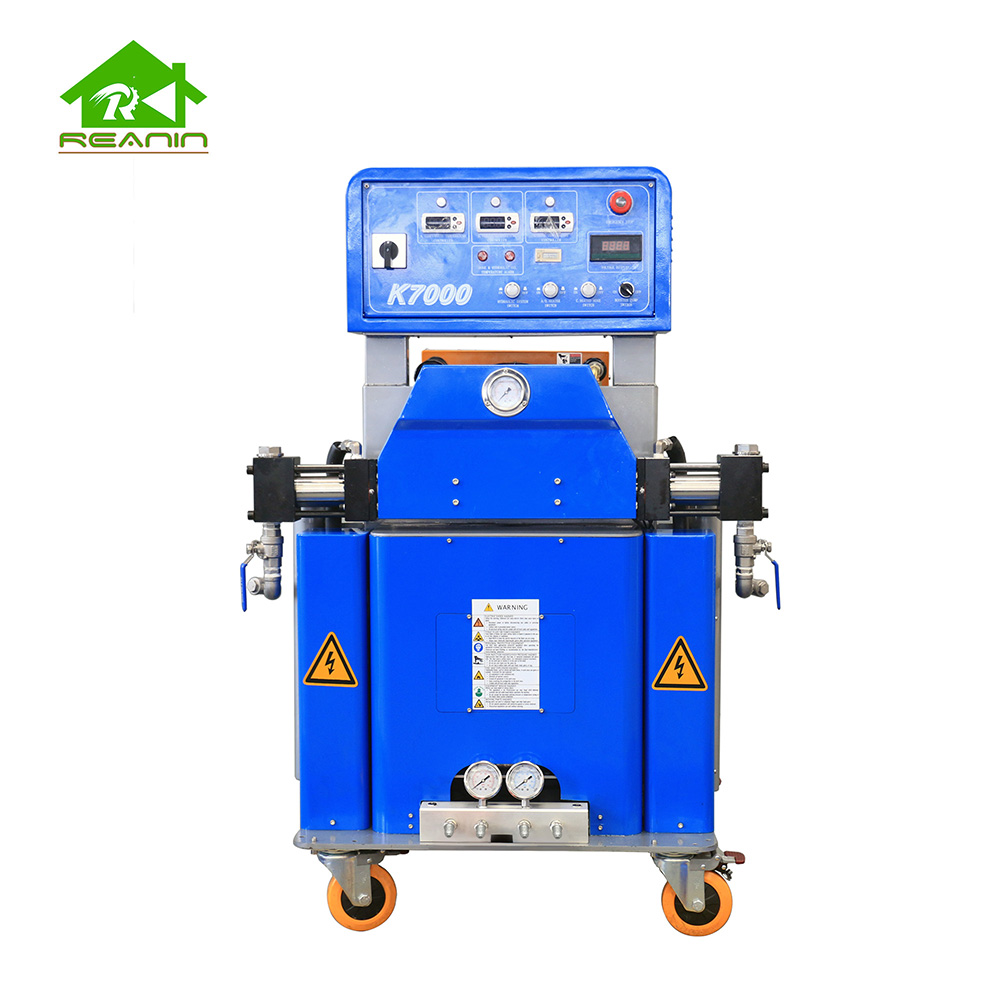
Contractors often consider using a standard spray polyurethane foam rig for polyurea applications. While dual-use rigs are feasible, technical realities and limitations must be addressed to ensure successful application and prevent equipment damage. Foam and polyurea behave very differently under pressure and heat.
Standard SPF proportioners often max out at 2,000 psi. Pure polyurea requires up to 3,500 psi for proper mixing. You must verify that existing primary heaters can reach and sustain the higher temperatures (140°F–170°F) required for polyurea viscosity reduction. If the heaters cannot maintain these temperatures, the material will not spray correctly, resulting in a poor surface finish and weak physical properties.
Upgrading standard 2,000 psi SPF hoses to high-pressure 3,500 psi hoses is a safety and operational necessity. Using low-pressure hoses for high-pressure polyurea applications risks catastrophic hose failure. A burst hose at 3,000 psi causes severe injury and significant material spills on the job site.
Transitioning a polyurea polyurethane spraying machine from polyurethane foam to polyurea requires strict protocols. Complete chemical flushing is necessary to prevent crystallization, ISO contamination, and catastrophic physical failures in the line. Even trace amounts of incompatible chemicals can ruin the entire system.
Park the proportioner and relieve all system pressure.
Remove the transfer pumps from the foam drums and wipe them clean.
Place the transfer pumps into drums of approved flushing solvent.
Circulate the solvent through the machine and hoses until the fluid runs completely clear.
Blow out the remaining solvent with dry compressed air before introducing the polyurea materials.
Maintaining consistent material temperature from the proportioner to the spray gun is critical. Temperature drops in the hose lead to viscosity imbalances, resulting in off-ratio spraying, poor curing, and clogged guns. The fluid delivery system must be robust enough to handle high-viscosity materials in cold weather.
The physics of polyurea application dictate that temperature directly affects viscosity. Copper-heated, insulated hoses with precise RTD or thermocouple sensors are necessary to maintain the required heat levels throughout the hose length. These sensors provide real-time feedback to the proportioner, ensuring consistent material temperatures regardless of ambient conditions.
A common implementation risk is the danger of unheated whip hoses at the gun connection. Temperature loss in the whip hose causes immediate mixing issues. Mitigate this risk by using heavy-duty insulated wraps to retain heat right up to the gun block. Never leave the whip hose exposed on cold concrete.
Transfer pumps supply the A and B chemicals from the drums to the proportioner. Air-operated double diaphragm pumps offer excellent wear-resistance. Alternatively, 2:1 or 3:1 piston pumps provide high-pressure feeding capabilities necessary for viscous materials. The choice depends on the specific gravity of your chemicals.
Select transfer pumps based on chemical viscosity, cold-weather operations, and the specific gravity of the materials used in your polyurea waterproofing spray machine. Thicker materials require higher-ratio pumps to ensure a consistent feed rate without cavitation. Cavitation introduces air into the system, causing immediate off-ratio spraying.
The spray gun is where the high-pressure, heated chemicals finally meet. Selecting the right gun and mixing chamber is necessary for achieving the desired spray pattern and coating quality. A poorly maintained gun will ruin the best material.
Air-purge guns are the most common and user-friendly option. They rely on high-velocity compressed air to clear the mixing chamber after each trigger pull. These guns are ideal for continuous, high-production environments where minimal downtime is essential. They require a steady supply of dry air to function correctly.
Mechanical-purge guns use a valving rod to physically clear the mixing chamber. They fit lower output or detail work where air volume is limited. This minimizes chemical buildup and overspray in tight spaces. Liquid-purge guns use a solvent flush to clean the chamber. You must consider environmental regulations, waste disposal, and solvent compatibility with the polyurea materials when using liquid purge systems.
Match the mixing chamber size to the proportioner's output capacity to prevent pressure imbalances. An oversized chamber on an undersized machine leads to pressure drops and poor mixing. The machine simply cannot push enough volume to maintain the required pressure in a large chamber.
Select round spray patterns for structural coating, filling voids, and pipe linings. Flat spray patterns work better for broad flat surface coverage and geotextile liners. Using the correct pattern maximizes efficiency when operating a polyurea spray machine on large commercial roofs or containment berms.
A complete polyurea spray machine package requires robust auxiliary systems to support the primary proportioner. Inadequate power or air supply will cripple the entire operation, regardless of how good the proportioner is.
The air compressor must supply clean, dry air with sufficient CFM to simultaneously power transfer pumps, operate the purge gun, run desiccant dryers, and supply fresh-air breathing systems. Undersized compressors lead to pressure drops and gun malfunctions. Always size the compressor for the maximum possible draw of all pneumatic equipment running at once.
Generator sizing requires a technical framework for calculating the total kW draw. You must account for the proportioner's primary heaters, hose heat transformers, compressor motor, and auxiliary equipment. Always include a 20-25% power buffer to prevent voltage drops during peak loads. Voltage drops will damage the proportioner's circuit boards and cause the heaters to fail.
Isocyanate is highly reactive when exposed to ambient humidity. This causes rapid crystallization, skinning in the drum, and equipment failure. Silica gel desiccant breather dryers must be installed on drum bungs to prevent moisture ingress. Check the desiccant color daily and replace it when it turns pink.
Drum agitators are necessary for keeping the resin pigments, fire retardants, and solid additives fully suspended. Proper agitation prevents material separation without introducing air bubbles into the fluid lines. Use expanding blade agitators that fit through the standard drum bung and mix the material near the bottom of the drum.
Applying polyurea involves handling hazardous chemicals under extreme pressure. Comprehensive safety equipment and protocols are mandatory to protect operators and ensure regulatory compliance on the job site.
OSHA and EPA compliance requires strict protocols for handling atomized diisocyanates in open or confined spaces. Operators must be protected from inhaling harmful vapors and particulates. Standard cartridge respirators are insufficient for polyurea application.
The equipment package must include Supplied Air Respirators, full-face fresh air masks, and high-efficiency ambient air pumps. Operators must wear full Tyvek suits, chemical-resistant gloves, and proper footwear to prevent skin contact with the unreacted chemicals.
Mandatory secondary containment systems for chemical drums are required to prevent environmental contamination in case of leaks. Portable ventilation systems and spill kits must be readily available on the job site to maintain compliance and handle emergencies. Never operate without a spill response plan in place.
Hardware alone is insufficient for a successful polyurea operation. The value of a complete package includes the support, training, and compatibility of the entire system. Buying cheap equipment without support costs more in downtime.
Manufacturer or distributor-led commissioning, hands-on training, and 24/7 phone support are mandatory. A standard certified training program covers troubleshooting pressure imbalances, gun maintenance, ratio verification testing, and substrate preparation. Operators must know how to read the machine's gauges to diagnose problems before they result in bad foam or polyurea.
Risk Factor | Mitigation Strategy |
|---|---|
Undersized generators causing heater failure | Mandate a 20-25% power buffer in generator specs. |
Cross-contamination of A and B sides | Implement strict color-coded hose, pump, and coupler protocols. |
Moisture contamination in ISO drums | Install and regularly maintain silica gel desiccant breather dryers. |
Whip hose temperature loss | Install heavy-duty insulated scuff jackets over the entire whip length. |
Work backward from your primary application to determine the necessary output, drive type, and hose length. Size all auxiliary equipment to support those specific parameters.
Request comprehensive spec sheets from manufacturers to ensure all components meet your exact requirements.
Verify power and air requirements against your existing fleet before finalizing any equipment purchases.
Schedule a live demonstration or technical consultation with an equipment distributor to see the system in action.
A: Pneumatic proportioners use compressed air to drive the pumps, offering lower initial costs but requiring large air compressors. Hydraulic proportioners use pressurized fluid, providing consistent pressure during long trigger pulls and longer lifespan for high-volume industrial applications.
A: Yes, but with modifications. Polyurea requires higher pressures (up to 3,500 psi) and temperatures (140°F–170°F) than standard spray foam. You must upgrade hoses, verify heater capacity, and perform rigorous chemical flushing to prevent cross-contamination.
A: Heated hoses maintain the chemical temperature from the proportioner to the gun. Temperature drops cause viscosity imbalances, leading to off-ratio spraying, poor curing, and clogged equipment.
A: Air-purge guns are generally best for continuous, high-production environments. They use high-velocity compressed air to clear the mixing chamber quickly, minimizing downtime and maintenance during operation.
A: The isocyanate (A-side) is highly reactive to ambient humidity. Exposure causes rapid crystallization and skinning, which can severely damage pumps, hoses, and proportioners. Desiccant dryers are essential.
A: Implement strict color-coding for all hoses, transfer pumps, and drum couplers. Red is universally used for the A-side (ISO) and blue for the B-side (Resin). Never swap parts between the two sides.


