
Views: 0 Author: Site Editor Publish Time: 2026-08-17 Origin: Site


Equipment mismatch in plural-component spraying carries severe financial risks. Inadequate pressure or insufficient heating directly causes off-ratio foam. This leads to poor material yield, structural failures, and devastating tear-outs that destroy project margins. Spec sheets for proportioners are dense and often prioritize peak numbers over sustained performance. Buyers struggle to translate raw specifications like maximum psi, kW heating, and lbs/min into operational reliability. Residential insulation demands entirely different capabilities than commercial roofing. Because spray foam is a cellular plastic manufactured on-site, the machine's ability to validate the chemical reaction is just as critical as its raw output. We will establish a technical evaluation framework that maps machine specifications directly to material requirements, environmental conditions, ease of use, and business scalability.
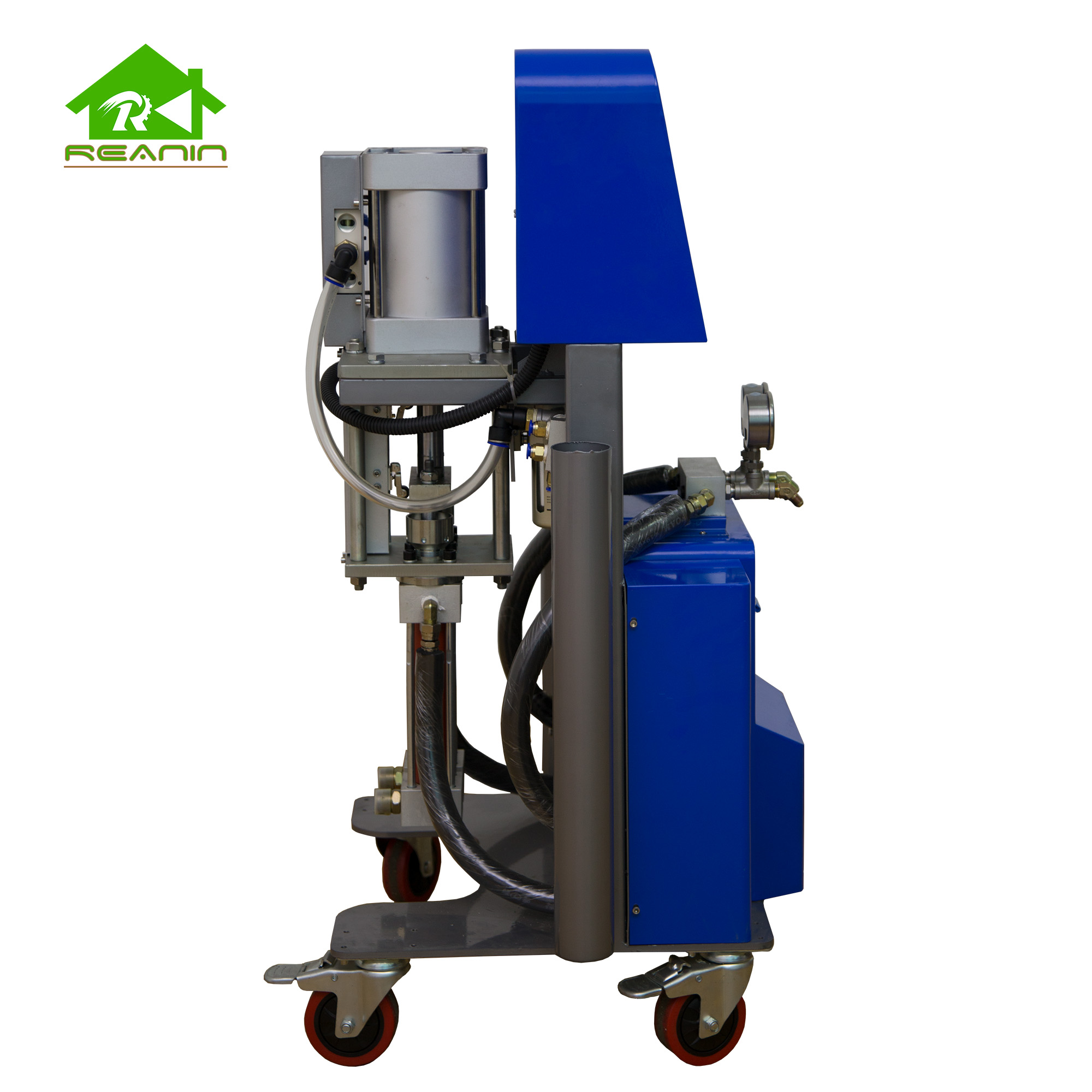
Pneumatic systems use compressed air to drive the proportioning pumps. An air motor moves a large piston up and down, which mechanically drives the smaller fluid pumps for the A and B chemicals. This design relies entirely on the volume and consistency of the air supplied by the rig's compressor. The mechanical simplicity makes these machines highly accessible for new operators. Maintenance requires basic mechanical knowledge rather than specialized electrical or hydraulic training. You can rebuild an air motor in the field with standard hand tools.
These units serve best in entry-level residential insulation, touch-ups, and low-output requirements. Contractors performing rim joist insulation, small room additions, or container insulation benefit from the lower initial investment. You avoid over-committing capital on unused capacity while still achieving professional atomization.
Pneumatic systems have distinct limitations regarding air consumption. They are highly susceptible to pressure fluctuations. If the air compressor is undersized or experiences a lag in cycle time, the air motor slows down. This causes a temporary drop in fluid pressure at the spray gun. Pressure drops disrupt the spray pattern and risk off-ratio mixing. Air motors also require routine lubrication and consume massive amounts of CFM just to operate the drive mechanism, often requiring a much larger air compressor than electric or hydraulic rigs.
Electric proportioners utilize electric motors to drive the fluid pumps. The motor connects to the pumps via gearboxes or a direct-drive yoke mechanism. This converts the rotary motion of the electric motor into the linear up-and-down motion required by the fluid pumps. This design eliminates the need for massive air compressors to drive the machine itself, reserving rig air strictly for the spray gun purge and drum transfer pumps.
These systems excel in mid-to-high volume residential and light commercial work. Contractors spraying whole-house envelopes or multi-family units rely on electric machines for steady daily output. The electric motor provides a smooth, consistent stroke rate. This consistency translates directly to stable fluid pressure at the gun, reducing the pressure drop during the pump changeover.
Electric machines offer significant advantages in power efficiency. They boast lower overall power consumption compared to hydraulic systems. The direct mechanical linkage ensures consistent stroke rates regardless of minor power fluctuations from the generator. Electric proportioners generally maintain a smaller footprint inside the mobile rig. This frees up valuable space for extra material drums, scaffolding, or safety equipment. However, the internal gearboxes require precise alignment and can be complex to rebuild in the field if a bearing fails.
Hydraulic systems use pressurized hydraulic fluid to drive the proportioning pumps. An electric motor turns a hydraulic pump, which circulates fluid to a central hydraulic cylinder. This cylinder powers the A and B chemical pumps. Hydraulic fluid does not compress. This physical property allows the machine to transfer massive amounts of force instantly and sustain it indefinitely.
Hydraulic machines dominate heavy commercial projects, roofing applications, and continuous high-duty cycles. When a contractor sprays 10 to 15 sets of foam per day, hydraulic systems handle the thermal and mechanical stress effortlessly. Large-scale commercial roofing requires long hose lengths and high output, making hydraulics the only viable choice for pushing thick materials over 300 feet vertically.
The advantages of hydraulic proportioners center on raw power and endurance. They deliver the highest sustained dynamic pressure available. The incompressible nature of hydraulic fluid ensures minimal pressure drop during the pump's directional change. This guarantees a flawless, uninterrupted spray pattern. Hydraulic pumps boast the longest lifespan under heavy load because the fluid naturally lubricates the internal components, reducing friction and heat buildup. The trade-off involves a larger physical footprint, heavier rig weight, and the necessity of managing hydraulic fluid maintenance and heat exchangers.
| Drive System | Power Source | Best Application | Primary Advantage | Maintenance Focus |
|---|---|---|---|---|
| Pneumatic | Compressed Air | Entry-level, touch-ups | Mechanical simplicity | Air motor lubrication, compressor upkeep |
| Electric | Electric Motor & Gearbox | Residential, light commercial | Consistent stroke rate, smaller footprint | Gearbox alignment, yoke lubrication |
| Hydraulic | Hydraulic Fluid | Commercial roofing, heavy duty | Highest sustained pressure, longevity | Fluid changes, heat exchanger cleaning |
Understanding the difference between static and dynamic pressure is vital for equipment selection. Static pressure is the resting pressure in the system when the pumps are energized but the spray gun is closed. Dynamic pressure is the actual working pressure measured while the trigger is pulled and material is flowing through the mixing chamber. Spec sheets often highlight maximum static pressure, but dynamic pressure dictates real-world performance on the job site.
Evaluating the dynamic pressure drop is critical for maintaining the 1:1 chemical ratio. When the gun opens, pressure naturally drops. If the machine cannot recover instantly, the mixing chamber receives unequal force from the A and B sides. This leads to poor atomization. The chemicals will not impinge with enough velocity to create a uniform mixture. You must monitor the analog or digital gauges while spraying. A drop of more than 200 PSI during the pump changeover indicates a restriction or an undersized drive system.
Recommended specifications vary by application. Look for systems capable of sustaining 1,200 to 1,500 PSI dynamically for standard residential insulation. High-viscosity materials, like certain winter-blend closed-cell foams or fire retardants, require up to 2,500 PSI. Specialized industrial polyurea coatings demand extreme performance, often requiring dynamic pressures up to 3,500 PSI to achieve proper cross-linking and a smooth surface finish.
Positive displacement pumps play a mandatory role in maintaining the exact 1:1 volume ratio of Isocyanate (A) to Resin (B). These pumps move a specific, unvarying volume of fluid with every stroke. Regardless of the material's viscosity or the resistance in the hose, the pump delivers the exact mathematical volume required. The A and B pumps are mechanically linked to the same drive mechanism. They stroke simultaneously, ensuring the volume remains perfectly matched.
Implementation risks arise when this mechanical harmony fails. Pump cavitation occurs when the transfer pump cannot draw enough material from the drum, creating a void in the proportioning pump cylinder. Unequal pressure between the A and B lines causes off-ratio foam. Off-ratio foam fails to cure properly. It leads to severe shrinkage, pulling away from studs and leaving air gaps. It can also produce a lingering odor that renders a building uninhabitable. Structural failure of the foam layer requires complete removal, costing contractors thousands in labor and replacement materials.
Delta T represents the machine's ability to raise the temperature of the chemicals from the drum temperature to the required spray temperature at a specific flow rate. It measures the raw heating power of the primary heaters. If the chemicals in the drum sit at 50°F and the required spray temperature is 130°F, the machine must achieve a Delta T of 80°F while the material flows at full speed through the heating blocks.
A higher kW heater is mandatory for winter spraying. Cold chemicals are thick and viscous. They resist pumping and atomize poorly. When operating a closed cell foam insulation machine, precise temperature control is vital for optimal expansion. Insufficient heat prevents the blowing agent from expanding fully. This drastically reduces material yield. You will spray more liquid to achieve the same foam thickness, destroying project profitability. Upgrading from a 10kW to a 15kW or 18kW heater provides the necessary thermal energy to maintain yield in freezing climates without slowing down your spray speed.
Industrial-grade machines should be capable of reaching maximum heating temperatures of up to 185°F (85°C). Standard spray foam typically requires temperatures between 110°F and 140°F. However, advanced coatings like polyurea demand much higher temperatures to reduce viscosity and accelerate the cure time. A machine with a higher maximum temperature specification offers greater versatility for diverse product lines and future business expansion.
The heated hose serves a specific, often misunderstood function. It maintains the temperature generated by the primary heaters up to the spray gun. It does not heat the material from cold. If the primary heaters fail to reach the target temperature, the hose cannot compensate. The hose features a copper heating element wrapped around the fluid lines, insulated by a thick foam jacket and a protective scuff jacket.
When evaluating specifications, check the maximum allowable hose length. Entry-level machines might support only 210 feet of hose due to smaller electrical transformers. High-output commercial rigs often support 310 to 400 feet. Longer hoses require more electrical current to maintain heat over the extended distance. Examine the copper winding gauge used for heat retention. Thicker copper wire provides more consistent heat distribution and resists burnout from continuous flexing on the job site. The Fluid Temperature Sensor (FTS) must be placed near the gun whip to provide accurate readings back to the proportioner.
Output capacity dictates how fast a machine can deliver mixed material. Specifications typically divide into three tiers. Low output machines deliver 15-20 lbs/min. Medium output systems provide 20-30 lbs/min. High output commercial units push 30-50+ lbs/min. Choosing the right Polyurethane Foam Spray Machine requires matching this output to the physical capabilities of the applicator and the specific mixing chamber size in the gun.
Scalability analysis reveals common purchasing errors. Buying a 40 lb/min machine for a beginner spraying residential walls is a waste of capital. Operators cannot physically move the gun fast enough to utilize that output in tight stud bays. Spraying too much material too quickly leads to thick lifts. Thick lifts generate excessive exothermic heat, risking internal charring or spontaneous combustion of the foam. High output machines belong on commercial roofs or large open-wall commercial projects where the applicator can walk continuously without stopping.
Atomized spraying differs entirely from cavity filling or concrete lifting. Spraying requires high pressure to force the chemicals through a tiny mixing chamber, creating a fine mist that expands on contact. Pour or injection applications require the material to flow as a liquid into a void before expanding. This process demands lower pressures, specific flow control, and different chemical formulations designed for slow reaction times.
If the rig will double as a polyurethane injection machine, specific modifications are required. The machine must operate efficiently at lower pressure settings without stalling. Alternative gun configurations, such as pour guns with static mixers, replace standard impingement spray guns. Volumetric shot timers become a critical specification. These timers allow the operator to dispense an exact, repeatable volume of liquid into a cavity, preventing over-pressurization and blowout of the surrounding structure.
Undersizing the mobile generator is the most common implementation failure in custom rig builds. Proportioners draw massive amounts of electrical current, especially when the primary heaters and hose heat engage simultaneously. If the generator bogs down under load, voltage drops. Low voltage damages electric motors, fries circuit boards, and causes the proportioner to shut down mid-spray.
Evaluate the total continuous wattage required carefully. Calculate the load by adding the wattage of the machine heaters, the primary motor, the hose heat transformer, the air compressor, and rig accessories like lighting, drum heaters, and transfer pumps. Once you have the total running wattage, add a 20-30% safety margin. This margin accounts for the surge current required when electric motors start up. A machine requiring 18,000 watts of continuous power should be paired with a generator rated for at least 24,000 watts to ensure stable, long-term operation.
| Component | Estimated Wattage Draw | Phase Requirement |
|---|---|---|
| Primary Heaters (15kW) | 15,000W | Single or Three Phase |
| Drive Motor (Electric/Hydraulic) | 3,000W - 5,000W | Single or Three Phase |
| Hose Heat Transformer | 3,000W - 4,000W | Single Phase |
| Air Compressor (5 HP) | 4,000W - 5,000W | Single or Three Phase |
| Rig Accessories & Lighting | 1,500W | Single Phase |
Even if you choose an electric or hydraulic proportioner, a robust air compressor remains mandatory. The spray gun relies on compressed air to purge the mixing chamber after every trigger pull. Without sufficient purge air, the gun will cross-over and clog instantly. Drum transfer pumps also operate on compressed air, pushing the raw chemicals from the 55-gallon drums to the proportioner.
Detail the CFM (Cubic Feet per Minute) requirements meticulously. A standard purge gun requires 3 to 5 CFM at 100 PSI. Two transfer pumps require an additional 4 to 6 CFM. If you utilize a pneumatic drive motor, the CFM requirement skyrockets to 25-35 CFM or more. Always size the compressor to deliver 125% of the rig's maximum continuous CFM demand. Rotary screw compressors are highly recommended over reciprocating piston compressors for spray rigs because they provide 100% duty cycle continuous air without overheating.
Modern proportioner electronics offer unprecedented control. Advanced systems feature pressure imbalance sensors that automatically shut down the machine if the A and B pressures deviate beyond a set percentage. This prevents off-ratio foam from ever reaching the substrate. Automatic shutoffs protect the pumps from running dry. Job data reporting software tracks chemical usage, spray temperatures, and pressure logs for every trigger pull.
Data logging validates the on-site chemical reaction. This validation is increasingly required for building code compliance and commercial quality assurance. Architects and inspectors want proof that the cellular plastic was manufactured strictly within the chemical manufacturer's parameters. Software provides this empirical evidence, allowing contractors to print out batch reports for general contractors.
However, a trade-off exists for beginners. High-tech touchscreens offer better diagnostics but present a steeper learning curve. Delicate electronics have a higher failure rate in the harsh, chemically saturated environment of a spray rig. Simple, reliable analog relay systems remain preferred by many entry-level operators. Analog systems lack data logging but can be diagnosed and bypassed in the field with basic electrical tools, keeping the job moving when a sensor fails.
Assess the physical layout and build quality before purchasing. Spray rigs are brutal environments subjected to extreme temperatures, vibration, and chemical spills. Are the Y-strainers easily accessible? These filters catch debris before it enters the pumps and must be cleaned daily. Are the fluid sections and pump packings exposed for quick field repairs, or are they buried behind complex metal shrouding? Components must be built to withstand daily industrial abuse.
Vendor evaluation is just as critical as machine specifications. Choose a brand with a robust, localized distributor network. Replacement parts must be available immediately. A broken pump seal costs a few dollars, but waiting three days for shipping costs thousands in lost revenue. Local support minimizes downtime and ensures your crew remains productive. Look for machines that use standard, non-proprietary O-rings and seals whenever possible.
A: Typically between 1,200 and 1,500 dynamic PSI. However, equipment should be capable of higher pressures to handle viscosity changes in cold weather and to push material through longer hose lengths without experiencing a severe pressure drop at the gun.
A: Yes, but it requires high-pressure equipment capable of reaching higher temperatures (up to 185°F/85°C) and higher dynamic pressures (2,500-3,500+ PSI) than standard foam requires. You must also flush the system thoroughly between chemical changes.
A: Delta T dictates how well the machine heats cold chemicals. Proper heat ensures the blowing agent expands fully. Insufficient heat results in dense, unexpanded foam, requiring more liquid material to cover the same area, which ruins your material yield and profitability.
A: You must calculate the total continuous wattage of the heaters, motors, compressor, and accessories, then add a 20-30% safety margin. Most standard commercial rigs require a generator producing between 22,000 and 30,000 watts to prevent voltage drops.
A: Pressure loss usually stems from pump cavitation, clogged Y-strainers, or worn pump packings. Cavitation happens when the transfer pump fails to supply enough material, creating a void in the proportioning pump cylinder. Always check your drum temperatures and air supply first.
A: Maximum hose length depends on the machine's electrical transformer capacity. Entry-level machines support around 210 feet, while heavy-duty commercial units can push material and maintain heat through 310 to 400 feet of hose using larger step-down transformers.


