
Views: 0 Author: Site Editor Publish Time: 2026-08-20 Origin: Site


Contractors face a heavy logistical burden when deploying separate equipment for surface insulation and structural void filling. Buying, transporting, and maintaining two distinct rigs eats into project margins. It crowds the job site and complicates fleet management. Redundant capital expenditure and doubled maintenance schedules drain resources quickly. Space constraints inside commercial vehicles make hauling multiple proportioners highly inefficient.
A consolidated solution directly addresses these operational bottlenecks. Using a dual-purpose system gives you significant operational leverage, speed, and industrial efficiency. You can tackle diverse project scopes without mobilizing a second crew. However, this approach requires careful technical evaluation. You must ensure the equipment meets the strict pressure, heating, and mixing demands of both applications. We will explore how combining these functions streamlines operations and what technical specifications you need to look for when upgrading your fleet.
Capital Efficiency: Consolidating spraying and injection capabilities into a single unit reduces initial equipment costs and lowers long-term maintenance overhead.
Operational Versatility: A unified system allows crews to seamlessly transition from surface coating to structural void filling or molding production without swapping rigs.
Technical Overlap: High-quality proportioners can handle the 150–250 bar pressure requirements necessary for both thick modified materials and standard closed-cell foams.
Risk Consideration: Relying on a single machine introduces a single point of failure, making robust maintenance protocols and interchangeable parts critical to preventing site downtime.
Understanding the mechanical overlap between spraying and injection reveals why a single machine performs both tasks effectively. Both applications rely on the precise conditioning and delivery of two-component chemicals. When you break down the fluid dynamics, the core requirements remain strikingly similar across both disciplines. You are dealing with an A-side (Isocyanate) and a B-side (Resin) that must meet under specific conditions to react properly.
Both spraying and injection demand precise volumetric proportioning. A strict 1:1 mixing ratio by volume is non-negotiable for most standard chemical sets. This precise ratio ensures excellent adhesion, proper cell structure, and uniform coverage across both application types. If the machine drifts off-ratio, you risk producing spongy foam, poor structural integrity, or uncured sticky surfaces that require complete removal. A high-quality Polyurethane Foam Spray Machine maintains this volumetric accuracy regardless of the output method.
Temperature control is another shared necessity. Primary heaters and heated hoses maintain material viscosity for both applications. Chemicals must reach the mixing chamber at the exact temperature specified by the manufacturer, often between 110°F and 130°F. If the material is too cold, it becomes thick and resists proper atomization during spraying. During injection, cold material fails to flow smoothly into tight structural voids before expanding. Robust heating elements ensure the chemicals remain at optimal viscosity from the drum to the gun.
Modern fluid sections and pumps are engineered to handle varying flow rates. High-velocity spray nozzles require rapid, continuous fluid delivery to maintain a wide fan pattern on a wall or roof deck. Conversely, low-velocity injection ports need controlled, steady flow to fill cavities without causing pressure blowouts in the surrounding formwork. Advanced transfer pumps and proportioning cylinders adapt to these differing demands. They provide the necessary volume for fast surface coating while allowing the operator to throttle back for delicate injection work.
Running separate systems creates immediate spatial and logistical problems. Mobile rigs and commercial vehicles have strict footprint constraints. A standard 16-foot or 20-foot box truck only has so much floor space. Housing two separate proportioners, two sets of heated hoses, two generators, and double the chemical drums leaves little room for anything else. This crowding makes the rig difficult to work in, restricts airflow around the compressors, and creates tripping hazards for the crew.
Redundant maintenance introduces hidden costs that erode profitability. Servicing two sets of transfer pumps, proportioners, and generators wastes valuable shop time. You must stock double the replacement parts, filters, and lubricants. Your mechanics spend twice as much time cleaning Y-strainers, flushing fluid lines, and replacing worn throat seals. Consolidating into a single, capable unit cuts these maintenance hours in half. It simplifies your inventory and keeps your crews focused on application rather than equipment troubleshooting.
Maintenance Task | Two Dedicated Machines | One Dual-Purpose Machine |
|---|---|---|
Y-Strainer Cleaning | 4 screens to clean daily | 2 screens to clean daily |
Transfer Pump Lubrication | 4 pumps to service weekly | 2 pumps to service weekly |
Generator Oil Changes | 2 engines to track and service | 1 engine to track and service |
Desiccant Dryer Replacement | Check and replace on 4 drums | Check and replace on 2 drums |
Hose Heat Verification | Test 2 separate transformers | Test 1 transformer |
Investing in dual-purpose equipment transforms how a contracting business operates. It shifts the focus from managing machinery to maximizing job site output. The benefits extend from the balance sheet to the daily workflow of the application crew out in the field.
The upfront cost of purchasing a high-tier dual-purpose machine is generally lower than buying two mid-tier dedicated machines. You eliminate the need to purchase redundant steel frames, complex control panels, and heavy primary heating blocks. This consolidation frees up capital for other investments, such as better safety gear, advanced respiratory protection, or specialized applicator training.
Verifiable equipment utilization rates improve dramatically with a unified system. A dedicated injection machine might sit idle in the shop while the crew performs spray insulation jobs for three weeks straight. An idle machine still depreciates and takes up floor space. A dual-purpose polyurethane spray and injection machine works every day. It moves from a roof insulation project on Monday to a concrete leveling job on Wednesday. This high utilization rate accelerates the return on investment through consistent daily revenue generation.
A unified machine allows contractors to bid on comprehensive building envelope projects. You can insulate exterior walls and lift sunken concrete slabs on the exact same ticket. You do not need to dispatch a second crew or tow a different trailer to the site. This capability makes your bids more attractive to general contractors who prefer dealing with a single specialized subcontractor for all foam-related tasks.
Setup and teardown times drop significantly. Parking one rig, rolling out one set of hoses, and starting one generator takes a fraction of the time. This faster setup leads to quicker application and improved overall project turnaround. Crews spend more hours pulling the trigger and fewer hours wrestling with overlapping equipment cables and air lines.
This agility also opens doors to niche markets. You can utilize a portable PU foam injection machine for specialized molding production alongside standard construction tasks. If weather delays exterior spray work, the crew can pivot to indoor injection tasks or shop-based molding without switching out the core machinery. You keep your crew working regardless of external conditions.
Powering multiple heavy-duty machines requires massive mobile generators. Running one robust machine is inherently more fuel-efficient. It requires less peak-load capacity than running two separate systems simultaneously. You can downsize your generator requirements from a massive 40kW unit to a more manageable 20kW or 25kW unit. This saves thousands of dollars on the initial generator purchase and reduces daily diesel consumption.
Electric-driven proportioners offer distinct advantages for these unified setups. They consume less power and are easier to set up for medium-duty jobs. They provide a budget-friendly and energy-efficient alternative to massive hydraulic rigs. While hydraulic systems dominate heavy-duty, continuous-pour applications, advanced electric units handle the intermittent demands of mixed-use residential and commercial projects exceptionally well.
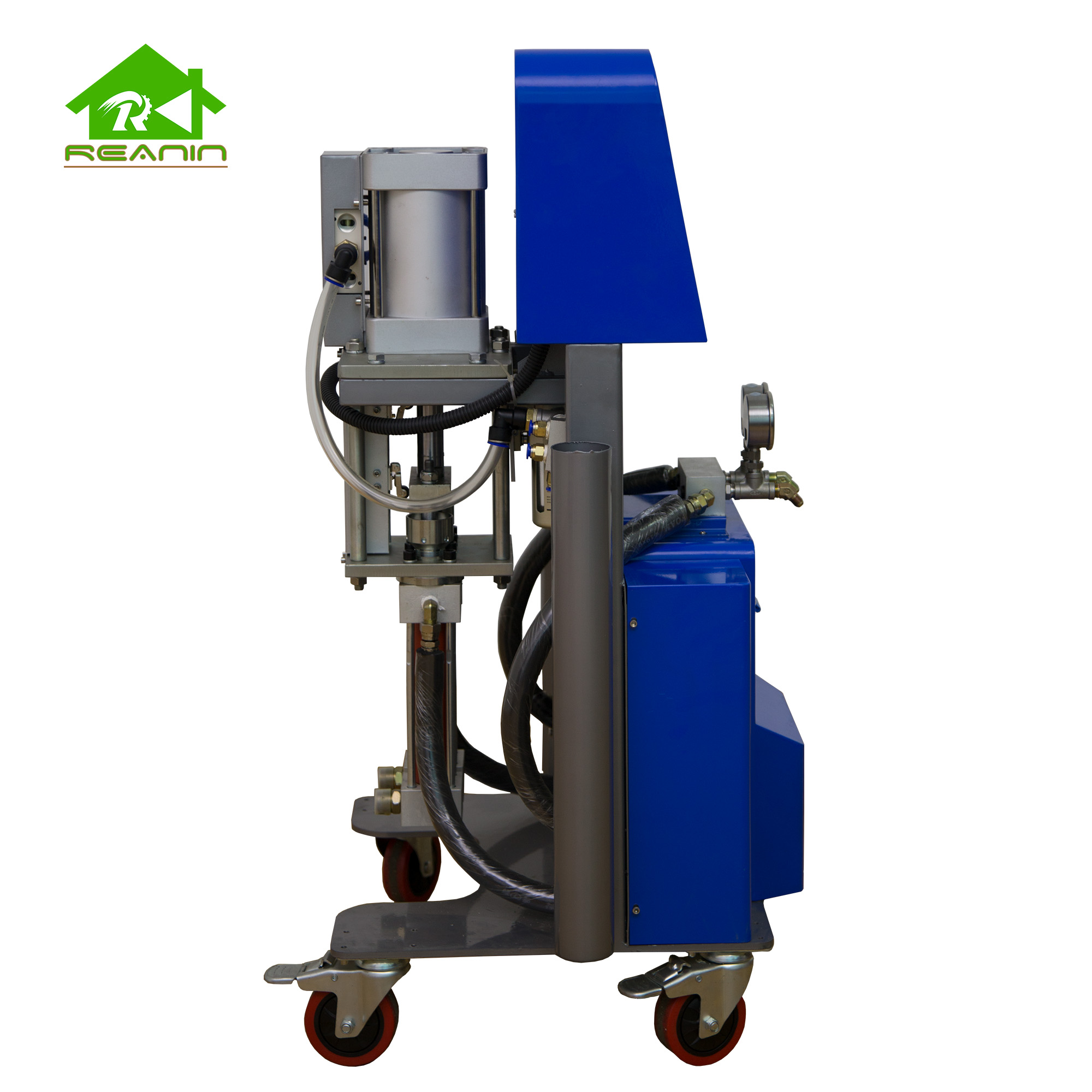
Not every machine can handle both tasks effectively. You must evaluate specific mechanical features to ensure the equipment delivers the required outcomes for both spraying and injection. The wrong specifications will lead to equipment failure, ruined materials, and frustrated operators.
Effective polyurethane spraying requires a baseline pressure of 150–250 bar. This high pressure is necessary to force the two chemicals through the tiny orifices of the mixing chamber. It creates the violent impingement mixing required for proper atomization. This pressure is particularly critical when handling thick modified materials or high-yield closed-cell foams. If the machine cannot sustain this pressure, the spray pattern will collapse, resulting in uneven coverage, poor yield, and a rough surface finish.
However, injection requires finesse. Blasting material into a closed wall cavity at 250 bar will blow out the drywall or destroy the formwork. The machine must feature highly adjustable pressure regulators. These regulators allow the operator to step down the pressure safely. A capable closed cell foam injection machine delivers a steady, low-pressure flow that fills voids gently and completely without causing structural damage.
Parameter | Spray Mode Requirements | Injection Mode Requirements |
|---|---|---|
Operating Pressure | 150 - 250 bar (High) | 40 - 100 bar (Low to Medium) |
Fluid Delivery | Rapid, continuous atomization | Controlled, steady volumetric fill |
Applicator Type | Air-purge or mechanical-purge gun | Pour manifold or injection packer |
Temperature Control | High heat to lower viscosity | Moderate heat depending on resin |
The choice between hydraulic, pneumatic, and electric proportioners dictates the machine's duty cycle. Electric proportioners excel in medium-duty applications and offer easier maintenance. Hydraulic proportioners are built for heavy-duty, continuous use. They maintain consistent pressure over long hose runs and rarely stall under heavy loads. Pneumatic systems offer a middle ground but rely heavily on massive air compressors, which adds to the rig's footprint and noise level.
Consistent impingement mixing is the heart of the process. A durable finish depends entirely on the machine's ability to maintain exact ratios. Switching between fast-reacting spray foams and slower-curing injection resins tests the limits of the proportioning system. The fluid valves and cylinders must stroke in perfect unison. Any lag on either the A-side or B-side will result in off-ratio material, leading to costly tear-outs and rework.
Transitioning from spraying to injection happens at the end of the hose. The machine must support quick-disconnect systems for swapping applicator tools. You need to switch from an air-purge spray gun to a specialized injection packer or pour manifold quickly. Threaded connections that require multiple wrenches slow down the changeover process and increase the risk of damaging the fluid fittings.
Material cross-contamination is a serious reality. When switching modes, you often switch chemicals. Pushing a slow-curing injection resin through a hose previously filled with fast-reacting spray foam requires strict purging processes. The machine must allow for efficient flushing of the lines.
Shut off the primary fluid valves at the proportioner.
Relieve all system pressure through the manifold block.
Disconnect the spray gun and attach the flushing manifold.
Circulate the approved flushing solvent through the heated hoses.
Verify the lines are completely clear of the previous chemical.
Connect the injection applicator and prime the system with the new resin.
Deploying a unified system simplifies logistics but concentrates your operational risk. Contractors must acknowledge these realities and implement strict protocols to protect their workflow and prevent unexpected downtime.
The primary risk of a dual-purpose system is the single point of failure. If the proportioner goes down, both spraying and injection operations halt immediately. You cannot simply fire up the backup machine if you only brought one to the site. A blown fluid seal, a ruptured heater core, or a fried control board stops the entire crew, turning a profitable day into a total loss.
Mitigation strategies are essential. You must stock critical spare parts on the truck at all times. Relying on next-day shipping from a manufacturer is not an acceptable strategy. Your mobile rig should carry spare O-rings, side seals, mixing chambers, friction plates, and complete fluid section rebuild kits. Operators must be trained to perform field repairs quickly to get the machine back online without waiting for a service technician.
A dual-purpose machine demands a highly skilled operator. The learning curve is steeper than operating a single-function machine. Operators must understand distinct fluid dynamics, temperature settings, and pressure limits for both applications. They need to know exactly how to adjust the heat banks when switching from a thin primer to a thick structural foam.
Achieving a smooth and uniform coating requires different gun techniques than achieving a perfectly filled void. The operator must read the gauges accurately and recognize the subtle signs of a pressure imbalance before it ruins the application. A technically proficient operator prevents off-ratio spraying, avoids improper injection blowouts, and extends the lifespan of the equipment through proper daily maintenance.
While versatile, these machines have limitations. You must analyze the constraints of using a construction polyurethane injection machine for highly specialized, non-standard resins. Some aggressive primers or highly corrosive chemical grouts can degrade standard internal seals quickly.
Verify chemical compatibility with the machine's wetted parts. Standard carbon steel components might rust or pit when exposed to certain water-blown injection foams. Stainless steel fluid sections offer superior long-term durability and resist corrosion from aggressive chemicals. Always consult the equipment manual and the chemical manufacturer's technical data sheet before introducing a new resin into your primary proportioner.
Deciding between a unified system and dedicated machines depends entirely on your business model, project volume, and crew structure. There is no universal right answer, only the right answer for your specific operational needs.
A dual-purpose machine is ideal for residential and commercial contractors handling mixed-scope projects. If your typical week involves insulating a pole barn, sealing a basement, and leveling a cracked driveway, a unified system is perfect. It allows you to pivot quickly between tasks without returning to the shop to swap trailers.
This setup is best for operations prioritizing fleet mobility, lower initial capital outlay, and energy efficiency. Smaller crews operating out of single box trucks benefit immensely from the reduced footprint and simplified maintenance schedule. It keeps overhead low while maximizing the types of jobs you can accept.
High-volume, single-task operations should stick to dedicated machines. If your business focuses entirely on OEM manufacturing, pouring molds eight hours a day, a dedicated pour machine is necessary. Similarly, continuous commercial roofing projects require massive, high-output spray rigs that never need to step down for delicate injection work.
Dedicated machines also make sense in scenarios where spraying and injection must occur simultaneously on the same job site. If you have a large commercial project where one crew is spraying exterior walls while another crew is injecting structural foam into the foundation, a single machine cannot serve both crews at once. In these high-volume, simultaneous-workflow environments, separate dedicated rigs are mandatory.
Audit your current project mix to determine your exact ratio of spray versus injection work before purchasing new equipment.
Consult with equipment manufacturers to verify that your most frequently used chemicals are compatible with the machine's internal seals and wetted parts.
Request a live demonstration of the mode-switching process to evaluate how quickly the lines can be purged and the guns swapped.
Stock essential spare parts, including fluid section rebuild kits and mixing chambers, in every mobile rig to mitigate single-point-of-failure risks.
A: Yes, but it requires specific modifications. The machine needs pressure step-down capabilities to avoid over-pressurizing cavities. You must also use specialized injection guns or packers and adjust the heating parameters to match the specific injection resin's requirements.
A: Spraying typically requires 150–250 bar to achieve proper atomization and uniform coverage. Injection pressures vary widely based on the void size and material viscosity. This necessitates highly adjustable fluid controls to step the pressure down safely for void filling.
A: The standard process involves flushing and purging the lines if you are changing chemicals. You then swap the applicator spray gun for an injection manifold or packer. Finally, you must recalibrate the primary heaters and pressure regulators to suit the injection material.
A: It depends on the unit's specifications. Low-pressure cart units cannot spray commercial insulation. However, high-pressure portable rigs with robust proportioners can easily handle commercial closed-cell spray foam and thick modified materials.
A: These machines handle closed-cell insulation foams, structural lifting foams, primers, and crack-sealing resins. You must check the manufacturer's viscosity limits and ensure the machine's wetted parts resist the specific chemicals used.
A: No, as long as the machine is rated for dual-use by the manufacturer and you process approved materials. Warranties remain intact under these conditions. However, performing unauthorized aftermarket modifications to force a single-use machine to do both will void the warranty.


