
Views: 0 Author: Site Editor Publish Time: 2026-06-30 Origin: Site


Successful polymerization in plural-component systems relies entirely on precise thermal environments. When you combine A-side Isocyanate and B-side Resin, you ignite a rapid chemical reaction. This delicate process strictly depends on accurate temperature management. Fluctuating job site temperatures constantly threaten this delicate balance. When fluids face mismatched viscosities, you inevitably suffer off-ratio spraying. Such errors lead to severe material waste and compromised structural insulation integrity.
Environmental variables actively steal your profit margins. Positioning the right equipment on your rig serves as your primary defense against these yield losses. In this comprehensive guide, you will discover exactly how thermal architecture impacts your daily operations. We will explore core heating systems, critical buyer criteria, and essential parameter setups. You will also learn practical troubleshooting steps to secure consistent output every time you pull the trigger. Proper thermal control transforms unpredictable chemistry into a reliable, highly profitable daily routine.
Proper viscosity matching requires independent, precise heating for both chemical components.
A machine's Delta-T (ΔT) rating determines its actual output capacity in suboptimal climates.
Heated hoses are designed to maintain temperature, not generate primary heat; pre-conditioning is critical.
Evaluating equipment requires scrutinizing sensor placement, heater wattage, and fluid control software.
When ambient temperatures plummet, raw chemicals react poorly. You must understand how cold environments alter fluid dynamics. Isocyanate (A-side) thickens much faster than Resin (B-side) in cold ambient conditions. This rapid viscosity mismatch creates immediate pressure imbalances at the proportioner. Your machine struggles to pump evenly when fluids possess different thicknesses. As a result, you spray an off-ratio mix directly onto the substrate.
Every five-degree drop below manufacturer specifications severely reduces foam expansion. You lose critical material yield almost instantly. This volume reduction directly increases your cost-per-board-foot. Poor temperature management practically burns your profit margins. Losing just ten percent of your expected yield on a commercial project destroys job profitability.
Additionally, off-ratio chemicals introduce serious physical defect risks. You might see noticeable shrinkage on the wall hours after application. The foam often exhibits poor substrate adhesion, pulling away from studs. Sometimes, you end up spraying "spongy" off-ratio foam. Keeping optimal foam spray consistency secures your reputation. It prevents costly callbacks, extensive scraping, and rigorous rework.
Robust equipment actively prevents temperature drops during application. Any reliable polyurethane spray foam machine utilizes multiple heating stages. You need to understand how these advanced elements work together.
Independent aluminum or steel heater blocks generate the initial thermal lift. These heat exchangers prioritize high surface-area-to-fluid-volume ratios. Rapid heat transfer happens as fluids pass through narrow internal channels. The larger the surface area inside the block, the faster the chemical reaches optimal temperature. Engineers design these blocks to heat fluid instantly without causing localized burning.
The hose assembly plays a critical yet widely misunderstood role. Copper wire heating elements wrap tightly around the internal fluid core. Heavy insulation and a scuff jacket protect these internal elements. Proper heated hose temperature control maintains primary heat during long transit runs. Hoses do not generate primary heat. They simply cannot compensate for cold fluid entering the system from the proportioner.
Precision requires accurate, real-time data collection. Fluid Temperature Sensors (FTS) locate directly near the spray gun. They read actual chemical temperatures just before mixing occurs in the chamber. Traditional block sensors only read fluid at the machine base. FTS units provide superior accuracy compared to older block sensors. You must measure the real fluid state, not just the exterior hose surface temperature.
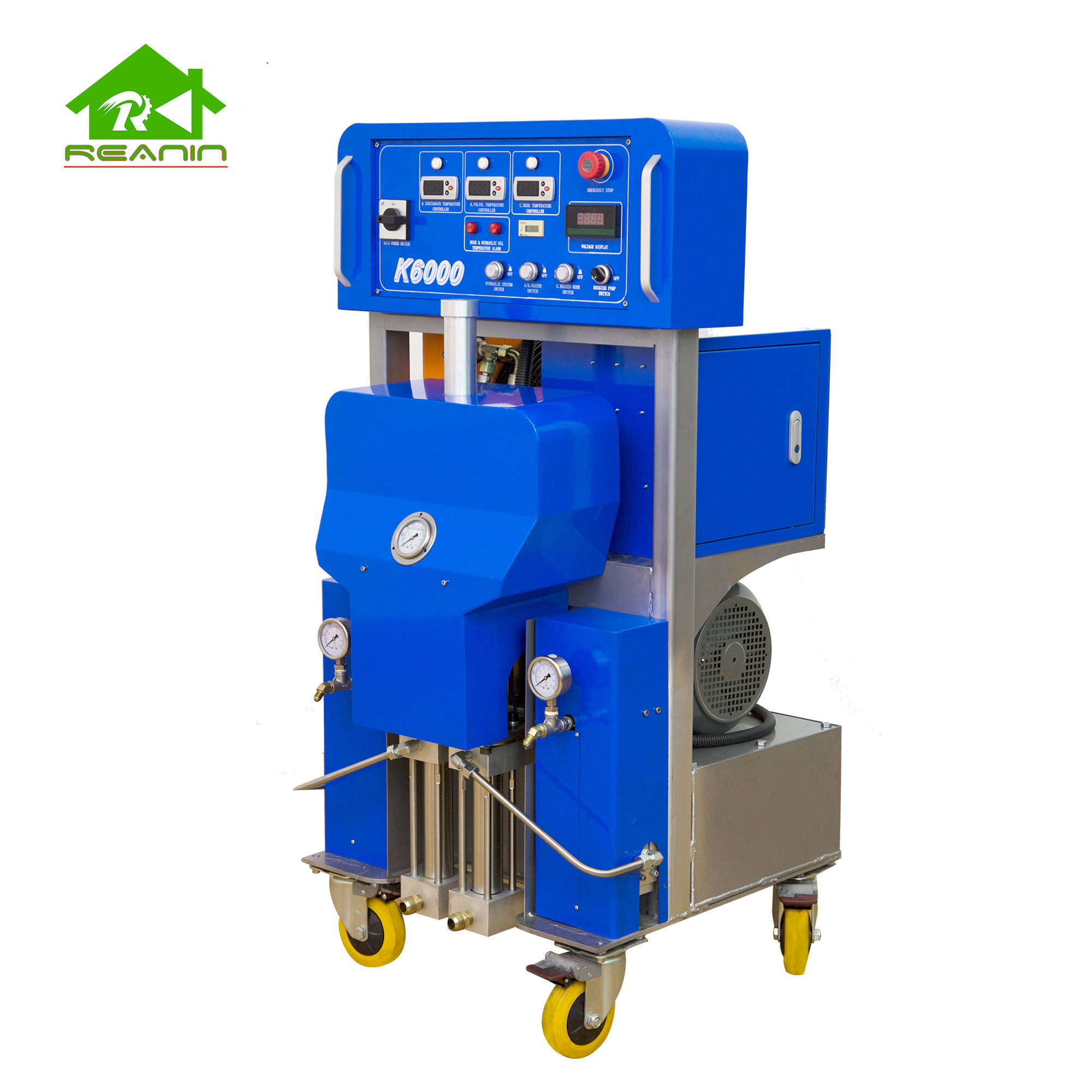
Purchasing reliable equipment requires a strict evaluation of heating capabilities. You need a robust PU material temperature control system to survive suboptimal climates.
Delta-T represents the maximum temperature increase a machine can apply at a specific flow rate. This metric defines your actual output capacity. Cold-climate contractors must prioritize exceptionally high ΔT ratings. If your materials sit at 50°F, you need a massive ΔT to safely reach 130°F. A low ΔT machine forces you to spray painfully slow to maintain heat.
Total heater wattage dictates your realistic production speed. A 6kW heater limits your output volume drastically in winter conditions. A 15kW heater allows continuous high-volume spraying regardless of ambient drops.
Heater Wattage vs. Production Capacity | ||
Heater Wattage | Estimated Max Flow Rate (lbs/min) | Ideal Climate Application |
|---|---|---|
6 kW | 15 - 20 | Warm climates / Residential |
10 kW | 20 - 30 | Moderate climates / Commercial |
15+ kW | 30 - 40+ | Cold climates / Industrial |
Look for systems featuring advanced PID (Proportional-Integral-Derivative) controllers. PID logic anticipates heat loss dynamically rather than just reacting to it. Older thermostats simply bang on and off, causing dangerous thermal swings. PID boards prevent temperature spiking during quick trigger pauses. They also prevent material charring inside the primary heaters.
Proper machine setup guarantees maximum daily yield. You must establish optimal polyurethane spray parameters before pulling the trigger.
Cold materials overwhelm even the most powerful primary heaters. Implement a strict daily protocol to bring raw materials to a reliable baseline temperature. Usually, you want drums resting evenly between 70°F and 80°F.
Store chemical drums in a fully climate-controlled warehouse overnight.
Deploy silicone band heaters around the lower third of the drums.
Never blast band heaters on high, as this scorches the internal chemicals.
Utilize a heated trailer environment during transit and field application.
Verify internal fluid temperatures manually before activating the transfer pumps.
Operators often misunderstand the critical relationship between primary and hose heating. You should set hose temperatures slightly lower than or exactly equal to primary heaters. This logic prevents blowing agent vaporization in the long line. Vaporization causes line cavitation, ruining your spray pattern completely.
Cold substrates aggressively drain exothermic heat from the rising foam. Metal building panels pull heat away much faster than wooden studs. This thermal theft actively stunts foam expansion. You must counter this by adjusting machine temperatures slightly upward. Applying thinner initial passes also helps the foam grip cold surfaces securely.
Even the most advanced equipment encounters harsh field variables. You must recognize subtle symptoms of thermal failure early.
Setting temperatures too high creates dangerous chemical instability. Overheated chemicals react prematurely inside the lines. You will notice spitting guns or heavily distorted fan patterns. Often, prematurely reacting foam clogs the internal mixing chamber. This forces an immediate, messy gun rebuild, destroying your production schedule.
Isocyanate remains highly sensitive to localized cold spots. Unheated hose sections or exposed transfer pumps allow temperatures to drop fast. The Isocyanate then crystallizes into hard, abrasive particles. These abrasive crystals destroy pump seals and score cylinder walls aggressively. You will eventually find these crystals clogging your Y-strainers.
Heating elements pull massive, continuous electrical loads. Job-site power drops constantly threaten your heating performance. Your generator must provide exceptionally clean, stable voltage. Voltage drops cause vital heater relays to underperform or fail entirely. Monitor your generator output constantly to keep heaters running optimally.
Field Note: Common Mistakes
Best Practice: Always agitate resin drums gently while pre-conditioning to ensure even heat distribution.
Common Mistake: Relying solely on the heated hose to warm 50°F materials up to a 130°F spray temperature.
Choosing new equipment defines your overall business capabilities. Let us examine how to precisely match machines to your reality.
Evaluate your geographic operating region honestly. Mid-tier heaters handle residential southern climates perfectly well. However, northern applications absolutely demand high-wattage industrial systems. Undersized heaters will force you to spray at a painfully slow crawl in winter.
Proportioner drive systems impact overall rig power distribution. Pneumatic drives typically draw less power for the pump motor. This leaves more available amperage for heating elements. Electric drives run highly efficient but require careful balancing of electrical loads between motors and heaters. Hydraulic drives handle massive continuous output. Manufacturers often pair hydraulic pumps with the largest 15kW to 20kW primary heater blocks.
Proportioner Drive Type & Heating Demand | ||
Proportioner Drive Type | Typical Heating Demand Integration | Primary Advantage |
|---|---|---|
Pneumatic | Low to Medium | Frees up generator amperage for heaters |
Electric | Medium to High | Consistent stroke pressure and efficiency |
Hydraulic | High (15kW+) | Maximum volume output and extreme high ΔT |
Always demand verifiable ΔT performance charts from manufacturers before finalizing a purchase. You must know exactly how the machine performs under heavy load. Additionally, secure comprehensive component-level warranties. Ensure these warranties specifically cover the heating elements and advanced control boards.
Profitability in plural-component spraying is completely dictated by final material yield. Thermal management directly controls this crucial yield. When you master fluid temperatures, you eliminate off-ratio errors entirely. Investing in advanced temperature control systems mitigates the highest variable cost in the business. Wasted chemicals and constant rework drain your operating capital fast. Modern proportioners solve these issues through intelligent, responsive thermal architecture. Protect your hard-earned margins by upgrading your environmental control strategies today.
Standardize your drum pre-conditioning protocols strictly before every single job.
Match your rig's heater wattage directly to your harshest local climate demands.
Train all operators to read fluid temperature sensors, not just primary machine gauges.
Perform routine maintenance on Y-strainers to catch temperature-related crystallization early.
A: Most closed-cell polyurethane foams require material temperatures between 120°F and 130°F at the spray gun. Open-cell foams typically require higher temperatures, ranging from 130°F to 140°F. You must always consult the chemical manufacturer's technical data sheet for precise targets.
A: No. Heated hoses are strictly designed to maintain the temperature generated by the primary heaters. They cannot generate enough primary heat to bring cold chemicals up to spraying temperature. You must use band heaters or heated trailers to pre-condition drums.
A: Longer hose lengths increase the risk of heat loss, especially if resting on cold concrete or snow. Extended runs force the hose heating elements to work harder. Always use a fluid temperature sensor near the gun to ensure temperatures remain stable across long distances.
A: Pressure divergence usually stems from a viscosity mismatch caused by uneven heating. If the Isocyanate runs colder than the Resin, it becomes thicker. The proportioner pump then struggles to push the thicker fluid, causing a noticeable pressure spike on the A-side gauge.
A: Poor expansion usually results from inadequate material temperatures or spraying onto excessively cold substrates. When chemicals are too cold, the blowing agent fails to activate fully. This thermal loss directly reduces foam expansion, wasting material and increasing your application costs.


