
Views: 0 Author: Site Editor Publish Time: 2026-07-11 Origin: Site


The success of a plural-component spray application relies entirely on consistent volumetric feeding. The most advanced proportioner will fail if the material feed is compromised. You cannot expect uniform spray patterns when fluid delivery fluctuates. Operators often overlook this foundational step.
Polyurea resins display exceptionally high viscosity and extreme moisture sensitivity. The Isocyanate A-side presents specific handling challenges. Ambient humidity easily reacts with these chemicals. This reaction causes rapid crystallization inside your equipment. Such contamination destroys seals and blocks fluid passages.
We will provide a critical evaluation framework for selecting your fluid handling equipment. You must mitigate cavitation risks before they damage your proportioner. Proper equipment selection prevents off-ratio dispensing. Ultimately, robust feed mechanisms reduce contractor downtime. You will learn exactly how to match supply pumps to your operational demands.
Feed pressure dictates proportioner success: Inconsistent fluid delivery leads to cavitation, off-ratio spraying, and costly substrate rework.
Pneumatic systems remain the industry standard: While electric and hydraulic options exist, 2:1 and 3:1 ratio pneumatic pumps offer the ideal balance of stall-under-load safety and flow capacity for high-viscosity resins.
Moisture control is non-negotiable: The A-side (ISO) requires dedicated handling protocols, including desiccant breathers and specific seal materials, to prevent crystallization inside the pump.
Match supply to demand: A spray machine feed pump must outpace the proportioner’s maximum output by at least 1.5x to account for viscosity spikes and temperature drops.
Starving the proportioner initiates a cascade of mechanical failures. Proportioning pumps demand a constant, pressurized fluid stream. When supply drops, the proportioner pulls a vacuum. This creates severe pressure imbalances across the fluid lines. A reliable two component material feed acts as the first line of defense.
Poor fluid delivery introduces several critical operational hazards. You must address these risks to maintain project timelines.
Cavitation: A starved pump pulls air into the fluid lines. Air bubbles enter the high-pressure proportioner cylinders. These bubbles collapse violently under pressure. This violent collapse damages proportioner seals and destroys primary fluid heaters.
Off-Ratio Material: Uneven feed pressure causes off-ratio dispensing. Unreacted polyurea leaves sticky, tacky surfaces. The coating will eventually peel or blister. Substrate failures trigger severe warranty claims and ruin contractor reputations.
Drum Waste: Weak scavenging leaves excessive material behind. High-viscosity resins stick to drum walls. A weak pump cannot pull the material from the bottom. You end up discarding usable, valuable chemicals.
You should never view the feed setup as a mere accessory. It serves as a critical fail-safe for the entire spray rig. Consistent delivery prevents catastrophic equipment failures. Experienced operators prioritize feed reliability above all else. A compromised feed system guarantees project delays. Robust delivery mechanisms ensure your primary equipment operates efficiently.
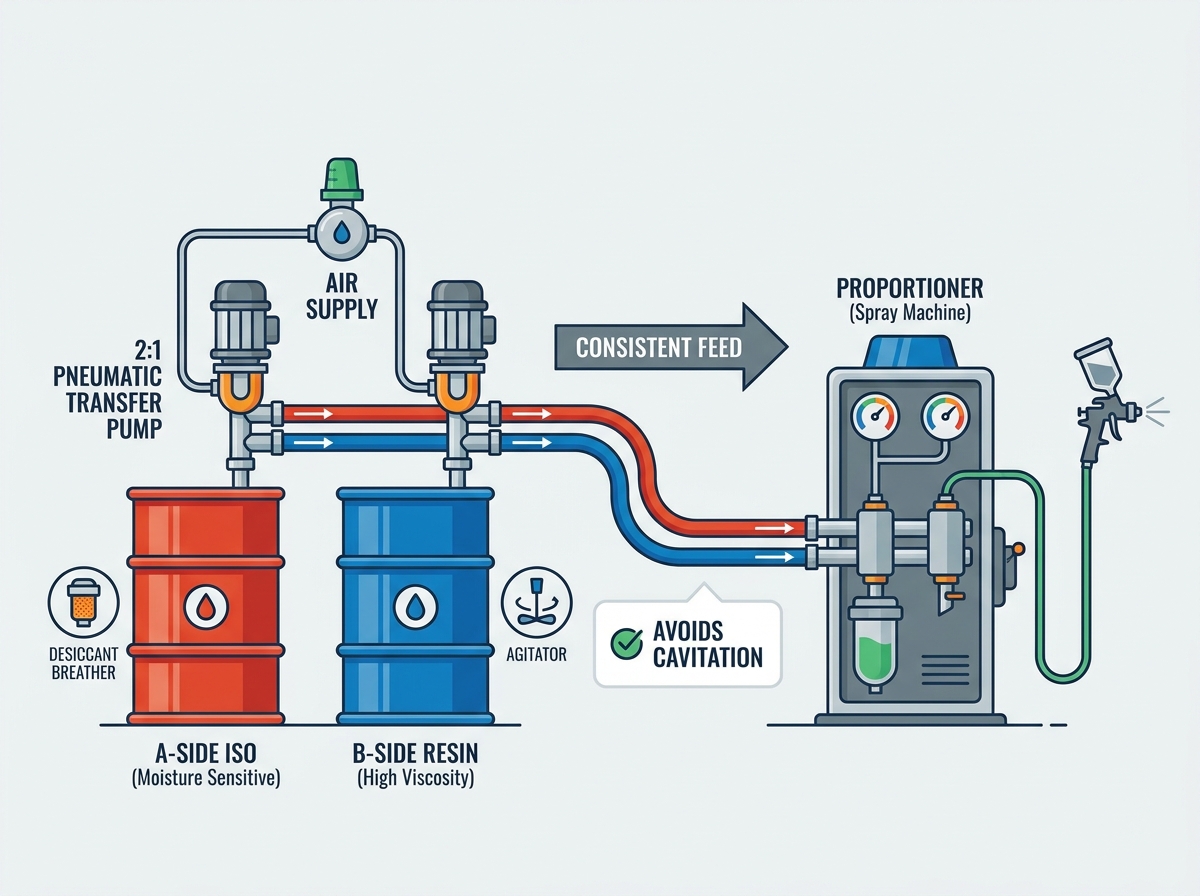
Contractors must evaluate drive mechanisms carefully. You should approach reliability claims with healthy skepticism. The industry standard heavily favors pneumatic power. However, alternative systems exist for specialized applications. Selecting the right polyurea transfer pump prevents job site stalls.
Air-driven pumps dominate the plural-component coating industry. They provide unparalleled safety and simplicity.
Pros: Pneumatic systems naturally stall under pressure. They stop pumping when the fluid line reaches maximum pressure. This prevents equipment damage. Operators adjust pressure easily using standard air regulators. Pneumatic motors also operate safely in hazardous or flammable environments.
Cons: These units require significant airflow. Your rig's air compressor must supply adequate CFM. High-humidity environments cause air motor icing. Rapid cycling drops the internal motor temperature. This leads to frustrating freeze-ups during heavy duty cycles.
Electric and hydraulic systems offer distinct performance profiles. They fit very specific environmental constraints.
Use Case: These pumps work well when compressed air is limited. Some remote facilities strictly restrict air compressor usage. Hydraulic units provide immense, relentless torque for thick materials.
Drawbacks: They carry a higher risk of dead-heading. A stalled electric motor burns out quickly. Preventing over-pressurization requires complex bypass valves. Furthermore, these pumps are significantly heavier. Operators find them cumbersome to swap between empty drums.
Below is a summary chart comparing the three primary drive types used in field applications.
Drive Type | Primary Advantage | Stall Characteristics | Best Application Environment |
|---|---|---|---|
Pneumatic | Simple pressure regulation | Stalls safely under pressure | Standard contractor spray rigs |
Hydraulic | Consistent torque and flow | Requires bypass relief valves | High-volume stationary plants |
Electric | No compressed air required | Prone to dead-heading damage | Air-restricted remote sites |
Hardware specifications directly impact field outcomes. You must match the pump geometry to the fluid chemistry. A properly specified polyurea drum pump handles harsh solvents. It also manages the demanding viscosities of modern coatings.
The transfer ratio defines the multiplication of air pressure to fluid pressure. A 1:1 pump provides equal fluid pressure to air input. You should rarely use a 1:1 ratio for polyurea. The 2:1 ratio serves as the industry baseline. It provides adequate push for standard materials. You will need a 3:1 pump for cold-weather applications. Cold temperatures cause viscosity to spike dramatically. Exceptionally thick B-side resins also demand 3:1 configurations.
Your feed system must outpace your proportioner. If the proportioner demands two gallons per minute, the feed cannot deliver only two. Operators utilize the 1.5x to 2x safety margin rule. The pump must deliver significantly higher GPM. This margin accounts for sudden viscosity spikes. It also absorbs temporary pressure drops when spray guns trigger on and off.
Chemical realities dictate seal selection. The A-side contains aggressive isocyanates. These chemicals corrode standard rubber seals rapidly. You must specify PTFE or Teflon packings. Stainless steel wetted parts resist corrosion better than carbon steel. Proper seal compatibility prevents fluid leaks. It also stops air from seeping into the fluid stream.
Airtight seals protect the material integrity. Bung adapters lock the pump into the drum securely. You must evaluate the quality of these adapters. An airtight seal prevents ambient moisture intrusion. Moisture ruins the A-side material instantly. High-quality O-rings on the bung adapter keep the drum environment strictly controlled.
Piecing components together requires careful planning. A functional polyurea transfer system involves more than just dropping pumps into drums. Environmental factors constantly attack the equipment.
Moisture represents the greatest threat to Isocyanate. You must utilize dedicated desiccant breathers. These breathers dry the air entering the drum as fluid exits. Advanced setups employ nitrogen blankets to displace oxygen and moisture. ISO crystallizes on exposed pump shafts. When the pump cycles, these hard crystals tear the internal packings. Proper throat seal liquid maintenance prevents this crystallization.
The B-side resin presents entirely different challenges. It contains pigments, amines, and blowing agents. These components separate over time. The feed mechanism handles fluid transfer, but it cannot mix. You must use separate drum agitators. Consistent mixing keeps the solids perfectly suspended. Without agitation, your sprayed coating will show severe color variations.
Hose geometry directly affects fluid dynamics. Your equipment performance degrades rapidly with poor hose selection. You should avoid undersized supply lines. Industry experts recommend a 3/4-inch minimum internal diameter. Excessively long hoses create friction loss. Keep the distance between the drum and the proportioner as short as possible. Route hoses smoothly to prevent kinks and flow restrictions.
Pneumatic equipment imposes a hidden CFM tax. You must calculate your total air consumption accurately. The primary air compressor runs the proportioner. It also runs the spray gun purge, the B-side agitator, and two feed pumps simultaneously. Ensure the compressor handles this combined load. A sudden drop in air pressure stalls the feed pumps. This immediately starves the proportioner and ruins the spray pattern.
Selecting equipment requires a vendor-agnostic approach. You should evaluate hardware based on raw specifications and operational needs. Follow this standardized framework to ensure optimal system performance.
Audit Proportioner Specs: Document the maximum flow rate of your existing spray machine. Check the maximum working pressure. Your feed equipment must exceed these baseline metrics comfortably.
Assess Typical Environment: Factor in average ambient temperatures. Colder environments thicken resins drastically. High viscosity demands aggressive pump ratios. Select 3:1 ratios if you spray primarily in winter conditions.
Standardization: Buy A and B pumps in identical pairs. Use the same brand and model. This simplifies your spare parts inventory. It also makes maintenance training much easier for your crew.
Long-Term Maintenance and Rebuild Availability: Look beyond initial specifications. Prioritize the availability of rebuild kits. Packings, check balls, and valve seats wear out predictably. You must source these parts quickly. Transparent maintenance schedules keep your rigs operational.
Implementing this logic prevents mismatched equipment. Standardized rigs experience far fewer operational hiccups. Your crew will perform rebuilds faster when they know the hardware intimately.
A well-architected fluid delivery setup remains foundational to consistent yield. It protects the contractor's reputation by ensuring uniform coating application. Overlooking the feed hardware leads to catastrophic proportioner failures.
You must prioritize configurations that offer transparent maintenance schedules. Ensure rebuild kits remain readily available in your region. Always build adequate flow margins into your system design. Match your pump ratios to your specific material viscosities and environmental conditions. Proper preparation guarantees your proportioner always has the fluid it needs to perform flawlessly.
A: A 1:1 pump will likely struggle to feed thick resins fast enough. This leads to proportioner cavitation, severe pressure faults, and off-ratio dispensing. The fluid pressure simply cannot keep up with the machine's demand. We strongly recommend using 2:1 or 3:1 ratio pumps for these applications.
A: While the pumps themselves can be identical models, they must never be swapped between materials. Cross-contamination causes instant curing inside the pump. Furthermore, A-side pumps require strict moisture protection, like desiccant dryers. This prevents isocyanate crystallization on the pump shaft.
A: Rebuild frequency depends heavily on material throughput and maintenance habits. However, daily lubrication of the air motor significantly extends lifespan. Proper wet-cup maintenance using a throat seal liquid protects the packings. With good habits, a pump can process dozens of drum sets before requiring a rebuild.
A: High cycle rates combined with humid compressed air cause rapid icing in pneumatic air motors. Expanding air absorbs heat, freezing ambient moisture. You can mitigate this by slowing the cycle rate. Ensure your air supply runs through a high-quality air dryer, or use inline antifreeze lubricators.


